
Plants
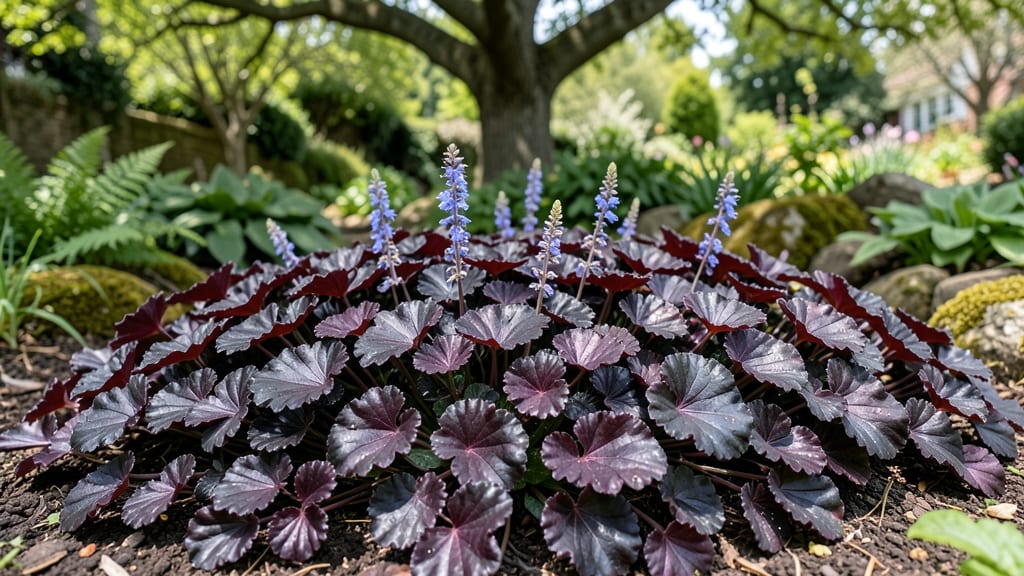
Growing bugleweed 'Black Scallop' transforms shady spots into lush, low-maintenance carpets. 🌿 This variety thrives where nothing else will, with its deep purple-black foliage and cheerful spring blooms. Once established, it spreads effortlessly, crowding out weeds while requiring almost no attention from you.
The secret to its success lies in its adaptability: partial shade, moist but not soggy soil, and occasional trimming to keep it tidy.
Plant in early spring or fall, space plants about 12 inches apart, and watch as they form a dense, velvety ground cover that stays vibrant all season long. Perfect for borders, slopes, or under trees where other plants struggle.
📚 In This Guide
- What you need
- Instructions
- Tips and common mistakes
- Wrapping up and next steps
What you need
- ● Bugleweed Black Scallop plants: 3–5 healthy nursery-grown plants (or seeds if propagating from scratch).
- ● Well-draining potting mix: 10–15 lbs of a blend designed for Ajuga (or a mix of 60% peat moss, 30% perlite, and 10% compost).
- ● Containers or garden bed: For containers: 5–7" deep pots with drainage holes (1–2 plants per 12" pot).
- ● For garden beds: Partial shade with moist, humus-rich soil (pH 6.0–7.0).
- ● Organic mulch: 2–3" layer of shredded bark or pine needles to retain moisture.
- ● Slow-release fertilizer: 10–10–10 NPK ratio (1 tbsp per plant at planting time).
- ● Garden trowel or small shovel: For transplanting or dividing plants.
- ● Watering can or hose with a gentle spray nozzle: Avoid over-saturating the soil.
- ○ Pruning shears: Optional, for shaping or removing spent foliage.
- ○ Gloves (optional): To protect hands from soil or sap.
- ○ Sunlight meter (optional): To confirm your garden’s light conditions (ideal: 3–6 hours of morning sun).
- ● 💡 Test your soil: Bugleweed thrives in moist but not soggy soil—amend clay soil with sand if needed.
- ● 🌡️ Harden off seedlings: If starting from seeds, acclimate young plants to outdoor temps for 1–2 weeks before planting.
- ● ✨ Companion plants: Pair with ferns, hostas, or heucheras for a lush, low-maintenance shade garden.
Step-by-step instructions for planting Bugleweed 'Black Scallop'
This hardy, shade-tolerant variety thrives with minimal fuss—here’s how to get it established strong.
🌱 Step 1: Choose the Perfect Spot and Prepare the Soil
Bugleweed 'Black Scallop' loves partial to full shade and tolerates a range of soil types, but it performs best in moist, well-draining soil. I always check the site first—if the area stays soggy after rain, amend with 1-2 inches of compost to improve drainage without changing the soil’s natural texture.
This plant spreads slowly but steadily, so give it 12-18 inches of space between plants if you’re grouping them. For a bold ground cover effect, space them 18-24 inches apart. I like to mark the spots with small stakes before digging to avoid overcrowding later.
🪴 Step 2: Plant at the Right Time and Depth
Spring or early fall are the best times to plant—avoid extreme heat or cold. Dig a hole twice as wide as the root ball but no deeper. The top of the root ball should sit just below soil level; planting too deep can suffocate the plant, while planting too high leaves roots exposed.
Gently remove the plant from its container and tease apart any circling roots. Place it in the hole, backfill with soil, and press lightly around the edges to eliminate air pockets. Water deeply right after planting to settle the soil and encourage root contact. You’ll know it’s done right when the soil surface looks slightly firm but not compacted.
☀️ Step 3: Water and Mulch for Establishment
Keep the soil consistently moist but not soggy for the first 4-6 weeks—this is critical for root development. Water in the morning so the foliage dries by evening, reducing disease risk. You’ll see new growth within 2-3 weeks if moisture is right; wilting or yellowing leaves mean it’s time to adjust your watering.
Spread a 2-3 inch layer of mulch around the base, keeping it 2 inches away from the stem to prevent rot. I use shredded bark or leaf mold—it retains moisture while allowing rain to penetrate. This mulch layer also suppresses weeds, which compete for nutrients and water.
🌿 Step 4: Maintain with Minimal Effort
Once established, 'Black Scallop' is nearly maintenance-free. It thrives in shade to partial sun, making it ideal for under trees or along north-facing walls. Fertilizer isn’t necessary unless your soil is very poor; a light application of balanced organic fertilizer in early spring keeps it lush without overstimulating growth.
This variety is disease-resistant, but I still check for powdery mildew occasionally—especially in humid climates. If you spot white powder on leaves, remove affected foliage immediately and space plants slightly wider to improve airflow. Prune back leggy stems in early spring to encourage bushier growth.
⏰ Step 5: Divide and Share After 3-4 Years
Bugleweed spreads slowly but will form dense clumps over time. Every 3-4 years, divide in early spring or fall by digging up the entire plant and separating the sections with a sharp knife. Replant the divisions immediately in prepared soil—they establish just as easily as new plants.
This is also a great way to share with friends or fill gaps in your garden. I always divide mine in cool weather; the roots handle the process better and recover faster. After replanting, water deeply and mulch as before to help the divisions settle in.
Tips & tricks for perfect Bugleweed 'Black Scallop' planting
These simple strategies will help you establish your 'Black Scallop' with confidence and avoid common pitfalls.
Soil Test First: Before amending, grab a handful of your garden soil and squeeze it—if it stays in a tight ball when wet, you need more compost to improve drainage. I always test soil moisture after rain; if water pools for more than 30 minutes, you're dealing with clay soil that needs serious compost (3-4 inches) to create that ideal loose, crumbly texture. This prevents root rot while keeping moisture where it belongs.
Root Ball Prep: When you remove the plant from its container, gently loosen the root ball with your fingers—this encourages roots to spread outward instead of staying in a tight circle. I like to make a few small vertical cuts around the edges with a butter knife to help roots establish faster. Just avoid damaging the main stems during this process.
Watering Watch: During those critical first 4-6 weeks, I set a timer for morning watering every other day unless it's rained heavily. The soil should feel like a damp sponge—not dripping wet. You'll know you're doing it right when you see new growth within 2-3 weeks; if leaves look crispy or yellow, you've either over- or underwatered. A simple soil moisture meter makes this easier.
Mulch Placement: That 2-3 inch mulch layer should extend out to the drip line of the plant's mature size—not just around the base. I use a flat garden rake to spread it evenly, then create a small gap around the stem to prevent rot. This creates a microclimate that keeps roots cool and moisture consistent, especially in hot afternoons.
Pro Tips for Bugleweed Black Scallop
- These simple strategies will help you establish your 'Black Scallop' with confidence and avoid common pitfalls.
- Soil Test First: Before amending, grab a handful of your garden soil and squeeze it—if it stays in a tight ball when ...
- Root Ball Prep: When you remove the plant from its container, gently loosen the root ball with your fingers—this enco...
Frequently asked questions
How quickly does Bugleweed Black Scallop spread in a garden?
The Bugleweed Black Scallop is a fast-spreading ground cover, typically filling gaps within 1-2 years under ideal conditions. Its creeping habit makes it perfect for suppressing weeds, but it thrives best in partial shade with moist, well-draining soil. If you want to control its spread, prune it back annually in early spring.
Is Bugleweed Black Scallop invasive? Should I avoid planting it?
While it’s not classified as invasive in most regions, Bugleweed Black Scallop can spread aggressively if left unchecked. It’s best suited for contained garden beds or areas where you want dense ground cover. If your region has strict invasive plant policies, check with local authorities before planting—some areas may discourage it in wild landscapes.
What’s the best way to propagate Bugleweed Black Scallop?
Propagation is easy! Simply divide mature clumps in early spring or fall, ensuring each section has roots and foliage. You can also take stem cuttings (4-6 inches long) and root them in water or moist soil. For faster results, layering (bending stems to root in soil) works well too—just pin them down and keep the soil damp.
Are there common pests or diseases that affect Bugleweed Black Scallop?
This variety is highly disease-resistant, but slugs, snails, and aphids may occasionally target young plants. To prevent issues, mulch around the base and remove debris. If pests appear, use neem oil or introduce beneficial insects like ladybugs. Overwatering can lead to fungal issues, so ensure proper drainage.
Can Bugleweed Black Scallop survive winter in cold climates?
Yes! This hardy perennial tolerates USDA Zones 3-9, making it great for cold climates. In harsh winters, a light mulch layer (2-3 inches) can protect roots. It may go dormant in freezing temps but rebounds quickly in spring. Just avoid planting in waterlogged or frozen soil until the ground thaws.
Wrapping up and next steps
Growing Bugleweed Black Scallop is a fantastic choice for gardeners seeking a low-maintenance, disease-resistant perennial with stunning foliage! Its adaptability and hardiness make it perfect for adding texture and color to borders, containers, or shady spots.
Whether you're a beginner or a seasoned gardener, this plant rewards patience with minimal effort.
Ready to transform your garden? Start by gathering your supplies and follow the steps outlined above. With a little care, you’ll soon enjoy a lush, thriving Bugleweed Black Scallop that brings beauty year after year! 🌿✨