
Planting
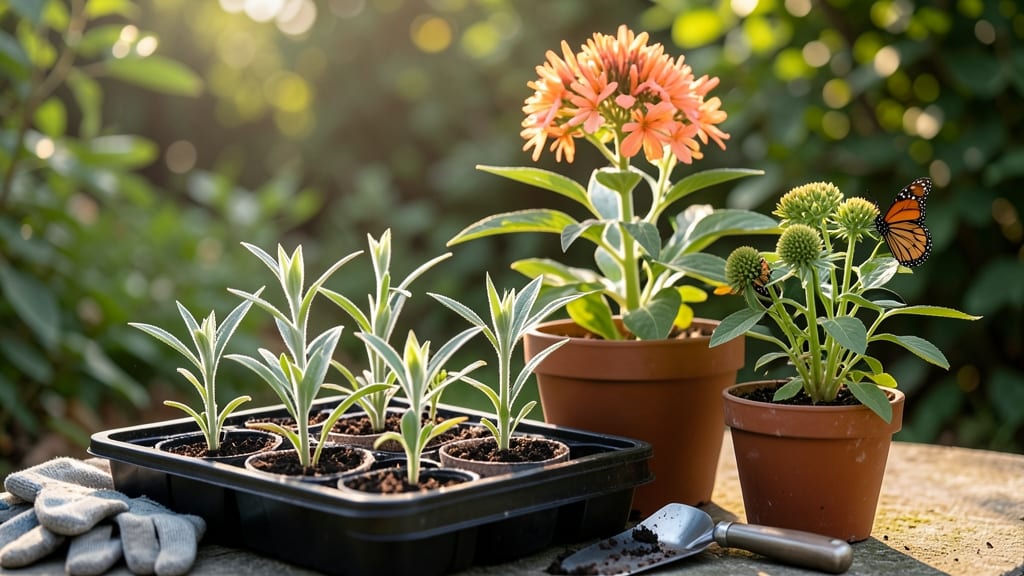
Planting milkweed in full sun transforms your garden into a monarch butterfly magnet. 🌞 I learned this the hard way—my first attempt in partial shade resulted in leggy, weak plants that barely supported caterpillars.
The right spot makes all the difference for both the plant and the butterflies that depend on it.
Milkweed thrives in 6+ hours of direct sunlight daily, with well-drained soil that mimics its native prairie habitats. Most varieties do best in USDA zones 3-10, though tropical milkweeds extend the range south. The key is avoiding soggy soil—root rot is the silent killer of these hardy perennials.
You’ll see the payoff when monarchs arrive in spring, laying eggs exclusively on milkweed leaves. The plants grow 3-5 feet tall with broad, fuzzy leaves that caterpillars devour, and the bright orange blooms add a pop of color that lasts from summer into fall.
For best results, plant in open areas where butterflies can spot the foliage easily. Pair with native grasses or wildflowers to create a full ecosystem—just avoid overcrowding, as milkweed spreads aggressively once established. Now let’s find the perfect spot in your garden!
📚 In This Guide
- What you need
- Instructions
- Tips and common mistakes
- Wrapping up and next steps
What you need
- ● Milkweed seeds or seedlings: Choose native species (e.g., Asclepias tuberosa for sunny spots, Asclepias syriaca for wetter areas).
- ● Quantity: 10–20 seeds per square foot (or 1–2 seedlings per 12-inch spacing).
- ● Well-draining soil: Mix in compost (1 part compost to 2 parts native soil) for better growth.
- ● Sunlight access: A location with 6+ hours of direct sunlight daily (milkweed is not shade-tolerant!).
- ● Watering can or hose: A gentle spray nozzle helps avoid disturbing seedlings.
- ○ Gloves (optional but recommended): Milkweed sap can irritate skin—wear gloves when handling.
- ● Mulch: Wood chips or straw (1–2 inches thick) to retain moisture and suppress weeds.
- ● Fertilizer: A balanced, slow-release fertilizer (10-10-10) to boost early growth (use sparingly—milkweed prefers lean soil!).
- ● Pest deterrents: Neem oil or insecticidal soap if aphids or beetles appear.
- ● Stakes or cages: For taller varieties (like Asclepias syriaca) to support stems in windy areas.
Step-by-Step guide for planting milkweed to attract monarch butterflies
Monarch butterflies rely almost entirely on milkweed—planting it right ensures thriving populations and stunning pollinator activity.
🌱 Step 1: Choose the Perfect Sun-Drenched Location
Milkweed thrives in full sun, needing at least 6-8 hours of direct sunlight daily. I always scout the sunniest spot in my yard—usually a south or southwest-facing area—because monarchs avoid shaded patches where milkweed grows weak and leggy. Avoid low-lying areas where water pools, as milkweed hates soggy roots.
Test your spot by observing how sunlight moves across the ground throughout the day. If a nearby plant already grows lushly, that’s your sign the location is ideal. I mark the area with a flag to avoid accidentally mowing or disturbing it before planting.
☀️ Step 2: Prepare the Soil for Optimal Growth
Milkweed tolerates poor soil but grows best in well-draining, slightly rocky or sandy soil with a pH between 6.0 and 7.5. I never amend the soil with compost—too much organic matter makes the roots too soft and prone to rot. Instead, I loosen the top 6 inches of soil with a garden fork to break up compaction.
For clay-heavy soil, I mix in 1 part coarse sand to improve drainage. If your soil is sandy, a light sprinkle of native topsoil helps retain moisture. Test drainage by digging a 12-inch hole, filling it with water, and checking if it drains within 30 minutes. If not, raise the planting area with a mound or container.
🌿 Step 3: Plant Seeds or Transplants at the Right Time
For fastest results, plant nursery-grown transplants in early spring (after the last frost) or late summer to establish roots before winter. If starting from seed, sow them outdoors in late spring when soil temperatures reach at least 60°F—cold soil delays germination for weeks. I plant seeds ¼ inch deep, spacing them 12-18 inches apart to allow room for mature plants.
Water deeply after planting to settle the soil around roots, then let the top 2 inches dry out before watering again. Overwatering now causes damping-off, a fungal disease that kills young seedlings overnight. I use a soaker hose to deliver moisture directly to the roots without disturbing the soil.
✂️ Step 4: Maintain and Protect Your Milkweed Patch
Once established, milkweed is drought-tolerant but benefits from deep watering every 1-2 weeks during dry spells. I avoid overhead watering to prevent fungal diseases like powdery mildew, which thrives in damp foliage. Instead, water at the base in the early morning so leaves dry quickly.
Leave seed pods on the plant through winter—they provide food for migrating monarchs and overwintering caterpillars. If deer or rabbits browse your garden, I install deer fencing (at least 6 feet tall) or use repellent sprays during peak feeding seasons. A thriving milkweed patch becomes a magnet for monarchs, so protecting it ensures generations of pollinators.
🪴 Step 5: Expand and Connect Plantings for Maximum Impact
For the biggest butterfly impact, plant milkweed in clusters of 4-5 plants rather than scattered singles. Monarchs locate patches by scent and visual cues, so grouping them creates a highway of nectar and host plants. I space clusters 10-15 feet apart to encourage natural spread through seed dispersal.
Pair milkweed with native pollinator-friendly flowers like coneflowers, black-eyed Susans, and asters to provide nectar for adult butterflies. This creates a year-round food source, from early spring blooms to late fall flowers. Track your plantings on a garden map to monitor monarch activity and adjust future plantings for even greater success.
Tips & tricks for perfect monarch butterfly habitat planting
Creating the ideal monarch haven starts with smart planting choices that transform your yard into a pollinator paradise.
Sunlight Strategy: The 6-8 hours of direct sunlight requirement in Step 1 is non-negotiable—monarchs won't visit weak, shaded plants. I recommend installing a solar-powered garden light near your planting area to track sunlight patterns throughout the day. If your yard has partial shade, consider using reflective surfaces like light-colored gravel or a white fence to bounce extra sunlight onto your milkweed during critical morning hours. This subtle boost can make the difference between thriving plants and struggling ones.
Soil Science: When testing drainage in Step 2, I've found that the 30-minute drainage test reveals more than just water retention—it tells you about your soil's overall health. If water drains too quickly (under 10 minutes), your soil lacks organic matter and may need a light application of native topsoil. Conversely, if it takes over an hour, you're dealing with heavy clay that needs that 1 part coarse sand amendment. I keep a soil test kit handy to check pH annually—milkweed's ideal 6.0-7.5 range is surprisingly narrow for such a hardy plant.
Timing is Everything: The soil temperature requirement of at least 60°F in Step 3 might seem arbitrary, but it's based on monarch caterpillars' need for warm environments to thrive. I use a soil thermometer to monitor temperatures before planting seeds—cold soil delays germination by weeks. For late summer plantings, I've found that transplanting after Labor Day gives roots time to establish before winter, while still allowing monarchs to find fresh leaves for their caterpillars. This timing creates a perfect overlap between plant growth and butterfly lifecycle needs.
Protection Plan: The 6-foot tall deer fence mentioned in Step 4 might seem excessive, but I've learned this the hard way—deer can reach higher than you think when desperate for food. I install the fence before planting and leave it up year-round, even after milkweed matures. For rabbits, I've had success with a commercial repellent spray applied every 2 weeks during growing season. The key is consistency: monarchs will only return to a reliably protected patch where their caterpillars can safely feed.
Pro Tips for Where To Plant Milk Weed
- Creating the ideal monarch haven starts with smart planting choices that transform your yard into a pollinator paradise.
- Sunlight Strategy: The 6-8 hours of direct sunlight requirement in Step 1 is non-negotiable—monarchs won't visit weak...
- Soil Science: When testing drainage in Step 2, I've found that the 30-minute drainage test reveals more than just wat...
Frequently asked questions
What’s the best time of year to plant milkweed?
Plant milkweed in early spring (as soon as the soil is workable) or late summer (6–8 weeks before your first frost). This gives roots time to establish before winter. If starting from seeds, sow them outdoors in spring—they germinate best in warm soil (60–70°F).
Will milkweed grow in partial shade?
While milkweed tolerates partial shade (4–6 hours of sun daily), it thrives in full sun (6+ hours) for best growth and monarch butterfly attraction. In shady spots, plants may grow leggy or produce fewer flowers. If shade is unavoidable, choose swamp milkweed (Asclepias incarnata), which adapts better.
Can I plant milkweed in a pot or container?
Yes! Milkweed grows well in large containers (10+ gallons) with drainage holes. Use a well-draining potting mix and place the pot in full sun. Just remember: Container-grown milkweed may need more frequent watering and could outgrow its space over time. Dwarf varieties like butterfly weed (Asclepias tuberosa) work best for small spaces.
Why aren’t monarchs visiting my milkweed?
Monarchs may skip your plants if:
- Timing is off: Plant in early spring so caterpillars hatch when adults emerge (late spring/early summer).
- Flowers aren’t blooming: Milkweed needs full sun and well-draining soil. Deadhead spent blooms to encourage reblooming.
- Pests are present: Aphids or spider mites can deter butterflies. Spray with water or use neem oil if needed.
- Location matters: Plant near nectar sources (like coneflowers or asters) and avoid pesticides.
What if I don’t want milkweed in my garden?
If you’re not ready for milkweed’s sprawling habit, try these low-maintenance alternatives that still support monarchs:
- Joe Pye weed (Eutrochium) – Tall, pollinator-friendly blooms.
- Goldenrod (Solidago) – Late-season nectar source.
- Swamp milkweed (Asclepias incarnata) – More compact than common milkweed.
- Dwarf butterfly bush (Buddleia davidii) – Attracts butterflies but stays contained.
For a no-mess option, plant native milkweed seeds in a wildflower meadow or community garden instead.
Wrapping up and next steps
Planting milkweed isn’t just about growing a pretty flower—it’s a lifeline for monarch butterflies and a rewarding way to support pollinators! 🌿 Whether you’re tucking it into a sunny garden bed, a pollinator-friendly meadow, or even a container on your patio, the key is location, location, location.
Give it full sun, well-draining soil, and space to thrive, and you’ll be part of a bigger mission to help these iconic butterflies bounce back. Ready to make a difference? Start small—even a single milkweed plant can attract butterflies and inspire others to join the cause.
Grab your seeds, find that sunny spot, and let nature do the rest! 🦋