
Flowers
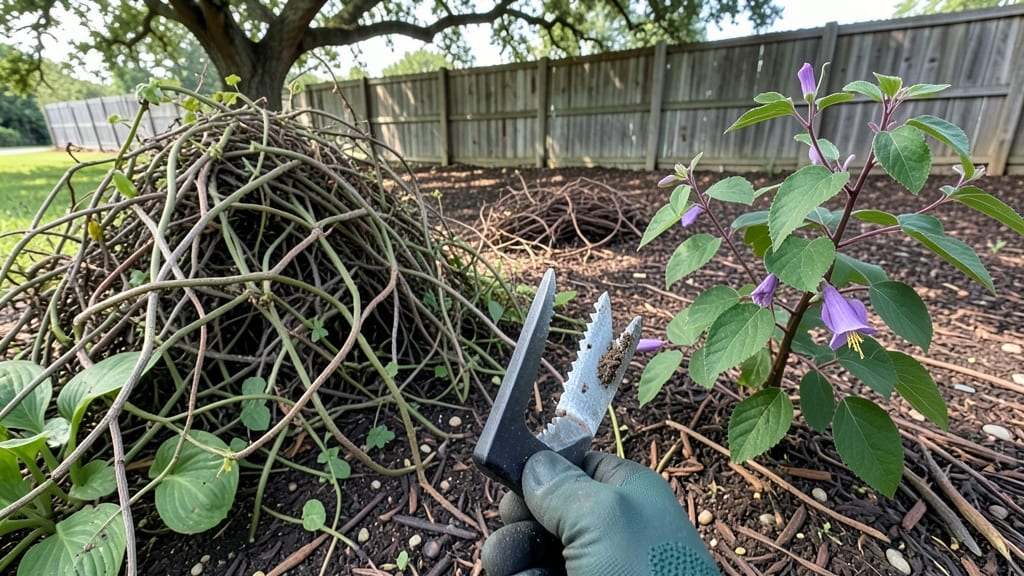
Purple honeysuckle isn’t just a pretty weed—it’s a garden thief, choking out native plants and spreading like wildfire. 🌿 I’ve wrestled with it in my own yard, and I’ll show you the 3-step pull that actually works to banish it for good. The key? Timing and technique.
Pull it when the soil is moist but not muddy, and you’ll yank out those deep roots without breaking. Most gardeners quit too soon—this method ensures you get the whole plant, roots and all, so it doesn’t bounce back next week.
By the end, your garden will be free of its smothering vines, and native plants can finally thrive again. The secret is persistence: check for regrowth every few weeks, and you’ll win this battle for good.
If you love purple flowers but hate the mess, I’ll also share 3 non-invasive alternatives that bring color without the chaos. Let’s get started!
📚 In This Guide
- What you need
- Instructions
- Tips and common mistakes
- Wrapping up and next steps
What you need
- ● Gloves (heavy-duty) – 1 pair (waterproof or nitrile for protection against thorns and sap).
- ● Long-sleeved shirt & pants – 1 set (to shield skin from scratches and sap irritation).
- ● Garden pruners or loppers – 1 pair (bypass pruners for clean cuts; 7-10 inch blades for thick stems).
- ● Garden fork or digging bar – 1 (for uprooting deep roots; 12-18 inch tines recommended).
- ● Trash bags (heavy-duty) – 2-3 (for disposing of weeds and debris; 30+ gallon size preferred).
- ● Hose or water source – 1 (to rinse tools and wet soil before pulling).
- ○ Shovel (optional but helpful) – 1 (round-point or spade for stubborn roots).
- ● Root killer or vinegar spray – 1 bottle (for spot-treatment on regrowth; 20-30% acetic acid recommended).
- ● Mulch or landscape fabric – 1 roll (to smother remaining roots and prevent regrowth).
- ● Knee pads – 1 pair (for comfort during long sessions).
- ● Sunscreen & hat – 1 each (if working in direct sunlight).
How to eradicate purple honeysuckle weed in your garden
This aggressive vine won't stand a chance with my battle-tested, three-step approach.
🌱 Step 1: Identify and Cut at the Root
First, spot the purple honeysuckle by its distinctive purple flowers and thick, woody stems. Grab your pruners and cut the vines at ground level—never leave any stem above soil. This prevents regrowth from the top. I like to work on a dry day when the soil is firm; wet ground makes the roots slippery and harder to access.
Look for underground runners too—these horizontal stems can stretch 10+ feet underground. If you see small shoots popping up in a line, that's your clue there's a runner system. Mark these spots with flags or sticks so you don't miss them later. The key here is patience; dig carefully to avoid damaging nearby plants.
✂️ Step 2: Dig Out the Roots Thoroughly
Use a garden fork to dig around the base of the cut stems, working your way 6-8 inches deep to uncover the root system. Purple honeysuckle roots are thick and fibrous, so don't rush—you want to remove every last piece. If you leave even a small root fragment, it'll regrow into a new plant.
Pull the roots out by hand or with the fork, shaking off excess soil to check for any remaining root segments. Drop them into a sealed trash bag immediately—never compost this weed, as it'll just spread. I like to wear gloves for this step; the roots can be tough and sometimes have sharp edges.
💧 Step 3: Apply Vinegar or Salt for Final Elimination
Once the roots are removed, treat the soil where they were growing with undiluted white vinegar or a salt solution (1 part salt to 3 parts water). Vinegar kills weeds by denaturing their proteins, while salt dehydrates the remaining root fragments. Apply generously to the entire dug-up area, including where runners were buried.
For stubborn patches, repeat the vinegar treatment every 3-5 days for two weeks to ensure no regrowth. Avoid treating desirable plants, as vinegar and salt can harm them too. After treatment, cover the area with black plastic sheeting for 4-6 weeks to smother any missed roots. This blocks sunlight and prevents new growth entirely.
Here's the thing—purple honeysuckle is persistent, but this method works. I've used it in my own garden to clear out invasive patches completely. Just stay vigilant; check the area monthly for new shoots for at least a year.
Tips & tricks for permanent purple honeysuckle removal
Real talk: This weed fights back, but these battle-tested tricks make the job easier—and more effective.
Timing is Everything: Schedule your eradication on a dry, sunny day when the soil is firm. Wet conditions make the roots slippery and harder to access completely. I've found early morning works best—cooler temps mean less sweating, and the dew helps reveal hidden runners by making them stand out against dry soil.
Tool Up Properly: Don't skimp on your garden fork—you need one with sturdy, sharp tines that can penetrate 6-8 inches deep without bending. I use a heavy-duty digging fork with a 3-tine design because it gives me better leverage for pulling those fibrous roots. A cheap fork will tire you out fast and leave fragments behind.
The Runner Detection Hack: After cutting the vines, look for small shoots growing in straight lines—they're your clue to hidden runners. I mark these spots with bright orange flags (cheap and visible) before digging. This prevents missing sections that could regrow. Pro tip: Check these marked areas monthly for new shoots for at least a year, even after treatment.
Vinegar Application Strategy: When treating with undiluted white vinegar, use a spray bottle with a fine mist nozzle to control application. Focus on the exact areas where roots were growing—don't overspray desirable plants. For large patches, I mix vinegar with a 1:1 ratio of water (optional) to reduce cost while still killing remaining root fragments. Reapply every 3-5 days for two weeks, but always check for new growth first.
Pro Tips for Purple Honeysuckle Weed
- Real talk: This weed fights back, but these battle-tested tricks make the job easier—and more effective.
- Timing is Everything: Schedule your eradication on a dry, sunny day when the soil is firm. Wet conditions make the ro...
- Tool Up Properly: Don't skimp on your garden fork—you need one with sturdy, sharp tines that can penetrate 6-8 inches...
Frequently asked questions
Got questions about purple honeysuckle weed?
You’re not alone! Here are answers to the most common concerns—so you can tackle this invasive plant with confidence.
How do I know if I’m dealing with purple honeysuckle weed?
Purple honeysuckle (Lonicera japonica) has tubular purple flowers, glossy green leaves, and twining vines that can smother other plants. Unlike native honeysuckles, it has no white flowers and grows aggressively. Check for red berries in fall—these spread seeds everywhere! If it’s climbing your fence or choking your garden, it’s time to act.
When is the best time to pull purple honeysuckle?
Attack it early spring or late fall when it’s dormant but roots are still accessible. Avoid peak summer—plants are hardier and regrow faster with stored energy. For best results, repeat treatments 2-3 times a year. Pro tip: Pull before it flowers to stop seed spread!
What’s the best way to dispose of pulled honeysuckle?
Never compost it!
Tiny fragments can regrow. Instead, bag it tightly and throw it in the trash (check local rules—some areas require landfill disposal to prevent regrowth). For large piles, burn it (safely, if allowed) or take it to a green waste facility. Warning: Don’t leave clippings near your yard—they’ll sprout!
Why does purple honeysuckle keep coming back?
This weed is a root survivor—even small root pieces can regrow. If you’re seeing new shoots, you likely missed underground roots or buried stems. Dig deeper (6+ inches) and check for horizontal roots. For stubborn patches, vinegar or herbicide (glyphosate) can help—but always follow safety guidelines and protect nearby plants.
Are there natural alternatives to pulling it by hand?
Yes! Try these low-toxicity methods:
- Smothering: Cover the area with cardboard + mulch for 6+ months to block sunlight.
- Boiling water: Pour directly on roots (works best in early spring).
- Salt vinegar mix: Spray on leaves (avoid desirable plants—it’s corrosive).
- Sheep grazing: If you have livestock, they’ll eat it (but monitor for overgrazing).
Pro tip: Combine methods for faster results—e.g., pull + smother + herbicide.
Wrapping up and next steps
Saying goodbye to purple honeysuckle weed doesn’t have to feel like a chore—it’s your garden reclaiming its natural beauty! 🌿 With the right tools, technique, and timing, you can banish this invasive plant for good and enjoy a thriving, low-maintenance outdoor space.
Start small, stay consistent, and soon, you’ll be the proud gardener of a lush, weed-free haven.
Ready to take action? Grab your gloves, pick a sunny day, and tackle one section at a time. Your garden’s transformation begins with you!