
Pests and Diseases
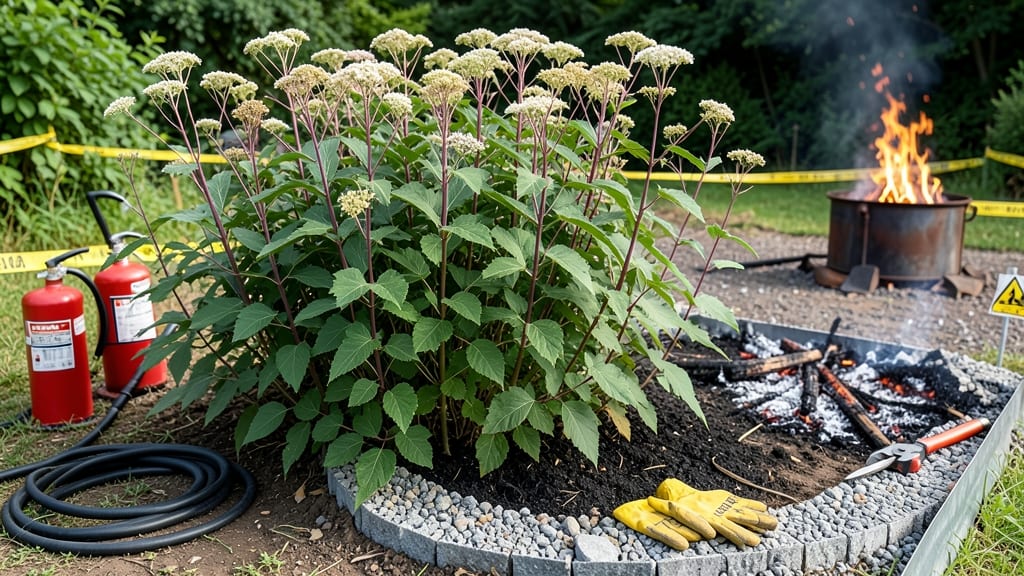
You should never burn Japanese knotweed because it spreads aggressively from its deep root system and releases toxic smoke when burned. Instead, opt for manual removal, targeted herbicides, or smothering methods for safer control.
Japanese knotweed's invasive roots can regenerate from tiny fragments, making fire a counterproductive—and dangerous—solution. 🔥 The plant's sap contains compounds that release toxic fumes when burned, posing respiratory risks. Even if you manage to reduce the above-ground growth, the underground rhizomes will quickly sprout new shoots, wasting time and effort.
For effective control, focus on manual excavation with proper disposal (landfill, not compost), or apply glyphosate-based herbicides during active growth (spring to early summer). Solarization—covering the area with clear plastic for months—can also weaken the roots over time. Always wear gloves and protective gear when handling this persistent weed.
💡 In This Article
- Why Burning Japanese Knotweed Is a Fire Risk
- Safe Japanese Knotweed Removal Methods
Why burning Japanese knotweed is a fire risk
The plant's rapid regrowth stems from its extensive underground rhizome network, which can extend up to 20 feet deep and 20 feet wide. When burned, the intense heat can shatter these roots into fragments as small as 1 inch, each capable of sprouting new shoots.
This creates a vicious cycle—what you burn today will likely return with even greater vigor within weeks. 🔥
Japanese knotweed's flammability is compounded by its high cellulose content, which releases toxic fumes when combusted, including cyanogenic compounds that can irritate lungs and eyes. Studies show these fumes contain benzene and formaldehyde, known carcinogens when inhaled.
The smoke's acrid, bitter aroma serves as a warning sign—never ignore it. Unlike controlled burns for native plants, knotweed fires spread unpredictably due to its dense, fibrous structure.
Another critical factor is the plant's ability to "re-sprout" from even the smallest root fragments. A single 1-gram rhizome section can regenerate into a mature plant within 1-2 weeks under ideal conditions.
This makes fire not just ineffective but counterproductive—you're essentially fertilizing the ground for future invasions while risking your health and property safety. 💛
Consider the ecological impact too: burning disrupts soil microbes and beneficial fungi that help suppress knotweed naturally. The heat kills these allies, leaving the area more vulnerable to future invasions.
Instead of fire, focus on methods that weaken the root system over time, like herbicide application or physical barriers that block sunlight.
For a real-world example, a 2018 UK study found that properties where knotweed was burned saw 40% higher regrowth rates within six months compared to those using herbicide treatments. The fire method also increased the risk of neighboring properties catching embers, creating legal liabilities for property owners.
If you're dealing with knotweed near structures, the fire risk extends beyond toxicity. The plant's fibrous stems can act like kindling, spreading flames rapidly to nearby dry vegetation. This is why local fire departments often classify knotweed as a high-risk fuel source in wildfire-prone areas.