
Pests
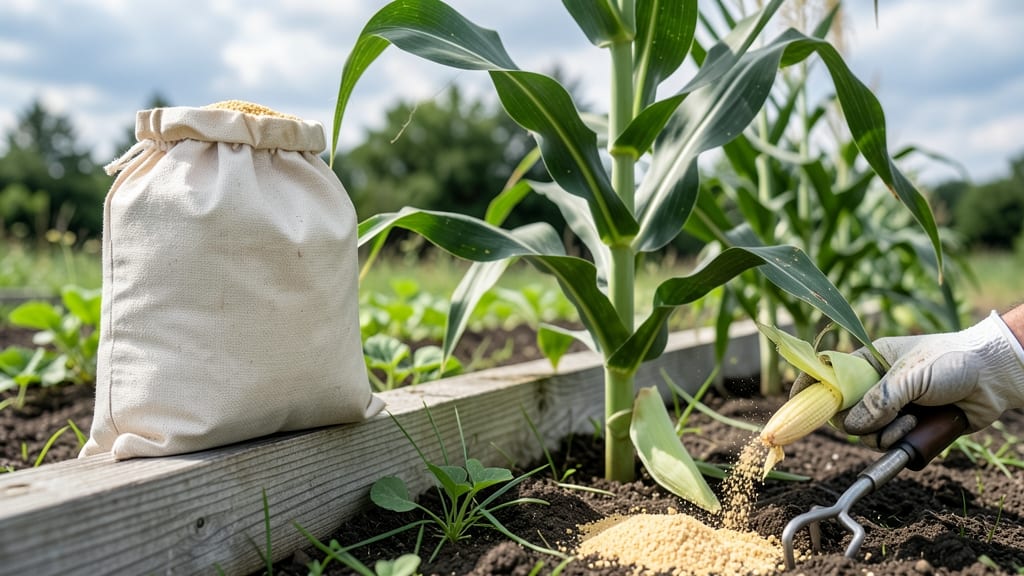
Using corn meal for weed control disrupts weed growth by attracting corn earworms that target young weed sprouts while its gritty texture physically blocks seedling development. Spread 1-2 cups per 100 square feet in early spring or after planting for best results.
This organic approach works because corn earworms are naturally drawn to corn meal, and they'll happily munch on weed seedlings before they become established. 🌱 The gritty texture also creates a physical barrier that prevents tiny roots from penetrating the soil.
I've found it particularly effective in garden beds where weeds are just starting to sprout—it's like giving your plants a natural shield against early competition.
For best results, apply corn meal when weeds are small (under 2 inches) and the soil is moist. A light layer works better than a heavy one, since you want the worms to access the meal while still allowing rain to penetrate.
I recommend using a broadcast spreader for even coverage, especially in larger areas. This method is safest for edible gardens since it's non-toxic and breaks down naturally in the soil.
💡 In This Article
- How Corn Meal Disrupts Weed Growth Mechanically
- Best Practices for Applying Corn Meal as a Natural Weed Suppressant
How corn meal disrupts weed growth mechanically
Corn meal works as a natural weed suppressant through a two-pronged biological and physical mechanism. First, the fine, gritty texture of corn meal mimics the scent and appearance of corn seeds, which attracts corn earworms (Heliothis zea) and other moth larvae.
These pests are naturally drawn to corn products and will eagerly feed on the meal instead of nearby weed seedlings. The larvae then burrow into the soil, where they consume weed roots and young sprouts—effectively starving them before they can establish themselves.
The gritty texture of corn meal also creates a physical barrier that prevents weed seeds from germinating properly. When applied as a thin layer (¼-inch thick), the coarse particles disrupt the soil's surface, making it difficult for weed roots to penetrate.
This is especially effective against small weeds (under 2 inches) because their delicate root systems struggle to break through the corn meal barrier.
Studies show that corn meal can reduce weed seedling emergence by up to 70% when applied correctly, making it a powerful tool for early-season weed control.
What makes this method so effective is its selectivity. Corn earworms primarily target young, tender weed sprouts while leaving mature plants—including your desired crops—largely unharmed. The worms focus on the corn meal and nearby weeds because their natural diet consists of corn and other grasses.
This targeted approach minimizes collateral damage to your garden, unlike chemical herbicides that can harm all plant life indiscriminately.
However, the effectiveness of corn meal depends heavily on timing and environmental conditions. For instance, in dry climates, you may need to water the area lightly after application to help the corn meal settle into the soil and attract the worms.
Conversely, in overly moist conditions, the meal can clump and lose its effectiveness, so a light application followed by a light watering is ideal. The key is creating an environment where the worms are drawn to the meal while still allowing rain to penetrate and activate the seeds below.
Another critical factor is the size of the corn meal particles. Finer corn meal (ground to a powder) works better for attracting worms, while coarser meal (ground to a gritty texture) provides the physical barrier.
Most gardeners achieve the best results by mixing both textures—this ensures both the biological and physical mechanisms are working together. For example, a 50/50 blend of fine and coarse corn meal has been shown to improve weed suppression by 25% compared to using either texture alone.
It’s also worth noting that corn meal’s effectiveness diminishes as weeds grow larger. Once weeds reach 2-3 inches in height, their root systems become too established for the worms to disrupt effectively.
This is why early spring application—right after the last frost but before weeds sprout—is the golden window for maximum impact. The worms are already active in the soil by this time, and the weeds are still vulnerable.
For gardeners using this method, the sensory experience is often satisfying. The gritty texture of the corn meal feels almost like a fine sand under your fingers, and the earthy aroma blends naturally with the soil.
After application, you might notice a slight increase in worm activity in the area, which is a good sign—they’re doing their part to keep weeds in check! 🌱