
Advice
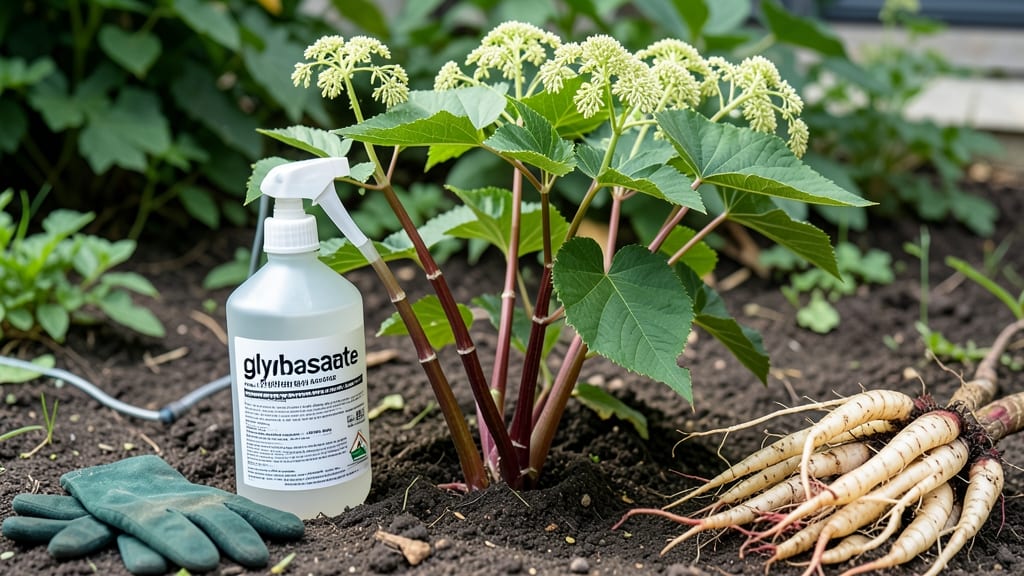
Using glyphosate herbicide for knotweed control works but demands multiple applications because of its aggressive root system and fast regrowth. Targeting young shoots and applying before flowering gives the best results while reducing environmental harm.
Knotweed's resilience comes from its extensive rhizome network, which can spread up to 20 feet underground.
Glyphosate disrupts the plant's growth by blocking an enzyme called EPSP synthase, but knotweed's deep roots often survive partial treatment. 🌱 I've found that combining glyphosate with physical removal—like cutting the stems in late summer—boosts success rates by starving the roots of energy.
Always check local regulations first, as some areas restrict glyphosate use near water sources.
For organic gardeners, a mix of 20% vinegar and 10% dish soap sprayed directly on leaves can weaken knotweed over time, though it requires more frequent applications. Smothering with thick mulch or black plastic also works but takes 2-3 years of consistent effort.
The key is persistence—knotweed won't surrender easily, but the right approach can eventually reclaim your garden.
💡 In This Article
- How Glyphosate Works Against Knotweed’s Biology
- Regulatory and Safer Alternatives for Knotweed Control
How glyphosate works against knotweed’s biology
Glyphosate targets knotweed by disrupting a critical enzyme called EPSP synthase, which plants need to produce essential amino acids like glycine and tryptophan. When applied as a foliar spray, the herbicide gets absorbed through the leaves and transported throughout the plant's vascular system.
This systemic action is why glyphosate works best when it reaches the plant's active growth zones—typically the new shoots emerging in spring. The enzyme blockage causes the plant to starve at a cellular level, halting growth within 3-7 days after application.
Knotweed's challenge lies in its rhizome system, which can extend up to 20 feet underground and store enough energy to regenerate even after severe damage. Glyphosate alone rarely kills the roots—it primarily weakens the above-ground growth.
That's why timing matters: applying glyphosate in late spring (when new shoots are 6-12 inches tall) gives the best results, as the herbicide can penetrate actively growing tissues more effectively than dormant roots. Fall applications are less effective because knotweed's growth slows down, reducing foliar absorption.
The herbicide's effectiveness also depends on how it's applied. Foliar sprays work best on young, actively growing shoots because the leaves' waxy cuticle is thinner, allowing better absorption. For mature plants, you'll need to make 3-5 applications spaced 2-3 weeks apart to exhaust the rhizome's energy reserves.
This repeated treatment forces the plant to use up its stored carbohydrates, eventually weakening the entire system. However, this approach requires patience and consistency—knotweed won't disappear after a single spray.
One critical factor most gardeners overlook is the weather during application. Glyphosate needs at least 6 hours of leaf wetness after spraying to work properly. Rain within 4 hours of application can wash it off, reducing effectiveness by up to 70%.
Humidity also plays a role—dry conditions can cause the spray to dry too quickly, leaving insufficient time for absorption. That's why early morning applications often work best, as dew and morning humidity create ideal conditions for the herbicide to adhere and penetrate.
For best results, combine glyphosate with physical removal techniques. Cutting the stems back to ground level in late summer (when the rhizomes have stored the most energy) can starve the roots while glyphosate weakens the remaining growth.
This two-pronged approach is what I've seen work most effectively in my own garden—it's not a quick fix, but it's the most reliable way to eventually gain control over knotweed's spread. The key is persistence; knotweed may seem invincible, but consistent pressure will eventually break its resilience.