
Watering
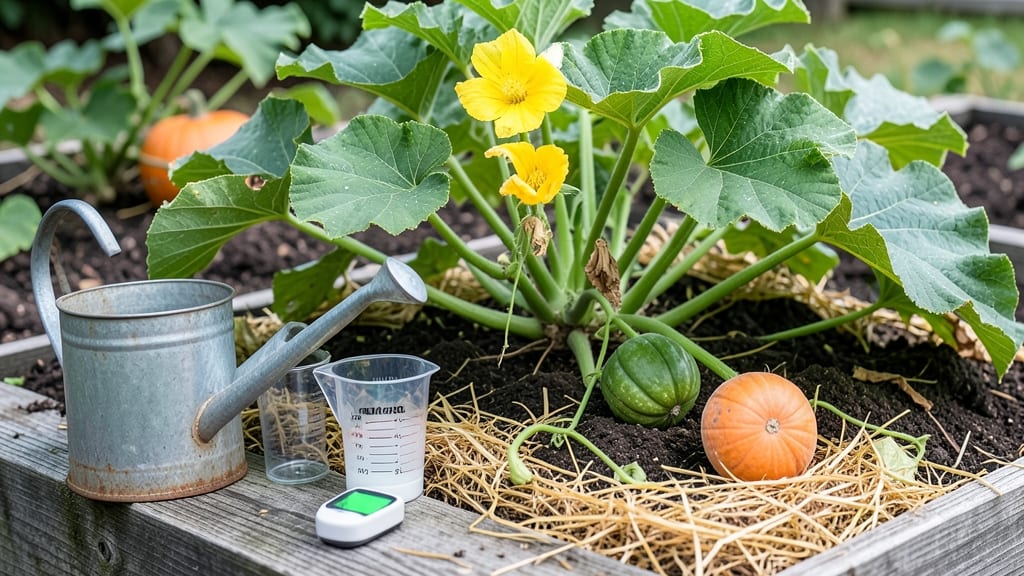
Pumpkins need about 1-2 inches of water weekly to grow strong vines and plump fruit — but that’s just the starting point. Too little water stunts growth, while too much invites rot, and both can ruin your harvest before it even begins.
Picture this: you’ve planted your 🎃 seeds in warm soil, and everything seems perfect—until the vines start wilting by noon or the blossoms drop without setting fruit. The truth is, pumpkins are thirsty plants, but they’re also sensitive to soggy roots.
In this guide, I’ll break down exactly how much water pumpkins need at each stage—from seedlings to flowering to fruiting—plus how to adjust for heatwaves, rain, and your local climate. You’ll also learn the tell-tale signs of over- or under-watering so you can keep your plants thriving without guesswork.
By the end, you’ll have a foolproof watering routine that ensures your pumpkins grow big, healthy, and ready for harvest—no more wasted effort or shriveled vines. Let’s get started.
Weekly watering requirements for pumpkins: 1-2 inches explained
Pumpkins thrive when they receive consistent moisture, but measuring exactly 1-2 inches of water weekly can feel tricky. This range ensures your vines stay hydrated without drowning the roots, which is critical for both growth and fruit development.
The key lies in understanding how much water your soil can hold and when your plants actually need it.
For young seedlings, aim for 1 inch of water weekly—their shallow roots can't access deep moisture yet. As vines mature and spread, increase to 1.5-2 inches weekly, especially during hot summer months when evaporation speeds up.
Always water deeply to encourage roots to grow downward rather than staying shallow.
| Growth Stage | Weekly Water Need | Frequency | Signs of Stress |
|---|---|---|---|
| Seedlings (0-4 weeks) | 1 inch | Every 3-4 days | Wilted leaves, dry soil |
| Vine Establishment (4-8 weeks) | 1.25 inches | Every 4-5 days | Yellowing leaves, slow growth |
| Flowering (8-12 weeks) | 1.5-2 inches | Every 3-4 days | Dropped flowers, weak stems |
| Fruiting (12+ weeks) | 1.75-2 inches | Every 2-3 days | Soft fruit, cracked rind |
During the flowering stage, pumpkins become particularly sensitive to water fluctuations. Too little water causes flowers to drop before pollination, while too much can lead to blossom end rot in developing fruits.
This is when deep watering in the morning becomes essential—it gives roots time to absorb moisture before the heat of the day.
If you're growing pumpkins in containers or raised beds, they'll need water more frequently—sometimes daily during summer—because soil dries out faster. Always check the top 2 inches of soil; if it's dry, it's time to water.
For in-ground plants, stick your finger 3-4 inches deep—if it feels dry, your pumpkins need hydration.
Watch for yellowing leaves or wilted vines as signs of underwatering, but also beware of mushy stems or blackened roots, which indicate overwatering. Pumpkins hate soggy soil, so always ensure your garden has good drainage and consider adding organic mulch to retain moisture without suffocating roots.
In hot, dry climates, you may need to increase watering to 2 inches daily for short periods, while cooler, rainy seasons might require reducing to 1 inch every 5-7 days.
Always adjust based on weather forecasts—a week of 90°F+ temperatures will demand more water than a mild spring day.
For container-grown pumpkins, use a moisture meter or the "finger test" daily, as small pots dry out quickly. In-ground plants, however, can often go slightly longer between waterings if the soil retains moisture well.
The goal is to keep the soil consistently moist but not waterlogged throughout the growing season.
One of my favorite tricks is using a rain gauge near my pumpkin patch to track rainfall. If I've gotten 1.5 inches of rain in a week, I can skip my scheduled watering.
But if it's been dry, I'll supplement with drip irrigation set to deliver the exact amount needed—no guesswork involved.
Remember, water quality matters too. If your tap water is high in chlorine or salts, consider using rainwater or filtered water to prevent buildup that could stress your plants.
And always water at the base of the plant, avoiding leaves to reduce the risk of powdery mildew, a common pumpkin ailment.
By mastering this 1-2 inch weekly guideline and adjusting for your local climate, you'll give your pumpkins the perfect hydration balance for healthy vines, abundant flowers, and prize-winning fruits. 🎃💧
Best watering practices to maximize pumpkin growth and yield
Consistent watering is the backbone of a thriving pumpkin patch. Pumpkin vines need steady moisture to develop strong roots, vibrant flowers, and plump fruits. I’ve learned through trial and error that skipping watering days or overdoing it can both spell disaster for your harvest.
The key lies in deep, infrequent watering that keeps the soil evenly moist without drowning the roots.
When I first started growing pumpkins, I made the rookie mistake of watering lightly every day. This led to shallow roots and weak vines that couldn’t support the weight of my giant pumpkins.
Now, I focus on watering deeply 2-3 times per week, ensuring the moisture reaches at least 6 inches down into the soil. This encourages roots to grow deeper, making your pumpkins more resilient during dry spells.
🚨
⚠️ Watering Pumpkins Wrong Can Ruin Your Harvest
Overwatering causes root rot and fungal diseases like powdery mildew, while underwatering leads to blossom-end rot and stunted fruit growth. Pumpkins need 1-2 inches of water weekly, but adjust based on soil type (sandy drains faster) and weather (hotter days need more). Always water at soil level, not the leaves, to prevent disease.
To monitor soil moisture like a pro, I stick my finger 2 inches deep into the soil. If it feels dry, it’s time to water. For container-grown pumpkins, check daily since pots dry out faster.
I also use a moisture meter for accuracy, especially during summer heatwaves when evaporation speeds up. Mulching with straw or grass clippings helps retain moisture and keeps roots cool.
Timing matters just as much as amount. Watering in the early morning (before 10 AM) gives leaves time to dry, reducing the risk of fungal infections. Avoid evening watering, as damp foliage overnight invites pests like squash vine borers.
I’ve noticed that drip irrigation or soaker hoses work best—they deliver water directly to the roots without wetting the leaves, which is a game-changer for disease prevention.
Watch your pumpkins for stress signals. Wilting leaves or yellowing vines often mean underwatering, while mushy stems or leaf spots scream overwatering. During flowering and fruiting stages (6-8 weeks after planting), increase water slightly to support fruit development.
I reduce watering as harvest approaches to harden the rind and improve shelf life.
Pro tip: Group your pumpkins with other thirsty plants like cucumbers or melons to create a microclimate that retains humidity. And always use rainwater or filtered water if possible—chlorine in tap water can stress your plants.
With these practices, you’ll grow healthier vines, bigger pumpkins, and fewer headaches in the garden. 🎃