
Orchid Care
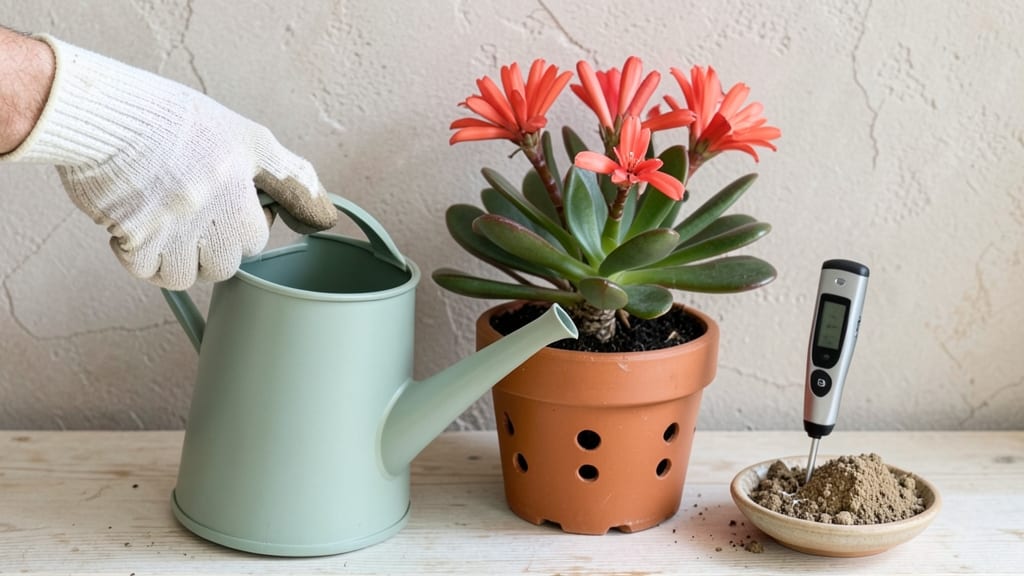
To water kalanchoe correctly means giving it just enough moisture to thrive without drowning its roots—because this succulent 🌸 stores water like a tiny, leafy battery.
Struggling to keep your Kalanchoe plant alive? Overwatering or underwatering can both kill this popular succulent—so how do you strike the perfect balance? The answer lies in understanding its natural drought tolerance and adjusting your routine to match the seasons.
Most gardeners make the mistake of watering on a strict schedule, but Kalanchoe needs a hands-off approach. Instead of guessing, I’ll show you how to check soil moisture, recognize the subtle signs of thirst (or overindulgence), and use techniques like bottom-watering to keep roots happy.
By the end, you’ll know exactly when to water, how much to give, and what to watch for—so your Kalanchoe stays plump, vibrant, and ready to bloom year after year.
Kalanchoe watering schedule: how often to water based on season
Mastering the Kalanchoe watering schedule is key to keeping this stunning succulent thriving. Unlike thirsty houseplants, Kalanchoes store water in their leaves, making them drought-tolerant but sensitive to overwatering. The secret lies in understanding seasonal water needs—your plant's rhythm changes dramatically from summer's heat to winter's rest.
Let's break down the science-backed approach to avoid both root rot and dehydration.
Kalanchoes thrive on a soak-and-dry cycle rather than frequent shallow watering. In spring and summer, when growth is active, they need more frequent hydration, while winter demands a near-dormant approach.
The two-finger test becomes your best friend: stick your finger an inch into the soil—if it's dry, it's time to water. This simple check prevents the most common killer of Kalanchoes: soggy roots from overzealous watering.
During spring and summer, your Kalanchoe enters its active growth phase. This is when you'll see those vibrant blooms and lush foliage develop. Watering every 7-14 days keeps the soil lightly moist but never soggy.
Pay attention to your plant's signals: if the leaves start to pucker slightly, it's thirsty. However, avoid the temptation to water daily—this succulent stores moisture efficiently. A good rule of thumb is to water when 50% of the soil has dried out between waterings during these active months.
As temperatures drop in fall and winter, your Kalanchoe shifts into dormancy. This is the most critical time to adjust your watering habits. Reduce frequency to every 3-4 weeks, allowing the top 3 inches of soil to dry completely.
Cold weather slows metabolism, so your plant needs far less water. Overwatering during dormancy is a fast track to root rot, which can kill your plant within weeks. Place your pot in a bright, cool location (around 55-65°F) to mimic natural winter conditions.
Container size plays a surprising role in your Kalanchoe watering schedule. Smaller pots dry out faster, requiring more frequent watering—every 7-10 days in summer—while larger containers can go 2-3 weeks between waterings. Always choose pots with drainage holes to prevent waterlogging.
If you notice water pooling at the bottom after watering, your plant is at risk. Pro tip: use a terracotta pot, which breathes better than plastic and helps regulate moisture levels naturally.
Light conditions directly impact water needs. A Kalanchoe in direct sunlight will dry out faster and need water more frequently than one in indirect light. If your plant is near a south-facing window, check soil moisture daily during summer heatwaves.
Conversely, if it's in a north-facing spot, you might extend the time between waterings by a few days. Remember, bright light increases transpiration, so your plant loses moisture through its leaves more quickly when exposed to sun.
One common mistake is assuming all Kalanchoes have identical water needs. Kalanchoe blossfeldiana, the most popular variety, has slightly different requirements than Kalanchoe daigremontiana (the "mother of thousands"). The flowering varieties generally need slightly more water during bloom season to support those energy-intensive flowers.
Always check the specific variety's care guide if you're unsure. When in doubt, it's safer to underwater slightly
Signs your Kalanchoe needs water (or too much water)
Your Kalanchoe plant speaks volumes through its leaves and stems—if you know what to listen for. As a succulent, it thrives on minimal water, but even these hardy plants can show distress when their needs aren’t met.
The key is recognizing the subtle visual cues that indicate whether your plant is thirsty or drowning.
Start by checking the leaf texture. Healthy Kalanchoe leaves feel firm and plump, almost rubbery to the touch. When underwatered, they’ll wrinkle slightly or pull inward, like a dried-up prune.
This is your plant’s way of conserving moisture—don’t ignore it! On the flip side, overwatered leaves become soft, mushy, and may even develop a translucent sheen.
Color changes are another red flag. Underwatered plants often develop a dull, grayish-green hue, while overwatered ones may turn yellow or brown at the edges. Pay close attention to the leaf edges—if they’re curling downward or crisping, your Kalanchoe needs water immediately. But if the entire leaf feels squishy, you’ve likely watered too much.
How to Water Kalanchoe: Pros & Cons
✅ DO This
- Water deeply but infrequently—soak until water drains from the bottom.
- Use well-draining soil and pots with drainage holes.
- Check soil moisture by sticking your finger 1 inch deep—water only if dry.
- Bottom-water to encourage roots to grow deeper.
❌ DON'T Do This
- Avoid watering on a schedule—always check soil first.
- Never let your Kalanchoe sit in standing water or soggy soil.
- Don’t ignore wrinkled leaves—they’re a cry for help!
- Skip watering if the soil is still damp from previous watering.
🌱 Pro Tip: Water in the morning to allow excess moisture to evaporate during the day.
The stem condition is another critical clue. A healthy Kalanchoe stem stands upright and feels sturdy. If it’s shriveling or collapsing, your plant is severely underwatered.
Conversely, a soft, mushy stem signals root rot from overwatering. Gently tug on the plant—if it pulls out easily, the roots may be rotting.
Don’t forget to inspect the base of the plant. Healthy roots should be white or pale, while rotting roots turn black or brown and smell foul. If you spot mold or fungus on the soil surface, your watering habits need an immediate overhaul.
Remember, Kalanchoe is drought-tolerant, so err on the side of underwatering rather than overdoing it.
Finally, observe the growth pattern. Underwatered plants may stop growing or drop buds, while overwatered ones develop weak, leggy stems and fewer blooms. If your Kalanchoe isn’t flowering as expected, reassess your watering routine. Balance is key—your plant will thank you with vibrant blooms and lush foliage.