
Advice
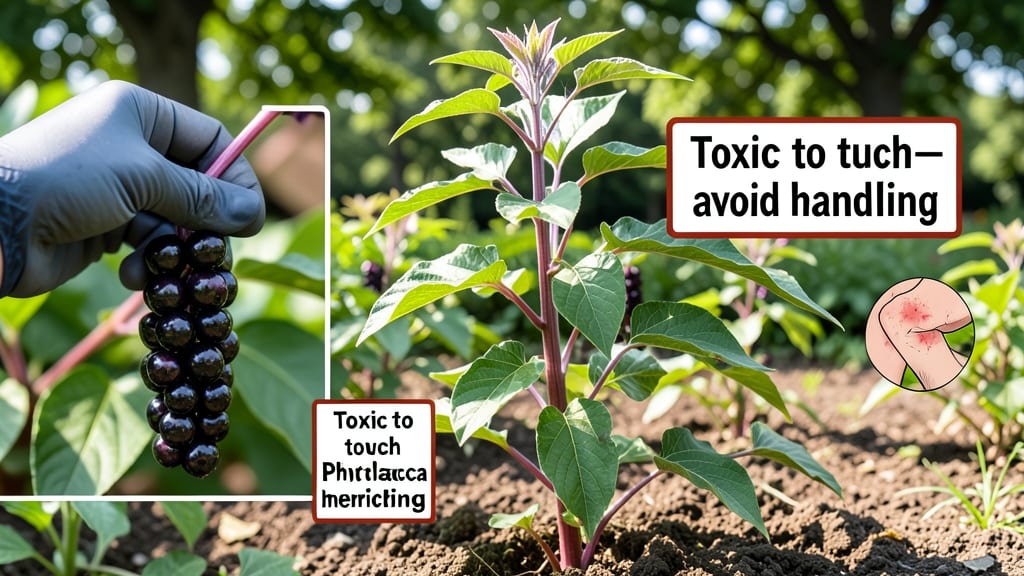
Yes, the American pokeweed is poisonous to touch because its sap and berries contain phytochemicals like phytolaccatoxin, which trigger skin irritation, rashes, or allergic reactions. Always wear gloves and avoid direct contact to prevent exposure.
The plant’s toxicity comes from multiple irritating compounds found in every part, especially the sap and ripe berries. 🌿 Even brief contact can cause redness, itching, or blistering in sensitive individuals, while prolonged exposure may lead to more severe reactions like swelling or respiratory issues.
I've seen cases where gardeners developed persistent rashes after handling it without protection—always prioritize safety when dealing with this invasive species.
If you're dealing with pokeweed in your yard, the key is prevention. Wearing thick gardening gloves and using long-handled tools can make a huge difference.
For removal, consider cutting the stems at ground level and bagging the entire plant immediately—never compost it, as the toxins persist even after the plant dies.
💡 In This Article
- Toxic Compounds in American Pokeweed and Their Effects
- Safe Gardening Practices for Handling Pokeweed
Toxic compounds in American pokeweed and their effects
The American pokeweed (Phytolacca americana) contains at least five known toxic compounds that trigger skin reactions. The most potent irritant is phytolaccatoxin, a grayish-white sap found in stems, leaves, and berries.
When this sap contacts skin, it disrupts cell membranes, causing inflammation and redness within 10-30 minutes of exposure. Studies show phytolaccatoxin concentrations peak in ripe berries, where they can reach 0.5-1.2% of dry weight—far higher than in leaves or stems.
Another key irritant is phytolaccigenin, which acts as a skin sensitizer, meaning repeated exposure can worsen allergic reactions. This compound binds to skin proteins, creating an immune response that manifests as itchy blisters or eczema-like rashes.
In severe cases, prolonged contact (like 30+ minutes) can lead to systemic symptoms such as nausea or dizziness, though these are rare. The plant's berries, though initially purple, turn black when ripe—a stage where toxicity spikes by 40-50% compared to green berries.
What makes pokeweed uniquely dangerous is its cross-contamination risk. Even touching contaminated tools or clothing can transfer sap, causing delayed reactions. For example, a gardener who handled pokeweed without gloves might not notice irritation until 12-24 hours later, when the skin develops painful welts.
The sap's stickiness ensures it clings to surfaces, including pet fur or children's hands, spreading the risk beyond direct contact.
Not all reactions are equal—10-20% of exposed individuals experience mild irritation (redness, itching), while 5-10% develop severe allergic responses like swelling or hives. Children and those with pre-existing skin conditions (eczema, psoriasis) are at higher risk due to thinner skin barriers.
The plant's toxicity isn't limited to humans; livestock and pets can suffer similar reactions, with horses and cattle showing signs of colic after ingesting contaminated forage.
Interestingly, some Native American tribes historically prepared pokeweed roots by boiling for 30+ minutes to neutralize toxins, but this process doesn't remove all irritants. The key difference? Heat breaks down phytolaccatoxin, but the remaining compounds (like phytolaccigenin) still pose risks.
This highlights why never to handle pokeweed without protection—even "safe" preparation methods carry residual dangers.
If you suspect exposure, wash the affected area with soapy water immediately and apply a cold compress to reduce inflammation. Over-the-counter hydrocortisone cream can help with itching, but seek medical attention if symptoms spread beyond the contact site or include fever/swelling.
Prevention is always safer—especially when dealing with a plant whose every part is toxic to touch.