
Companion Plants
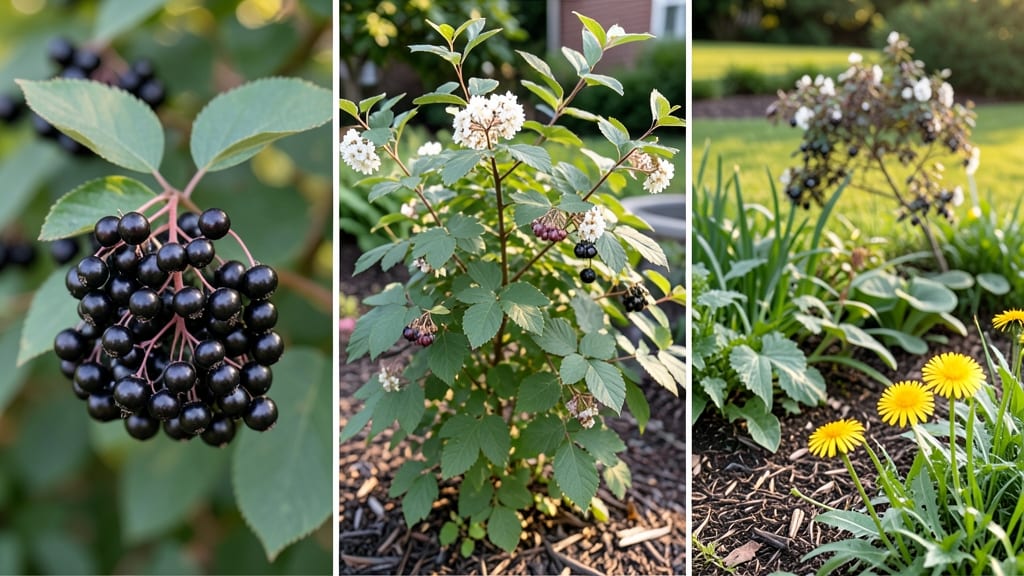
Common elderberry isn't a weed—it's a beneficial perennial shrub with medicinal and ornamental value, though its rapid growth can overwhelm small gardens. Its berries and flowers provide health benefits and support pollinators, but strategic pruning is essential to manage its spread.
Common elderberry belongs to the Adoxaceae family, not the weed category, and plays a vital ecological role by attracting bees and birds. 🌿 Its woody stems and multi-stemmed growth distinguish it from true weeds, which typically have non-woody stems and spread through seeds rather than suckers.
While it can dominate spaces, elderberry's deep roots actually improve soil health—making it a valuable addition when properly managed.
Many gardeners appreciate elderberry for its dual-purpose nature: the berries make excellent syrups and teas, while the flowers add beauty to landscapes.
The key to controlling its spread lies in regular pruning during late winter or early spring, removing about one-third of the oldest stems each year to encourage new growth while preventing overcrowding.
💡 In This Article
- Botanical Classification: Why Elderberry Isn’t a Weed
- Managing Elderberry Growth in Gardens and Landscapes
Botanical classification: why elderberry isn’t a weed
Common elderberry (Sambucus canadensis) belongs to the Adoxaceae family, a group of plants that includes viburnum and elderberry species—none of which are classified as weeds.
Unlike true weeds, which typically have non-woody stems and spread rapidly through seeds, elderberry is a woody perennial shrub with a multi-stemmed growth habit.
Its stems are thick and pithy, capable of reaching 10-15 feet tall under ideal conditions, and they persist year after year, unlike the annual or biennial life cycles of most weeds.
The key difference lies in how elderberry reproduces and spreads. While it can produce abundant berries (each containing 3-5 seeds), its primary method of propagation is through underground suckers and root sprouts.
This creates dense thickets, but unlike weeds, elderberry’s roots actually improve soil structure by breaking up compacted earth and adding organic matter as they decompose. Its deep taproot system also makes it more drought-resistant than many invasive weeds, which rely on shallow, aggressive seed dispersal.
Elderberry’s ecological role further distinguishes it from weeds. Its flat-topped clusters of white flowers bloom in late spring, providing a critical nectar source for bees, butterflies, and other pollinators.
A single elderberry bush can support hundreds of pollinator visits per day during peak bloom, making it a valuable plant for biodiversity.
The berries that follow are a food source for birds, which help disperse seeds—but unlike weed seeds, elderberry seeds require stratification (cold treatment) to germinate, slowing their spread compared to weed seeds that sprout immediately.
Botanists classify elderberry as a facultative wetland plant, meaning it thrives in moist soils but can adapt to drier conditions. This adaptability is why it’s often found along streams, in meadows, and even in disturbed areas—but its presence is intentional in many cases.
Native American tribes and early settlers cultivated elderberry for its medicinal properties, including fever reduction and immune support, long before modern botanists classified it.
The plant’s high vitamin C content (up to 30mg per 100g of berries) and antioxidant compounds further cement its status as a beneficial, not harmful, species.
What often confuses gardeners is elderberry’s aggressive growth rate—it can spread 5-10 feet per year if unchecked. However, this is a trait shared with many ornamental shrubs (like privet or honeysuckle), not weeds.
The distinction lies in intentional cultivation: weeds are typically unwanted plants that thrive without human intervention, while elderberry’s spread can be managed through selective pruning and root barriers, making it a valuable rather than detrimental addition to landscapes.
Consider this: elderberry’s leaves, when cooked, are edible (though raw leaves contain cyanogenic glycosides, which are toxic). The flowers make elderflower cordial, and the berries ferment into wine or jam. This culinary and medicinal versatility is a hallmark of cultivated plants, not weeds.
The real challenge isn’t whether elderberry is a weed—it’s how to harness its benefits while controlling its spread in a way that aligns with your garden’s goals. 🌿