
Diseases
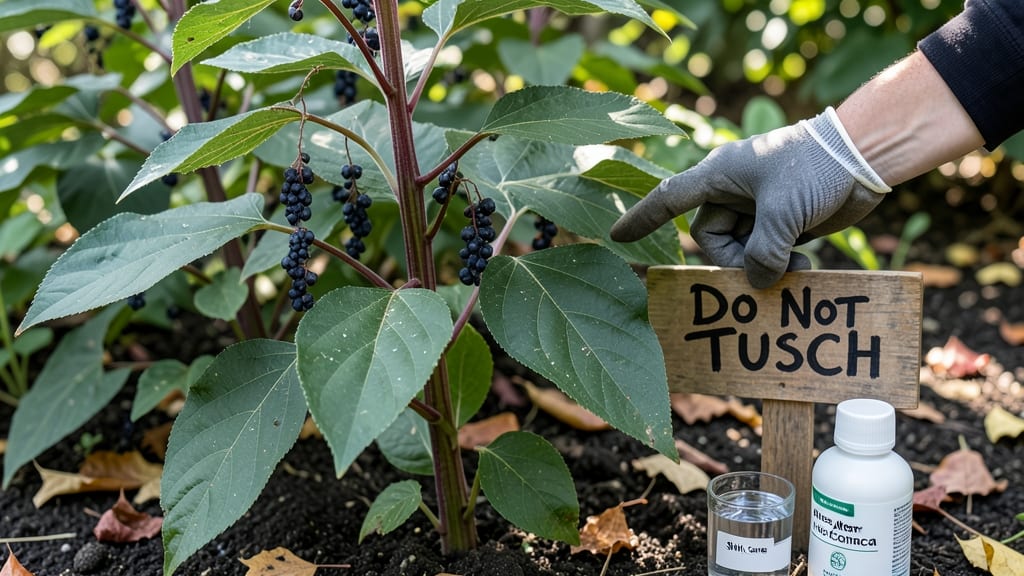
Pokeweed rash isn't contagious because it results from skin contact with the plant's irritating sap, not a virus or bacteria. However, touching affected skin can spread the sap to new areas, intensifying irritation, and scratching may introduce infections.
This skin reaction happens when tiny urticating hairs on pokeweed plants pierce your skin, releasing phytochemicals that trigger an allergic response. 🌿 Unlike contagious conditions like ringworm, pokeweed rash spreads only through direct contact with the plant's sap—not from person to person.
Think of it like poison ivy: the irritation comes from the plant itself, not something you can "catch" from someone else. If you've ever brushed against pokeweed while gardening, you know how quickly those red, itchy bumps can appear.
Once exposed, the best way to prevent further irritation is to wash the area immediately with mild soap and cool water. Avoid scratching, as that can break the skin and invite bacterial infections.
Over-the-counter hydrocortisone cream or calamine lotion can help soothe symptoms, but if the rash covers large areas or shows signs of infection (pus, warmth), see a doctor. The key takeaway? Pokeweed rash is all about plant chemistry, not germs.
💡 In This Article
- How Pokeweed Rash Develops and Why It Isn’t Contagious
- Managing Pokeweed Rash Exposure: Prevention and Treatment
How pokeweed rash develops and why it isn’t contagious
Pokeweed rash starts when microscopic urticating hairs—tiny, needle-like structures on the plant—break off and penetrate your skin. These hairs inject phytochemicals like pokeweed mites and caustic sap into your epidermis, triggering an allergic reaction in about 6-48 hours.
Unlike contagious rashes caused by viruses or bacteria, this response is purely chemical, meaning you can't "catch" it from someone else. 🌿 The plant's sap contains phytolacca acid, which disrupts cell membranes and causes inflammation, similar to how poison ivy's urushiol oil works.
The confusion often comes from how quickly the rash spreads across your body. When you touch an affected area, residual sap on your fingers can transfer to new skin regions, creating fresh outbreaks—but this is still just the plant's irritants at work, not contagion.
For comparison, poison ivy spreads the same way, though its oil remains active on surfaces for years, while pokeweed sap loses potency after 24-48 hours of exposure to air. This is why immediate washing is critical.
The key difference between pokeweed rash and contagious conditions lies in the biology: pathogens like viruses or bacteria multiply and spread between hosts, while pokeweed's phytochemicals are passive irritants. Your immune system reacts to the plant's compounds, not an infectious agent.
This is why you won't find pokeweed rash in medical discussions about contagious dermatitis—it's classified as a contact dermatitis, like reactions to latex or certain metals.
What makes pokeweed particularly tricky is its growth pattern. The plant's purple berries (which contain the highest concentration of irritants) often attract children and pets, leading to accidental exposure.
A single brush against the plant can deposit hundreds of urticating hairs on skin or clothing, increasing the risk of spreading irritation—but again, this is mechanical transfer of plant material, not contagion. Think of it like transferring ink from a marker: you're not "infecting" someone, you're just spreading the irritant.
Scratching plays a dangerous role here because it breaks the skin barrier, allowing bacteria like Staphylococcus to enter and cause secondary infections. This is why healthcare providers emphasize keeping the rash clean and dry. The good news?
Once the plant's irritants are washed away, your body typically clears the reaction within 1-3 weeks, leaving no lasting damage to your skin. The entire process is a reminder of how plants have evolved chemical defenses that we humans experience as uncomfortable rashes.