
How To
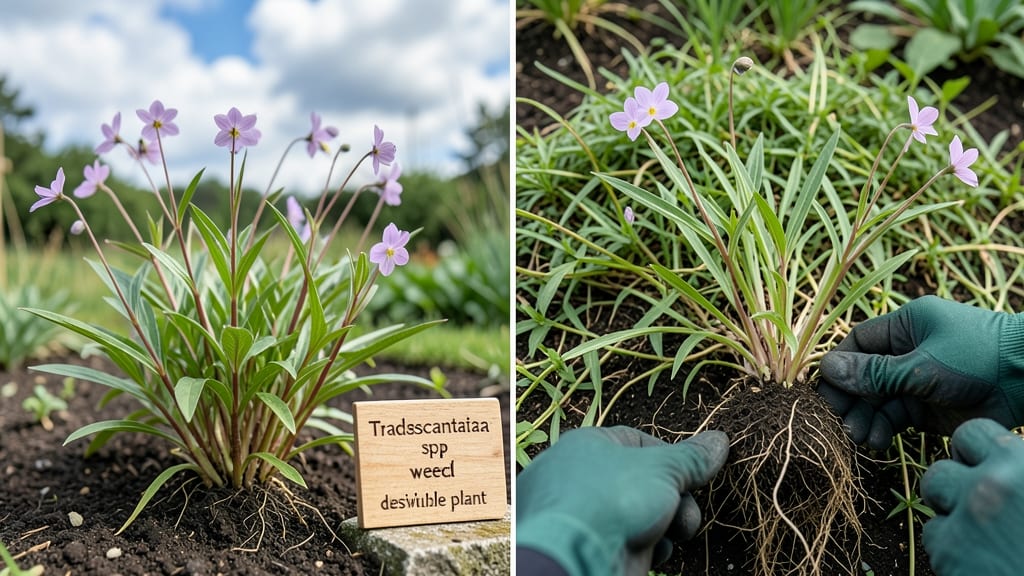
Is spiderwort a weed? It’s not—this native perennial wildflower offers vibrant blooms and crucial pollinator support, though some varieties can spread aggressively in gardens if left unchecked. The key lies in identifying your specific type to determine whether it’s a beneficial addition or a nuisance.
Spiderwort’s reputation as a weed stems from its rapid growth habits, particularly in Tradescantia species like the common spiderwort. 🌸 What many don’t realize is that these plants are ecologically valuable—their nectar-rich flowers attract bees and butterflies, making them excellent for native gardens.
The confusion arises because certain varieties, especially those escaping cultivation, can outcompete other plants in some regions, earning them a "weed" label from frustrated gardeners.
Instead of dismissing it outright, consider its potential: in designed landscapes, spiderwort makes a stunning ground cover or border plant. The trick is managing its spread through strategic division or mulching—giving you the best of both worlds: beauty and biodiversity without the chaos.
💡 In This Article
- Spiderwort Species: Native vs Invasive Traits Explained
- Managing Spiderwort Growth in Gardens
Spiderwort species: native vs invasive traits explained
Spiderwort belongs to the Commelinaceae family, with Tradescantia being the most common genus. The confusion about whether it's a weed stems from two key factors: its rapid growth rate and regional differences in ecological impact.
Native species like Tradescantia virginiana (Virginia spiderwort) thrive in moist meadows and woodland edges, while cultivated varieties such as Tradescantia pallida (purple-heart spiderwort) often escape gardens and spread aggressively in some climates.
The distinction lies in how these plants interact with their environment—what's beneficial in one region can become invasive in another.
The plant's spread is fueled by its rhizomatous growth habit, where underground stems produce new shoots every 3-6 inches. This creates dense colonies that can smother other plants, particularly in USDA Hardiness Zones 5-10.
The vibrant blue, pink, or purple flowers (each lasting just one day) attract pollinators, but this ecological value doesn't always outweigh the plant's competitive nature. For example, in Florida's native ecosystems, Tradescantia ohiensis is considered invasive, while in New England, it's often left undisturbed as part of the natural landscape.
What makes spiderwort particularly interesting is its adaptive coloration. The leaves often display purple undersides that protect against UV radiation, while the upper surfaces remain green for photosynthesis. This trait helps it thrive in partial shade, where many gardeners might not expect such vigorous growth.
The plant's self-compatibility means it can reproduce without pollinators, further accelerating its spread in ideal conditions. This biological flexibility explains why some gardeners see it as a weed while others cultivate it intentionally for its low-maintenance ground cover qualities.
Regional perception plays a huge role in its classification. In the Southeastern United States, where native spiderwort species evolved, they're often considered beneficial. However, in California or Pacific Northwest gardens, escaped cultivars can become problematic due to different native plant communities.
The key difference lies in whether the spiderwort is native to the area or an introduced species filling ecological niches it wasn't designed for. This regional variation means what's a weed in one garden might be a prized native in another.
Consider the Tradescantia virginiana example: its 3-inch-wide flowers bloom from spring to fall, providing continuous nectar for bees. In its native range, this makes it ecologically valuable, but when planted in arid Western states, it can outcompete drought-adapted native plants.
The same species can therefore be both a garden asset and a management challenge depending entirely on location and context. This dual nature is what creates the ongoing debate about spiderwort's true classification.
The plant's leaf arrangement also provides clues: the three-ranked leaves (one at each node) create a distinctive pattern that helps identify species. Tradescantia virginiana typically grows 1-2 feet tall with 1-inch-wide leaves, while Tradescantia ohiensis reaches 2-3 feet with broader foliage.
These physical differences help gardeners determine which species they're dealing with and whether its spread might become problematic in their specific climate zone.
What most people don't realize is that spiderwort's root system actually improves soil structure. The fibrous roots help prevent erosion while creating microhabitats for beneficial insects. This ecological benefit is often overlooked when considering its weed-like qualities.
The plant's true nature therefore depends on how you balance its aggressive growth habits with its ecological contributions—a calculation every gardener must make based on their specific landscape goals. 🌿