
How To
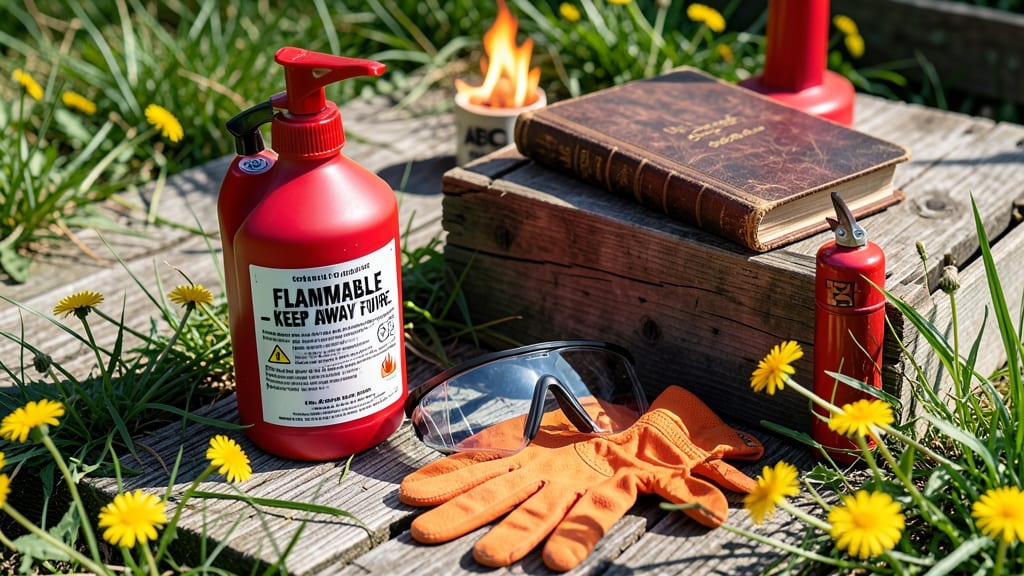
Is weed killer flammable? Most herbicides are non-flammable in their standard forms, but concentrated formulations—especially those with volatile solvents—can create fire hazards when improperly stored, mixed, or exposed to heat sources. Always verify product labels for specific warnings and follow storage guidelines.
Most weed killers you'll find on store shelves are designed to be safe under normal conditions, but the real risks come from concentrated versions or improper handling. Solvent-based herbicides often contain volatile organic compounds (VOCs) that can release flammable vapors when exposed to heat or open flames.
Even water-based formulas may pose dangers if mixed incorrectly or stored in improper containers. Glyphosate-based products are generally safer, but always double-check the label—some contain additives that could be risky when combined with other chemicals. 🔥
What makes this particularly important is that many people store weed killer in sheds, garages, or near grills without realizing the potential dangers. Even a small spark from a faulty outlet or a hot surface can ignite vapors from improperly sealed containers.
I recommend using approved herbicide containers (like HDPE plastic) and keeping them in well-ventilated areas, away from ignition sources. If you're mixing concentrates, do it outdoors or in a space with proper ventilation to avoid vapor buildup.
💡 In This Article
- Chemical Composition of Weed Killer and Fire Risks
- Safe Storage and Handling to Prevent Fires
Chemical composition of weed killer and fire risks
The flammability of herbicides depends entirely on their chemical makeup. Most water-based formulations, like glyphosate (Roundup), are non-flammable because they primarily contain water as a solvent. However, when you look at solvent-based herbicides, the story changes dramatically.
These often use petroleum distillates or other volatile organic compounds (VOCs) that can produce flammable vapors when exposed to heat or open flames.
Take 2,4-D, a common active ingredient in many broadleaf herbicides: its concentrated form may include up to 20-30% volatile solvents by volume. When stored in improper containers or exposed to temperatures above 80°F, these solvents begin vaporizing, creating an invisible but highly flammable gas mixture.
The flashpoint—temperature at which vapors ignite—can be as low as 100°F for some concentrated herbicides, making them dangerous near heat sources like water heaters or grills.
Improper mixing compounds the risk. When you combine different herbicides or additives without following manufacturer instructions, chemical reactions can occur that generate heat or even produce combustible byproducts. For example, mixing certain acid-based herbicides with alkaline cleaners can create exothermic reactions, raising temperatures enough to ignite nearby vapors.
This is why labels always warn against mixing herbicides with other chemicals or household products.
Even seemingly safe ingredients have nuances. Glyphosate, while generally non-flammable, may contain surfactants or stabilizers that could be volatile when heated. The key is always checking the Material Safety Data Sheet (MSDS)—this document specifies whether a product contains flammable components and at what concentrations.
Many gardeners overlook this step, assuming all herbicides are equally safe.
Visualize the risk this way: imagine a 5-gallon container of concentrated herbicide sitting in a 90°F garage with a faulty light fixture sparking intermittently. The heat causes the solvent to vaporize, and the sparks provide the ignition source.
Within seconds, you could have a fire—even though the liquid itself might not burn, the vapors above it certainly can. This is why proper ventilation and storage are critical.
Here's what most people miss: even water-based herbicides can become hazardous when contaminated. If you store them in metal containers or ones that degrade over time, chemical reactions with the container material can produce flammable gases.
Always use HDPE (High-Density Polyethylene) containers, which are chemically inert and won't react with herbicides.