
Watering
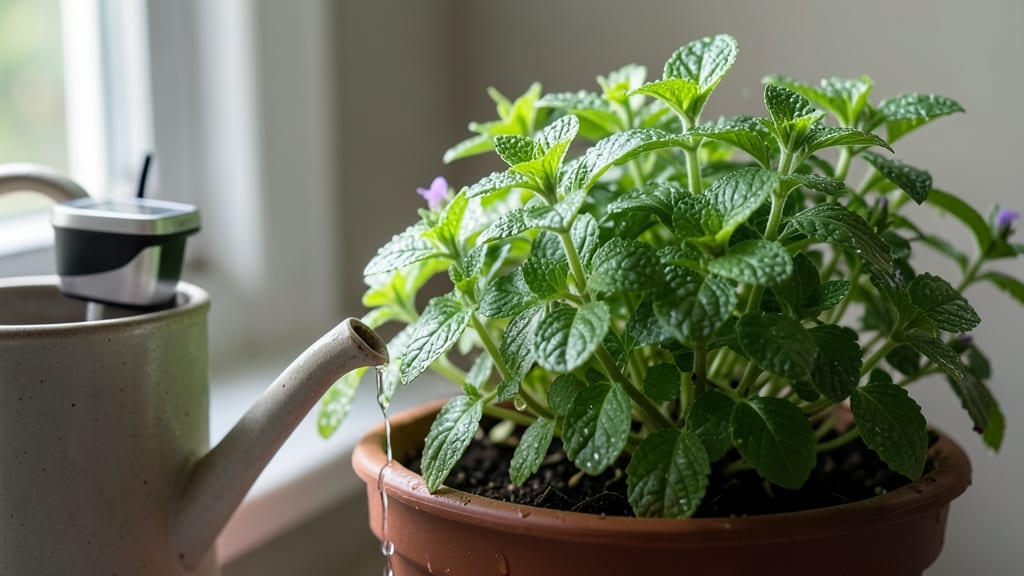
How to test soil dryness for perfect mint watering schedule
Mastering the mint watering schedule starts with understanding your soil's moisture level. Mint thrives on consistent dampness but despises soggy roots—finding that sweet spot is key. The simplest way? The finger-dry test, a foolproof method that takes seconds and prevents overwatering or underwatering.
Whether your mint grows in pots on your patio or sprawls in your garden bed, this technique works for both.
Before you grab your watering can, dig your finger into the soil near your mint's roots. The depth and texture will tell you exactly when to water. For potted mint, check the top 1-2 inches of soil, while in-ground mint needs a deeper test of 2-3 inches.
If the soil feels dry or crumbly, it's time to water. If it's still cool and damp, wait a day or two—your mint isn't thirsty yet.
Here’s how to perform the test like a pro, along with seasonal adjustments to keep your mint lush year-round:
Mint’s water needs shift with the seasons. During summer’s peak heat, your plants may need water daily or every other day, especially in containers that dry out faster.
In contrast, winter’s cooler temps slow evaporation, so you can stretch watering to every 7-10 days. Always prioritize morning watering to avoid fungal issues and ensure your mint stays vibrant.
Pay attention to your mint’s growth signals. Healthy mint has bright green leaves and a vigorous growth habit. If leaves turn yellow or wilt, it’s a sign of overwatering or underwatering. The finger-dry test keeps you ahead of these problems, ensuring your mint stays perky and productive.
For container-grown mint, use well-draining pots with drainage holes to prevent root rot. If your soil dries out too quickly, add a layer of mulch or pebbles to retain moisture. In-ground mint benefits from a 2-3 inch mulch layer to keep soil consistently damp without waterlogging.
Pro tip: Keep a watering journal to track your mint’s needs. Note the soil type, pot size, and weather conditions. Over time, you’ll spot patterns—like how your mint thrives with every-other-day watering in summer but only needs a drink once a week in winter.
This personal data turns guesswork into a science!
Remember, mint is a hardy herb that forgives occasional slips, but consistency is key. With the finger-dry test and seasonal adjustments, you’ll cultivate mint that’s lush, fragrant, and ready to harvest all season long. Happy gardening!
Signs of overwatering vs. underwatering mint plants (with fixes)
Your mint plants crave consistent moisture but hate soggy soil—balancing these needs is key to avoiding common problems like yellowing leaves or moldy stems. Overwatering and underwatering both show up in similar ways, but the fixes are worlds apart.
Let’s decode the visual clues so you can rescue your herb garden before it’s too late.
First, recognize that peppermint and spearmint varieties have slightly different thirst levels—peppermint often needs daily watering in hot climates, while spearmint can tolerate slightly drier conditions. Always check the soil before watering to avoid guessing games.
Overwatering vs. Underwatering Mint: Quick Fixes
✅ Overwatering
- Yellowing leaves (especially lower leaves)
- Mushy stems or blackened roots
- White mold on soil surface
- Slow growth despite frequent watering
❌ Underwatering
- Dry, crispy leaf edges
- Wilting even with water nearby
- Stunted growth or no new leaves
- Soil pulls away from pot edges
If your mint leaves are yellowing but the soil feels dry, you’re likely dealing with underwatering. This is especially common in small pots where moisture evaporates quickly. Increase watering frequency in hot climates (like summer in Arizona) to every 2-3 days for potted mint.
For overwatered mint, the fix starts with better drainage. If your plant is in a terracotta pot, switch to one with drainage holes. Add sand or perlite to heavy soils to prevent compaction. Avoid watering at night to reduce fungal risks like powdery mildew.
Climate plays a huge role—humid regions (like Florida) need less frequent watering because air moisture slows evaporation. In dry climates, like those in California, mint may need daily watering in summer. Always adjust based on your local weather and pot size.
Remember, mint thrives on routine. Stick to a morning watering schedule to give roots time to dry slightly before evening. Prune yellow or moldy leaves immediately to prevent spread. With these fixes, your mint will bounce back in 1-2 weeks—just keep an eye on soil moisture!