
Planting
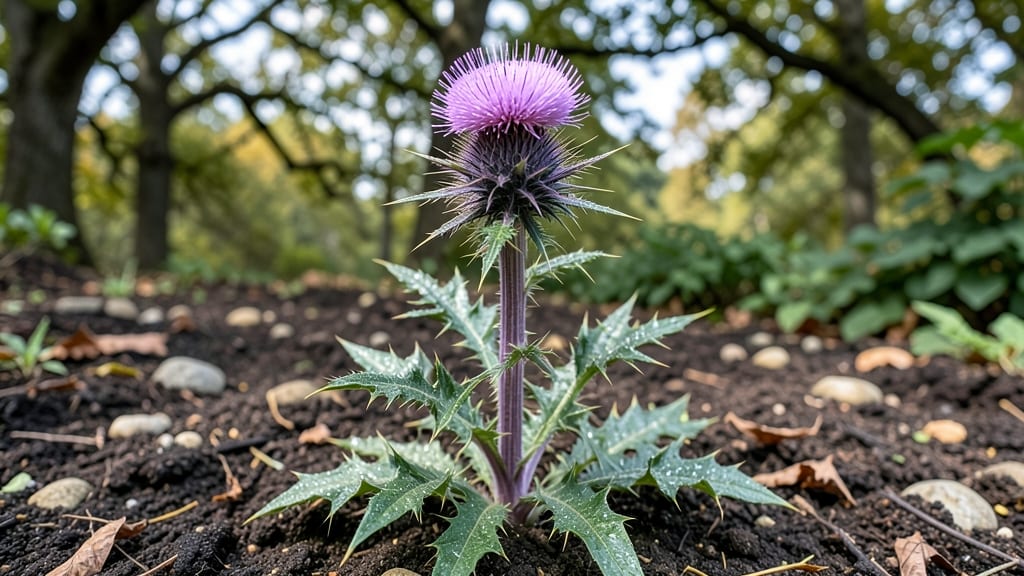
Prickly weed plants (Amaranthus spp.) thrive in USDA zones 3-10, requiring full sun and well-draining soil. Their edible leaves and flowers are best harvested young, while their roots can be dried for tea or medicinal use. Handle with gloves due to fine spines on stems and leaves.
Prickly weed, also called pigweed or amaranth, grows aggressively in sunny, disturbed areas across North America, making it both a nuisance and a resource. 🌱 The plant's needle-like hairs aren't just defensive—they make harvesting a careful process, but the reward is worth it.
Young leaves taste like spinach when cooked, while flowers can be used in salads or dried for vibrant garnishes. What's fascinating is how this hardy plant adapts to poor soil, yet still produces nutrient-rich greens packed with iron and calcium.
For gardeners, the key is timing—harvest leaves before the plant bolts to flower, as the texture becomes tougher. The roots, when properly dried, create a caffeine-free herbal tea with earthy notes.
Always wear gloves when working with mature plants, as the spines can irritate skin. This dual-purpose plant proves nature's resilience while offering unexpected culinary benefits.
💡 In This Article
- Prickly Weed Plant Identification and Natural Habitat
- Harvesting and Culinary Uses of Prickly Weed Greens
Prickly weed plant identification and natural habitat
Amaranthus spp., commonly called prickly weed, boasts triangular leaves with pointed tips that grow in alternating patterns along the stem. The key identifier is the fine, hair-like spines covering the entire plant—these microscopic needles (0.5-1mm long) make it feel rough to the touch, even when gloves are worn.
The flowers appear as dense, feathery plumes in pink, green, or red, resembling dandelion puffs but more compact.
This hardy plant thrives in USDA zones 3-10, native to North America but now naturalized worldwide.
It thrives in disturbed soils like construction sites, roadsides, and abandoned fields, where it acts as a pioneer species—quickly colonizing bare ground with its extensive root system. 🌱 The plant's rapid growth (reaching 3-6 feet tall) and ability to fix nitrogen in the soil make it both an ecological opportunist and a valuable green manure crop for farmers.
Ecologically, prickly weed plays a crucial role by stabilizing eroded soils and providing food for wildlife. Its seeds are a protein-rich food source for birds and small mammals, while the leaves serve as forage for livestock when young.
The plant's resilience comes from its deep taproot system, which can access water up to 6 feet underground—a survival advantage in dry climates.
In cultivation, prickly weed prefers full sun (6+ hours daily) and well-draining soil with a pH between 6.0-7.5. Unlike many weeds, it tolerates poor soil quality but struggles in waterlogged conditions, where root rot can develop.
The plant's aggressive growth habit means it can outcompete native vegetation, which is why many gardeners consider it invasive—though its edible qualities make it a valuable resource for foragers.
What sets prickly weed apart is its dual nature: while often seen as a nuisance, its young shoots contain more protein than spinach (about 3.5g per 100g) and are packed with vitamins A and C. The spines aren't just for defense—they deter herbivores while allowing the plant to thrive in disturbed environments where competition is minimal.
For identification, focus on three key features: the triangular leaves with serrated edges, the dense seed heads that resemble puffballs, and the rough texture caused by microscopic spines. These characteristics distinguish it from similar plants like lamb's quarters, which lacks the spiny coating and has more rounded leaves.