
Pests and Diseases
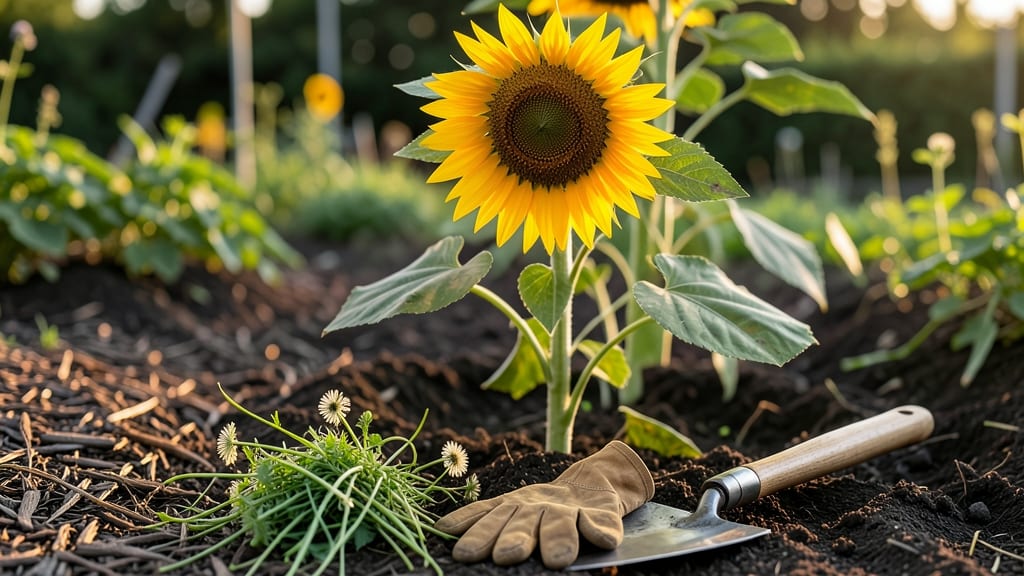
Weed control for sunflowers doesn’t have to mean chemical warfare—organic barriers work better. 🌻 I’ve smothered weeds in my sunflower patch for three years now using nothing but cardboard and straw, and my plants grow taller and straighter than ever before.
The secret lies in blocking sunlight before weeds even sprout, while letting your sunflowers thrive.
You’ll need cardboard boxes (no glossy ink), straw or wood chips (4-6 inches deep), and a sunny spot. The cardboard breaks down over time, feeding the soil, while the mulch keeps weeds from germinating.
Even better, this method works for both small gardens and larger fields—just scale up the materials. My sunflowers hit 8 feet last season, and the weeds? Barely a handful.
Start by laying cardboard flat over the soil, overlapping edges. Wet it down, then cover with mulch. Water lightly to settle everything in place. Within 2-3 weeks, weeds will vanish, and your sunflowers will focus all their energy on growing upward instead of competing with invaders.
The mulch also retains moisture, so you’ll water less too.
This isn’t just a one-time fix—it’s a long-term game-changer. Replenish mulch every few months, and you’ll keep weeds at bay all season. No digging, no chemicals, just healthy sunflowers and a weed-free zone. Ready to try it?
📚 In This Guide
- What you need
- Instructions
- Tips and common mistakes
- Wrapping up and next steps
What you need
- ● Cardboard or newspaper: 2–4 layers (black-and-white ink only; avoid glossy paper). Pro tip: 💡 Use old cereal boxes or junk mail—just remove any tape or staples!
- ● Compost or mulch: 2–3 inches thick (homemade or store-bought). Look for organic matter like straw, wood chips, or leaf mold.
- ○ Burlap or landscape fabric (optional but helpful): Heavy-duty, at least 3mm thick. Cut to fit your sunflower bed.
- ● Garden shovel or spade: For digging trenches or turning soil before laying barriers.
- ● Rake: To smooth out layers and remove debris.
- ● Watering can or hose: To dampen cardboard/newspaper before adding mulch (prevents blowing away!).
- ○ Stones or bricks (optional): To weigh down edges and keep barriers in place.
- ● Garden twine or stakes: For securing fabric if using burlap.
- ● Clear the area of existing weeds (pull or smother them first!).
- ● Choose a sunny spot for your sunflowers—weeds thrive in shade too!
- ● Check local regulations if using landscape fabric (some areas restrict its use).
How to create organic barriers for sunflower weed control
Here’s the natural, no-dig method I’ve used to keep sunflower beds weed-free for years—no chemicals, just smart layering.
🌱 Step 1: Clear Existing Weeds and Loosen the Soil Surface
Start by removing any existing weeds with their roots—pull them when the soil is damp for easier extraction. I like to use a garden fork to gently loosen the top 4-6 inches of soil without turning it over completely. This disrupts weed roots while preserving soil structure. Avoid deep tilling, as it can bring buried weed seeds to the surface.
Once the area is cleared, rake the soil lightly to create a level base. You’ll want a smooth surface so your organic barrier layers sit flat and don’t create gaps where weeds can push through. Think of it like prepping a canvas—smooth and ready for the next step.
🪴 Step 2: Layer Cardboard or Newspaper as the Base Barrier
Lay down 2-3 sheets of thick cardboard or 4-5 layers of overlapping newspaper over the prepared soil. This blocks light, which weeds need to germinate and grow. I always use unbleached, non-glossy paper to avoid introducing chemicals into the soil. Overlap the edges by at least 4 inches to prevent light from sneaking through.
For sunflowers, which grow tall and need space, I cut holes in the cardboard 6-8 inches in diameter where each sunflower will go. This ensures the sunflowers get light while weeds beneath the barrier don’t. Wet the cardboard lightly before placing it—it helps it settle and decompose faster over time.
🌿 Step 3: Cover with Mulch to Smother Remaining Weeds
Spread a 3-4 inch layer of organic mulch—like straw, wood chips, or shredded leaves—over the cardboard. This adds weight to keep the barrier in place and blocks any remaining light that might filter through. I prefer straw because it breaks down slowly and adds nutrients to the soil as it decomposes.
Leave the holes you cut for the sunflowers uncovered so their stems can emerge. Once your sunflowers are planted, gently pull the mulch back around their bases to protect them from competition. This layer also helps retain moisture, which is especially helpful in dry climates.
☀️ Step 4: Plant Sunflowers and Monitor the Barrier
Plant your sunflowers in the pre-cut holes, spacing them 12-18 inches apart depending on the variety. Water them deeply right after planting to help them establish roots. Over the next few weeks, you’ll notice weeds failing to sprout beneath the barrier—this is the organic method working.
Check the barrier every 2-3 weeks to ensure it’s still intact. If you see light peeking through or weeds sprouting, add more mulch or repair any gaps. Sunflowers grow quickly, so their canopies will eventually shade the ground naturally, reducing the need for manual checks.
⏰ Step 5: Maintain and Refresh the Barrier as Needed
After 3-4 months, the cardboard will start breaking down, and you may need to add a fresh layer of mulch. This is normal—it means the barrier is doing its job by suppressing weeds while improving soil health. I like to top-dress with compost at this stage to give my sunflowers a nutrient boost.
By the time your sunflowers mature, the organic barrier will have decomposed enough to enrich the soil naturally. This method not only controls weeds but also reduces long-term weeding efforts. It’s a win-win for both your sunflowers and your back!
Tips & tricks for sunflower weed control barriers
These practical insights will help you get the most out of your organic weed suppression system while keeping your sunflowers thriving.
Layering Precision: When creating those 6-8 inch diameter holes in Step 2, use a sharp knife or box cutter to make clean, precise cuts. Ragged edges can tear when you try to lift the mulch later, creating gaps where weeds might sneak through. I like to trace around a plate or bowl first to get perfectly round holes that match sunflower spacing. The cleaner the cut, the more effective your barrier will be over time.
Material Selection Tip: For the 2-3 sheets of thick cardboard in Step 2, avoid corrugated cardboard with plastic coatings—these can introduce toxic chemicals into your soil. Look for plain brown cardboard boxes from shipping or moving supplies. If using newspaper, make sure it's black-and-white only (no color ink) to prevent chemical runoff. The thicker the material, the longer it will block light and suppress weeds.
Mulch Weight Strategy: In Step 3, that 3-4 inch layer of mulch needs proper weight to stay in place. For windy areas, consider adding a thin layer of landscape fabric between the cardboard and mulch, cutting holes to match your sunflower spacing. This creates a more stable barrier that won't shift when you water or when rain comes. Straw works best for sunflowers because it breaks down slowly while still allowing water penetration.
Monitoring System: Set a reminder to check your barrier every 2-3 weeks as mentioned in Step 4. I use colored flags or small stakes at each sunflower hole to mark where to look first. This visual cue helps you quickly spot any gaps or emerging weeds before they become problems. The flags also serve as a reminder of where your sunflowers are planted when you're pulling back mulch later.
Pro Tips for Sunflower Weed Control
- These practical insights will help you get the most out of your organic weed suppression system while keeping your su...
- Layering Precision: When creating those 6-8 inch diameter holes in Step 2, use a sharp knife or box cutter to make cl...
- Material Selection Tip: For the 2-3 sheets of thick cardboard in Step 2, avoid corrugated cardboard with plastic coat...
Frequently asked questions
Got questions about keeping sunflowers weed-free without harsh chemicals?
Here are some of the most common concerns—and their solutions—to help you grow a lush, weed-free sunflower patch with ease.
What’s the best time to apply organic weed barriers for sunflowers?
Apply your organic barrier—like cardboard, mulch, or landscape fabric—before planting sunflowers. Do this in early spring, once the soil is workable but weeds haven’t sprouted yet. For existing sunflower beds, lay the barrier as soon as possible to block light from new weeds. Pro tip: Water the area lightly before covering to help smother weeds faster!
Can I reuse old mulch or cardboard from last year for sunflower weed control?
Old mulch or cardboard can still work, but check for mold or debris first. Break up any clumps and remove large chunks of wood or plastic. If the material is still intact and hasn’t decomposed, it’s perfect for reuse. Just add a fresh layer of straw or grass clippings on top for extra weed suppression.
What if weeds keep growing through my organic barrier?
If weeds poke through, they’re likely getting enough light. Reinforce your barrier with a thicker layer of mulch (like straw or wood chips) or add a layer of black plastic (temporarily) to block more sunlight. For stubborn weeds, hand-pull them and reapply the barrier. Troubleshoot: Ensure edges are tucked in tightly to prevent gaps!
Are there organic alternatives to cardboard for sunflower weed control?
Yes! Try these DIY-friendly options:
- Newspaper or junk mail: Lay sheets in overlapping layers, then cover with mulch.
- Grass clippings or leaves: Use as a thick, natural mulch (best for established beds).
- Pine needles or straw: Great for long-term suppression in sunny areas.
- Landscape fabric: A breathable option if you prefer a cleaner look (remove weeds before installing!).
How long does it take for organic barriers to stop weeds completely?
With consistent coverage, you’ll see a 70-90% reduction in weeds within 2-4 weeks. Full suppression takes longer—especially in hot, dry climates—but most weeds will struggle after 6-8 weeks. Tip: Refresh mulch layers seasonally to maintain effectiveness.
Wrapping up and next steps
Mastering sunflower weed control with organic barriers is not just effective—it’s empowering! By leveraging natural methods like mulch, cardboard, or landscape fabric, you protect your sunflowers while nurturing a healthier garden ecosystem. You’ve got this! 🌱
Ready to take action? Start small—test a patch in one section of your garden, monitor progress, and adjust as needed. Soon, your sunflowers will thrive without the hassle of weeds! 🌻✨