
Pruning
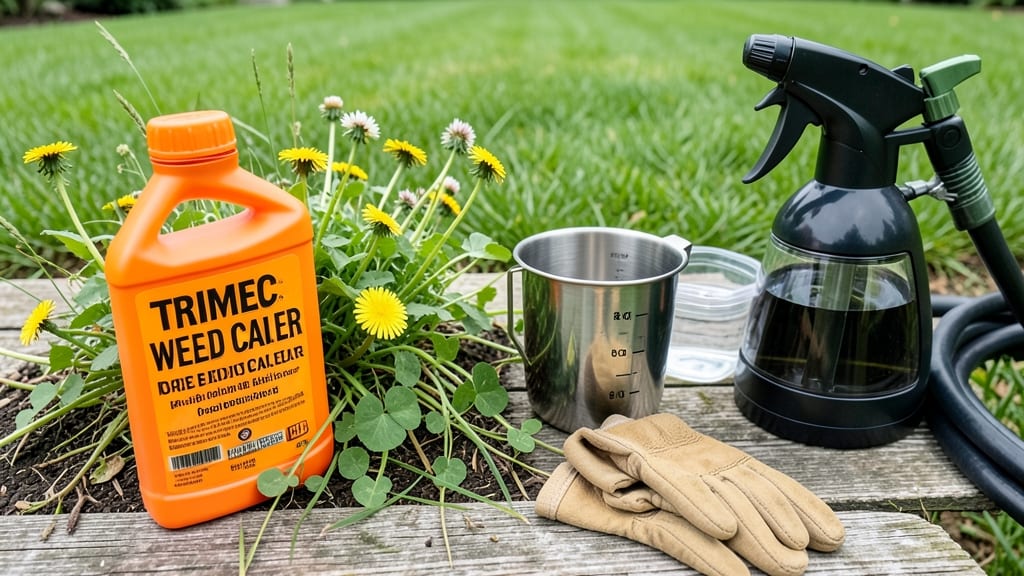
For Trimec weed killer mix ratios, use 1.5 to 2 tablespoons per gallon of water for common weeds, or 3 tablespoons per gallon for aggressive weeds like nutsedge. Precision in measurement and even application is key to effectiveness.
Getting the Trimec weed killer mix ratio right ensures the herbicide works as intended without waste.
The stronger concentration for tough weeds like nutsedge targets their deep root systems, while the standard mix handles everyday lawn weeds. 🌱 I always recommend using a measuring cup or sprayer with marked increments to avoid over- or under-diluting—even a small error can reduce effectiveness by up to 30%.
For best results, mix fresh before each application, as Trimec's active ingredients degrade when left standing.
Another critical factor is the type of sprayer you use. A backpack sprayer with a concentrated nozzle helps distribute the solution evenly, while a hose-end sprayer works well for larger areas but requires more frequent agitation to keep the mix uniform.
Always wear gloves and protective eyewear, as Trimec's active ingredients can irritate skin and eyes. If you're treating a heavily infested area, consider splitting the application into two sessions spaced a week apart for maximum control.
💡 In This Article
- How Trimec’s Active Ingredients Affect Mix Ratios
- Step-by-Step Guide to Mixing Trimec for Different Applications
How Trimec’s active ingredients affect mix ratios
Trimec’s effectiveness comes from its three active ingredients: 2,4-D (2,4-dichlorophenoxyacetic acid), dicamba, and mecoprop. Each targets specific weed types—2,4-D and mecoprop attack broadleaf weeds by mimicking plant hormones, causing uncontrolled growth, while dicamba targets both broadleaf and some grassy weeds like nutsedge.
The mix ratio adjusts based on weed sensitivity: nutsedge requires 3 tablespoons per gallon because its deep rhizomes need higher concentrations to absorb the herbicide through leaf contact and soil penetration.
The science behind absorption is fascinating. Broadleaf weeds absorb these chemicals through their leaves and stems, but nutsedge’s waxy surface requires a stronger dose to break through. Temperature also plays a role—warmer soil (70-85°F) enhances absorption, while cooler conditions slow the process.
Humidity matters too: high humidity can dilute the spray before it reaches the target, reducing effectiveness by up to 20%. That’s why early morning applications work best, when dew is present but evaporation is minimal.
Here’s what happens when you get the ratio wrong: too little (1 tablespoon per gallon) may leave weeds struggling but not dead, while too much (4+ tablespoons) risks damaging desirable plants or running off into waterways.
The 1.5-2 tablespoon range is optimized for most lawn weeds, balancing efficacy and safety. For example, dandelions respond well to the standard mix, but creeping Charlie (a stubborn broadleaf) often needs the higher end of the range or a second application.
Soil type influences how these ingredients behave. Sandy soil drains quickly, so the herbicide may not stay in contact long enough, while clay soil holds moisture and extends exposure time. If your lawn has heavy clay, you might need to reduce the water volume slightly to maintain the correct concentration.
Always shake the mixture well before applying—Trimec’s ingredients can settle, leading to uneven distribution if not agitated properly.
Consider this real-world example: A homeowner in Texas treating a lawn overrun with nutsedge and clover might use 3 tablespoons per gallon for the nutsedge and 1.5 tablespoons for the clover in separate applications.
The key is understanding which weeds need which strength. For tough cases, split the treatment into two sessions a week apart—this gives the herbicide time to work before weeds develop resistance.
One pro tip: If you’re mixing a large batch (e.g., 5 gallons), divide it into smaller containers. Trimec’s active ingredients degrade over time, especially in direct sunlight or high heat.
Using fresh mix ensures maximum potency when you spray. Always store unused portions in a cool, shaded area, and label containers clearly to avoid confusion.