
Pests and Diseases
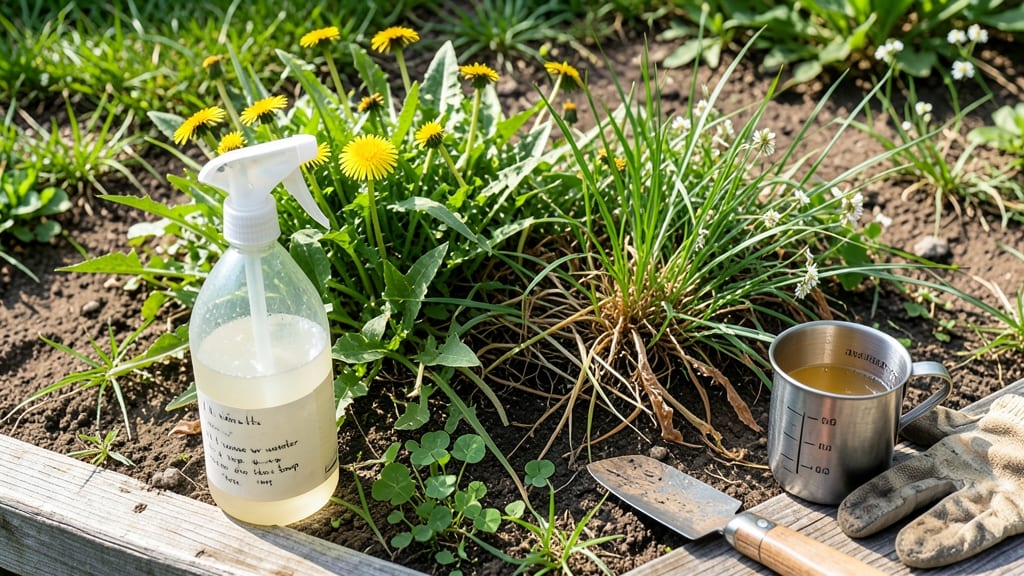
Vinegar weed killer works by breaking down plant cell membranes, killing weeds on contact with a solution of 1 part white vinegar to 3 parts water, though it may require multiple applications for stubborn weeds. Always apply on sunny days and avoid spraying desirable plants.
This natural herbicide leverages acetic acid to dehydrate and dissolve weed tissues, making it an effective organic alternative to chemical sprays. 🌱 The 3:1 water ratio prevents over-concentration that could harm nearby plants, while sunny conditions boost evaporation, enhancing the vinegar's weed-killing power.
For best results, apply during peak sunlight hours and reapply every 3-5 days until weeds wither completely.
White vinegar works fastest, but apple cider vinegar adds mild antimicrobial properties that may help deter regrowth. Always test a small area first—some plants like clover or chickweed might survive the treatment.
I recommend using a spray bottle with a fine mist nozzle for precise application, and never mix vinegar with other herbicides, as chemical reactions could create toxic fumes.
💡 In This Article
- How Vinegar Kills Weeds: The Science Behind Organic Herbicide
- Best Vinegar Weed Killer Recipes and Application Tips
How vinegar kills weeds: the science behind organic herbicide
The acetic acid in vinegar—typically 5-8% concentration in household white vinegar—disrupts plant cell membranes by breaking down their lipid bilayers. This causes cells to lose moisture and collapse, effectively dehydrating the weed from the inside out.
The process begins within minutes of application, but full results take 3-7 days, depending on weed type and environmental conditions. 🔥
pH levels play a critical role: vinegar's acidity (2-3 pH) denatures proteins in plant cells, preventing them from functioning properly. For comparison, lemon juice (pH ~2) has a similar effect but lacks the concentrated acetic acid needed for effective weed control.
The 3:1 water dilution reduces vinegar's corrosiveness while maintaining enough acidity to kill weeds without harming most desirable plants.
Sunlight accelerates the process by increasing evaporation, which concentrates the vinegar's acidity on the weed's surface. This is why applications work best on sunny days—dry conditions prevent the solution from being diluted by rain or dew.
Repeated applications (every 3-5 days) ensure stubborn weeds like dandelions or crabgrass don't recover, as their root systems may survive the initial treatment.
Not all weeds respond equally: broadleaf weeds like chickweed or plantain typically die faster than grasses, which have tougher cell structures. The acetic acid also acts as a natural desiccant, causing weeds to turn brown and crispy within 24-48 hours of contact.
However, vinegar doesn't penetrate soil to kill weed roots, so regrowth may occur if the base isn't treated with additional methods like mulching or hand-pulling.
For optimal results, apply vinegar when weeds are actively growing and their leaves are fully exposed to sunlight. The solution should be sprayed until fully saturated but not dripping, as excess liquid can run off and harm nearby plants.
Always test a small, hidden area first—some ornamental grasses or succulents may show signs of stress even with diluted vinegar.
What most people don't realize is that vinegar's effectiveness depends on the weed's moisture content. Overwatered weeds absorb more vinegar, speeding up the killing process, while drought-stressed weeds may require additional applications.
This is why timing—applying after a light rain but before the next watering—can make a noticeable difference in results. ✨