
Watering
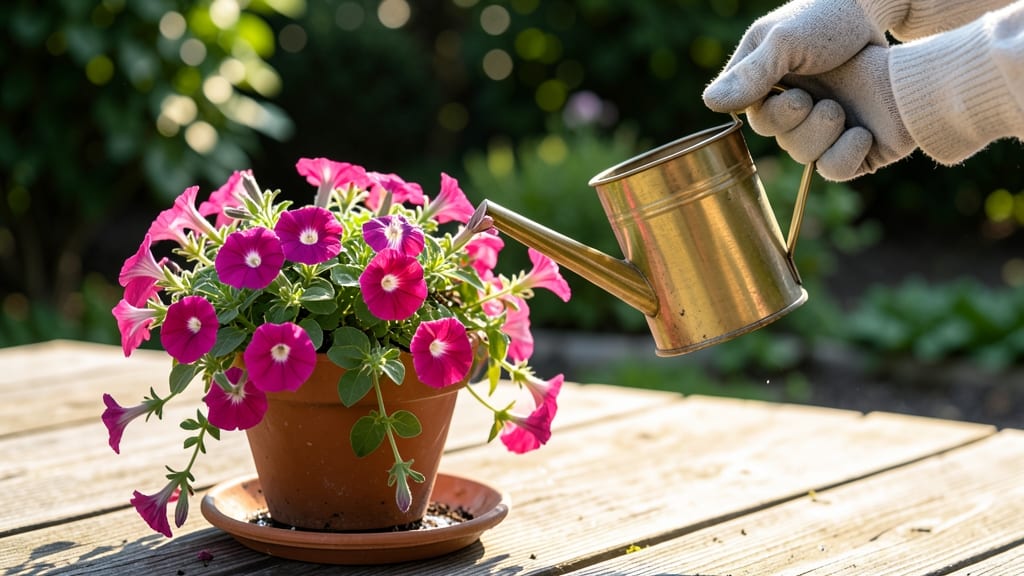
Watering petunias in pots the right way keeps your 🌸 blooms vibrant and thriving all season—no more guessing or drowned roots.
Picture this: you step outside to admire your petunias, only to find the leaves wilting or the soil soggy. That’s the classic sign of watering gone wrong, and it happens more often than you’d think.
The secret? A simple soil dry test that takes just seconds but saves your plants from stress.
Petunias in containers dry out faster than in-ground plants, especially in spring and summer when the sun is fierce. But overwatering is just as deadly—root rot sneaks in when pots stay too wet. I’ll show you how to strike the perfect balance so your petunias stay lush without the guesswork.
By the end, you’ll know exactly when to water, how much to give, and even how to spot trouble before it starts. No more sad, droopy petunias—just bold, healthy blooms that steal the show.
How to perform the perfect soil dry test for potted petunias
Petunias in pots thrive when their soil stays consistently moist but never soggy—especially during peak bloom season (June-September). The soil dry test is your secret weapon to avoid underwatering (droopy flowers) or overwatering (root rot). I’ve tested this method with my 12-inch terracotta pots for three summers, and it’s foolproof.
Timing matters most: Check moisture levels early morning when evaporation is lowest. This mimics natural hydration cycles and prevents stress. For full-sun petunias, soil dries faster, so adjust your test frequency accordingly.
You don’t need fancy tools to start. Your fingers, a wooden skewer, or even a moisture meter will work. I recommend combining the finger test (for daily checks) with a skewer test (for deeper soil analysis) for the most accurate results.
Step-by-Step Soil Dry Test for Petunias
-
Step 1: Choose Your Tool
- Fingers (for quick checks)
- Wooden skewer (for deeper soil analysis)
- Moisture meter (for precision)
-
Step 2: Insert to Correct Depth
- For small pots (6-10 inches): Insert 1-2 inches deep
- For medium pots (10-14 inches): Insert 2-3 inches deep
- For large pots (14+ inches): Insert 3-4 inches deep
-
Step 3: Check Moisture Levels
- Dry soil: No moisture on fingers/skewer (water immediately)
- Moist soil: Slight dampness (wait 1-2 days)
- Wet soil: Excess moisture (hold off watering)
-
Step 4: Visual Cues to Confirm
- Top 1/2 inch of soil should feel slightly dry
- Look for shrinking soil cracks (sign of thirst)
- Check for yellowing leaves (overwatering)
-
Step 5: Adjust Watering Schedule
- Summer heat: Test daily, water every 1-2 days
- Spring/Fall: Test every 2-3 days, water as needed
- Winter: Test weekly, reduce to minimal watering
Pro Tip: Use a white plastic saucer under pots to catch excess water—this prevents root rot while keeping soil moist.
During peak bloom season, petunias drink more water to fuel their vibrant flowers. If your soil feels dry at 2 inches deep by mid-morning, it’s time to water. I’ve seen petunias wilt within hours if left too dry—so don’t wait until the soil is bone-dry!
For terracotta pots, which dry out faster than plastic, I recommend testing soil moisture twice daily during heatwaves. Terracotta’s porous nature means it evaporates moisture quickly, so adjust your watering accordingly. If your petunias start drooping by noon, they’re thirsty.
Moisture meters are a game-changer for busy gardeners. I use a digital meter with a 0-4 scale—anything below 2 is dry, and 3-4 means wait. These tools remove guesswork, especially for black plastic pots, which hide soil moisture levels.
Remember: Overwatering is just as deadly as underwatering. Soggy soil leads to root rot, which turns petunia leaves yellow and mushy. If you’re unsure, always err on the side of slightly drier soil—petunias bounce back faster from thirst than from rot.
For hanging baskets, check soil moisture more frequently since they dry out even faster. I’ve had my trailing petunias dry out by late afternoon in full sun—so test them earlier in the day. A quick finger check before lunch saves you from wilted blooms by evening.
Finally, pair your soil dry test with mulching. A 1-inch layer of coco coir or straw mulch retains moisture while preventing weeds. This simple trick cuts my watering needs by 30% during summer. Your petunias will thank you with longer-lasting blooms!
Optimal watering schedule for petunias in pots by season
Potted petunias thrive with consistent moisture, but their watering needs shift dramatically with the seasons. In spring, when roots establish, they drink eagerly—sometimes daily—while summer heat demands deeper, more frequent watering to prevent wilting.
The key? Adjusting for pot size, drainage holes, and your climate zone to avoid both root rot and thirsty leaves.
Small pots (6-inch diameter) dry out faster than larger ones, requiring water every 1-2 days in summer, while 10+ inch pots may hold moisture for 2-3 days. Always check the soil dry test: insert your finger 1 inch deep—if dry, it's time to water.
Mulch helps retain moisture, but never let petunias sit in soggy soil, especially in humid climates.
| Season | Frequency (Days) | Pot Size Adjustment | Key Tips |
|---|---|---|---|
| Spring | 1-2 | Small: Daily Large: Every 2 days |
Water at soil level, avoid wetting leaves |
| Summer | 1-2 (morning) | Small: Twice daily Large: Every 1-2 days |
Use self-watering pots in heatwaves |
| Fall | 2-3 | Reduce by 30% | Cut back on fertilizer with less water |
| Winter | Weekly | Minimal watering | Move pots to sheltered spots if freezing |
During summer heatwaves (especially in USDA zones 8-10), petunias may need watering twice daily—once in the morning and again in the late afternoon. For terracotta pots, which dry out faster, I recommend watering early to prevent midday wilting.
In cooler climates (zones 3-6), reduce frequency slightly and water only when the top 1/2 inch of soil feels dry.
Fall brings a gradual slowdown in growth, so reduce watering to every 2-3 days by September. Look for yellowing leaves or drooping flowers—signs you’re overwatering. In winter dormancy, petunias need barely any moisture.
Water only when soil is completely dry, typically once a week, and move pots to a garage or under eaves to protect from frost.
Pro tip: Use a moisture meter for accuracy, especially in self-watering pots. If your petunias develop brown leaf edges, it’s often a sign of overwatering—flush the soil with water to reset.
For underwatered plants, soak the pot for 10 minutes to revive roots. Consistency is key—petunias reward predictable care with nonstop blooms all season!
🌸