
Advice
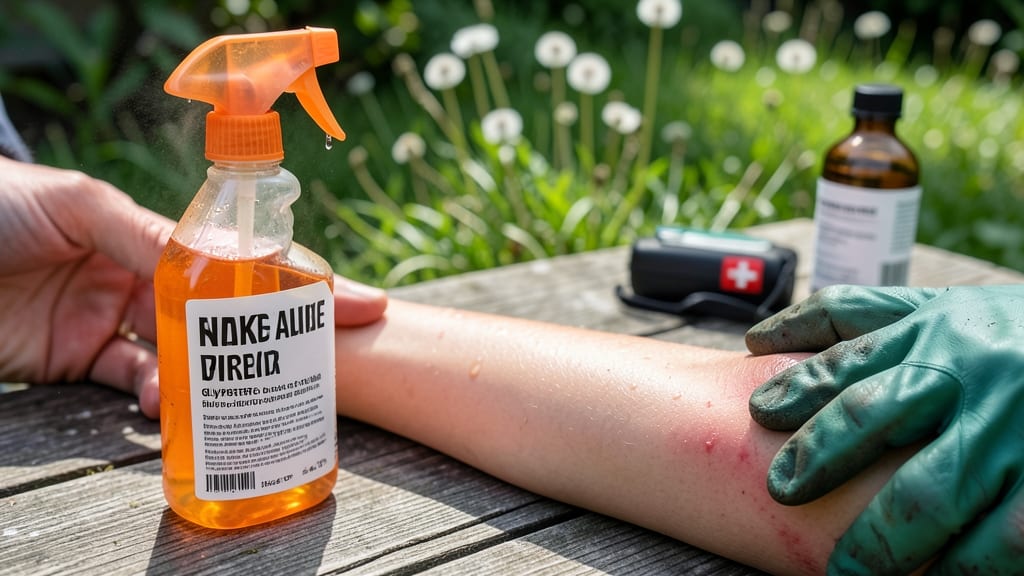
If weed killer gets on skin, rinse immediately with cold water for 15-20 minutes to flush out residue, then wash gently with mild soap. Never scrub or use hot water, as these can drive chemicals deeper. Seek medical attention right away for burning, irritation, or chemical burns, particularly with glyphosate or 2,4-D exposure.
When herbicides land on your skin, time is critical because these chemicals can penetrate quickly—especially through broken skin or sweat. 🔥 Glyphosate, found in many popular brands, is particularly concerning due to its systemic absorption risk, while 2,4-D often causes localized irritation.
I always recommend double-checking the product label for specific warnings, as concentrated formulas may require even more aggressive rinsing. For granular weed killers, brush off any dry particles before rinsing to avoid spreading the chemical further.
Beyond immediate first aid, prevention is key. Wearing long sleeves, gloves, and closed-toe shoes during application dramatically reduces exposure risks. If you're working near pets or children, consider using a spray shield or barrier cream designed for herbicide protection.
Remember, even "organic" weed killers like vinegar or citric acid can cause skin irritation with prolonged contact.
💡 In This Article
- Chemical Types in Weed Killers and Their Skin Risks
- First-Aid and Prevention for Weed Killer Skin Exposure
Chemical types in weed killers and their skin risks
Weed killers contain different active ingredients that behave uniquely on skin. Glyphosate, found in brands like Roundup, is a systemic herbicide that disrupts plant growth by inhibiting an enzyme called EPSP synthase.
When it contacts skin, glyphosate can penetrate through sweat glands or damaged skin at a rate of about 0.01-0.1% of applied dose—enough to cause irritation or allergic reactions in sensitive individuals.
Studies show prolonged exposure may lead to contact dermatitis, characterized by redness, itching, and blistering within 24-48 hours of contact.
2,4-D, another common herbicide, works by mimicking plant hormones and is often found in granular formulations. Unlike glyphosate, 2,4-D primarily causes localized skin reactions rather than systemic absorption. However, its absorption rate through skin can increase by up to 30% in humid conditions due to sweat.
Dicamba, used in products like Banvel, poses additional risks because it can vaporize and cause respiratory irritation even when applied to soil. Granular formulations, like those containing triclopyr, pose unique risks because particles can cling to skin and clothe, increasing prolonged exposure.
The formulation type—whether liquid, granular, or foam—significantly affects skin contact risks. Liquid concentrates spread easily and require immediate rinsing, while granular products can adhere to skin and clothing, prolonging exposure.
For example, a 20% glyphosate liquid concentrate applied to bare skin can leave residue that remains active for up to 30 minutes unless properly rinsed. Always check the product label for specific warnings, as some formulations contain surfactants that enhance chemical penetration.
Long-term risks vary by chemical. Glyphosate has been classified as a "probable carcinogen" by the WHO, though skin absorption alone is unlikely to cause cancer without repeated, high-level exposure.
2,4-D, however, is more likely to cause immediate skin reactions, such as urticaria (hives) or chemical burns, particularly in individuals with pre-existing skin conditions like eczema. Dicamba exposure can lead to more severe dermatitis due to its volatility and tendency to linger in the environment.
Sensory clues can help identify exposure risks. If you notice a stinging sensation within minutes of contact, it’s often a sign of 2,4-D or dicamba exposure. Glyphosate reactions may take hours to appear but can include a burning feeling similar to mild sunburn.
Always monitor skin for these signs after handling herbicides, especially in hot or humid weather, as sweat increases absorption rates by up to 20%.
For those with sensitive skin, even "organic" weed killers like vinegar or citric acid can cause irritation. These alternatives rely on acetic acid, which can denature skin proteins at concentrations above 5%, leading to dryness or mild burns. Always dilute homemade solutions and wear gloves to minimize contact.
Understanding these chemical behaviors helps you respond faster and protect your skin effectively. 💫