
Pests
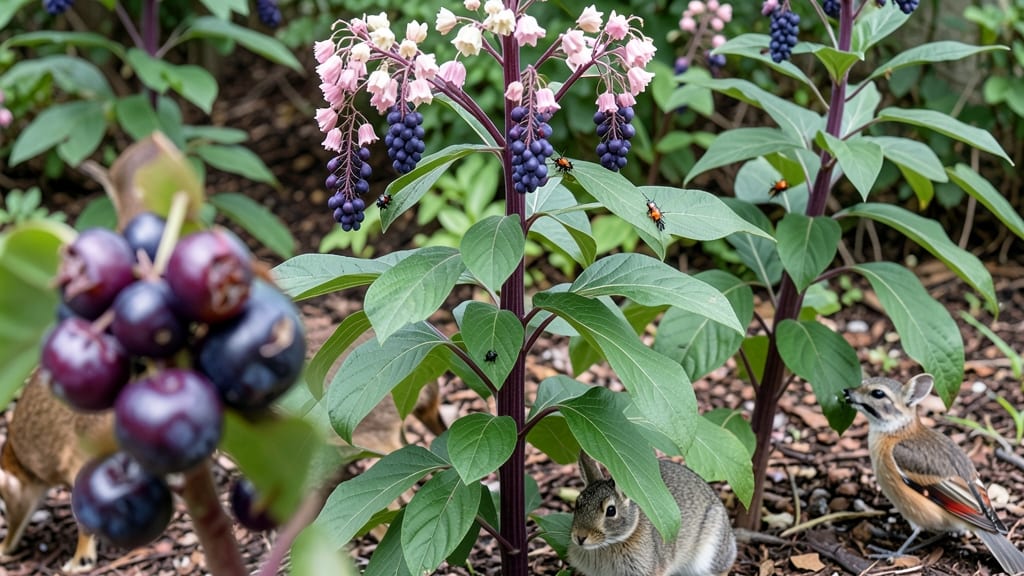
Several animals eat pokeweed, including deer, rabbits, and Japanese beetles, while its berries draw birds like cedar waxwings and robins—but these plants can be toxic to pets and livestock in large amounts.
Pokeweed's berries are particularly appealing to wildlife because they contain natural sugars that act like a magnet for birds and small mammals. 🌿 Deer and rabbits, however, tend to avoid the leaves due to mild toxins, though they'll still nibble on young shoots when other food is scarce.
The Japanese beetle, on the other hand, thrives on the plant's foliage, making it a natural pest control ally for gardeners struggling with invasive pokeweed patches.
What makes this plant tricky is its dual nature—while it supports local ecosystems, its berries can be dangerous if consumed in excess by pets or livestock. 🐶 The key is understanding which animals help control its spread without risking unintended consequences.
For example, encouraging deer browsing can reduce pokeweed growth, but only if your property has safe boundaries to prevent overconsumption.
💡 In This Article
- Why Pokeweed Attracts Certain Wildlife
- Natural Pokeweed Control Using Wildlife
Why pokeweed attracts certain wildlife
Pokeweed's ability to draw specific wildlife hinges on its unique nutritional profile and toxicity thresholds. Its berries contain about 10-15% sugar by weight, making them irresistible to birds like cedar waxwings and robins. These sugars provide quick energy, while the berries' thin, fleshy texture makes them easy to consume.
The plant's leaves, however, contain alkaloids like phytolaccatoxin, which act as natural deterrents for most herbivores—though not all. 🌱
Deer and rabbits have evolved to handle these mild toxins, especially when other food sources are scarce. Studies show deer will graze on young pokeweed shoots (which contain lower toxin levels) but avoid mature leaves.
Japanese beetles, meanwhile, thrive on the plant's foliage because their digestive systems can process the alkaloids better than mammals can. The beetles' larvae also feed on pokeweed roots, creating a two-stage natural control system. 🐞
Seasonality plays a critical role in feeding behavior. Birds flock to pokeweed berries during late summer and fall when other fruits ripen, while deer and rabbits rely on it more in early spring when fresh greens are limited.
This seasonal pattern explains why pokeweed populations can explode in areas where these natural predators aren't present year-round. The plant's berries remain on the stalk for weeks, providing a prolonged food source that wildlife can't resist.
What's fascinating is how these animals navigate the plant's toxicity. Deer, for instance, can metabolize small amounts of pokeweed toxins without harm, but their systems reject large quantities—this is why you'll see them nibbling selectively rather than devouring entire plants.
The Japanese beetle's ability to process these compounds makes it an ecological ally for gardeners, as its larvae can reduce pokeweed root systems by up to 30% in a single season. 🌿
For pets and livestock, the risks become apparent when they consume pokeweed in excess. While a single berry might not harm a healthy dog, eating 10-20 berries can cause vomiting or diarrhea due to the plant's saponins and phytolaccatoxin content.
The key difference lies in body weight—what's toxic to a 20-pound dog might be harmless to a 100-pound deer. This biological selectivity explains why wildlife can coexist with pokeweed while domestic animals require careful supervision.
The plant's chemical defense system also explains why some animals avoid it entirely. For example, white-tailed deer will often bypass pokeweed in favor of clover or alfalfa when given the choice, demonstrating their ability to distinguish between toxic and non-toxic plants.
This selective feeding creates a natural balance in ecosystems where pokeweed grows, preventing it from becoming completely dominant. 🌍