
How To
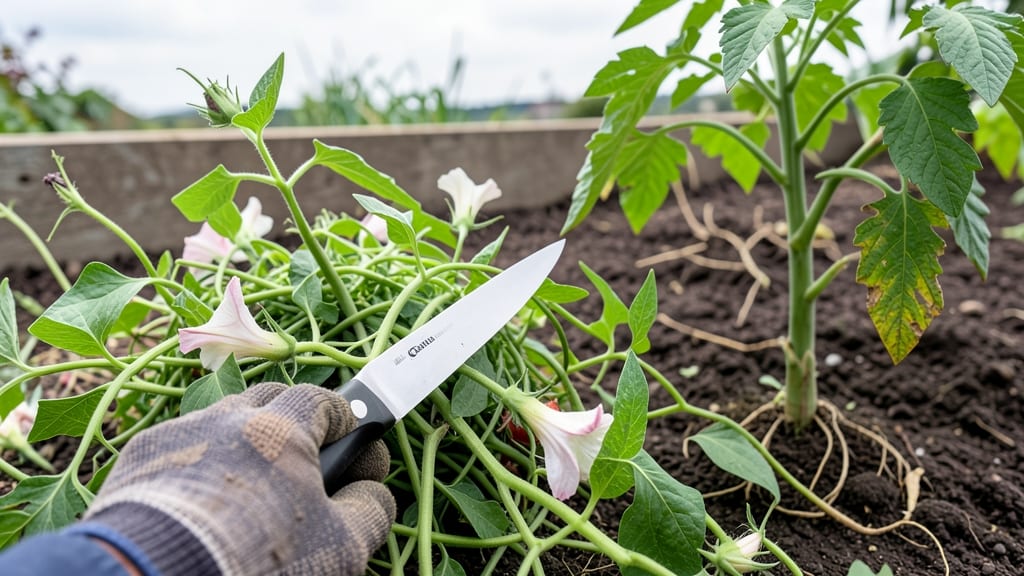
Bindweed is a highly invasive perennial vine with arrowhead-shaped leaves and white or pink bell-shaped flowers, known for its aggressive root system that spreads underground and resists eradication.
Bindweed, also called morning glory vine, is one of the most stubborn weeds gardeners face because it can grow 10-15 feet in a single season. 🌱 The confusion often starts with its morning glory look-alike, but bindweed's thicker stems and deeper root system (up to 15 feet underground) make it far more destructive.
Unlike annual morning glories that die back in winter, bindweed's roots survive harsh conditions, sprouting new growth year after year. This persistence is why it's classified as a noxious weed in many states.
What sets bindweed apart visually is its heart-shaped leaves with pointed tips and a distinctive twisting vine habit. The flowers appear in clusters along the vine, while morning glories typically have solitary blooms.
The real giveaway? Bindweed's roots form dense underground networks that can choke out other plants, making it a nightmare for lawns and gardens.
💡 In This Article
- Identifying Bindweed: Key Visual and Structural Traits
- Bindweed vs Morning Glory: How to Tell Them Apart
Identifying bindweed: key visual and structural traits
Bindweed's most distinctive feature is its arrowhead-shaped leaves that grow in pairs along the vine, each measuring about 1-3 inches long with pointed tips and smooth edges.
These leaves have a glossy texture and grow alternately along the stem, creating a spiral pattern as the vine climbs. 🌿 Unlike many vines, bindweed's leaves lack the fuzzy or hairy texture common in morning glory varieties, giving them a sleek, almost waxy appearance when healthy.
The flowers are another dead giveaway—bindweed produces clusters of white or pink bell-shaped blooms that hang downward, each about 1 inch wide. These flowers appear in late spring to early summer and have five petal-like lobes with a slightly twisted appearance.
What's unique is how these flowers emerge directly from the leaf axils (the angle between the leaf and stem), rather than on separate stalks like many garden vines.
The flowering period lasts about 4-6 weeks, after which the vine produces seed pods that can contain up to 4 seeds each.
What truly sets bindweed apart is its aggressive root system that can extend 10-15 feet deep and spread horizontally up to 30 feet from the parent plant. These roots form dense, tangled networks that can regenerate new shoots from even small fragments left in the soil.
The vine itself can grow 10-20 feet tall in a single season, wrapping tightly around structures or other plants. This growth habit creates a suffocating canopy that blocks sunlight from reaching garden plants below.
Seasonal changes reveal bindweed's persistence. In fall, the above-ground parts die back, but the roots remain dormant underground. By early spring, new shoots emerge from these roots, often appearing as small rosettes of leaves before the vine begins its rapid ascent.
Unlike annual vines that die completely each winter, bindweed's ability to regenerate from root fragments makes it nearly impossible to eradicate with surface treatments alone.
One often-overlooked trait is the vine's thickness. Mature bindweed stems can reach 1/4 inch in diameter, which is significantly thicker than most morning glory varieties. The stems have a slightly ribbed texture and can appear somewhat woody as they mature.
When you run your fingers along the vine, you'll notice the twisting growth pattern that helps it climb fences, trees, and garden trellises with remarkable tenacity.
For gardeners, the key takeaway is to examine these traits together: the arrowhead leaves, bell-shaped flowers, thick twisting vines, and aggressive root system. These characteristics create a unique profile that distinguishes bindweed from nearly all other common vines in North America. 🌱