
Diseases
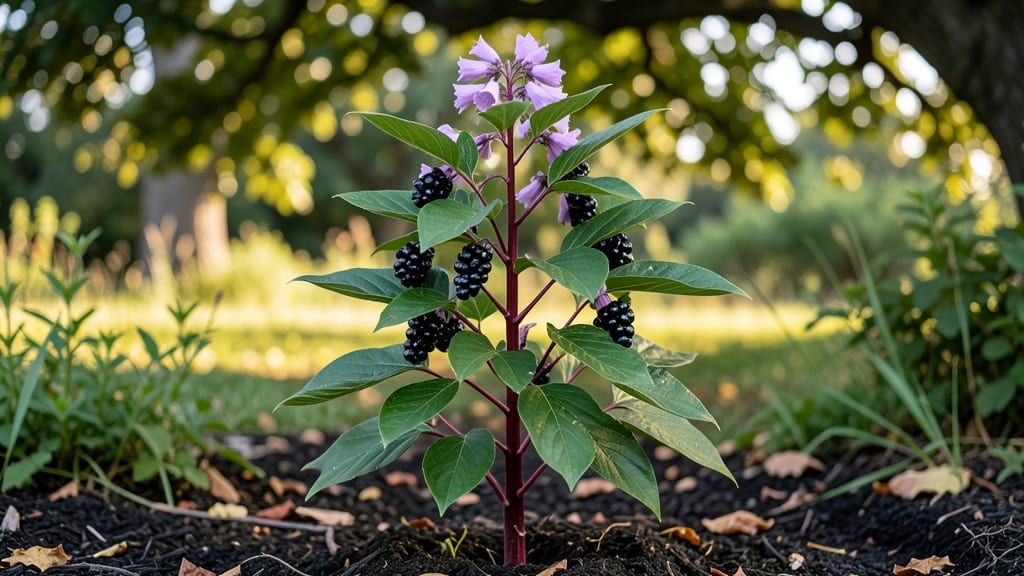
Pokeweed is a fast-growing, invasive plant with purple stems and clusters of purple berries, highly toxic when ingested due to its saponins and alkaloids, posing serious risks to humans and pets if consumed.
Pokeweed thrives in disturbed soils and spreads aggressively through its extensive root system, often popping up in gardens, fields, and even cracks in pavement. 🌱 Its distinctive features—alternating green leaves with purple veins and tall, stalk-like stems—make it easy to spot once you know what to look for.
Unfortunately, many people confuse its berries with edible fruits like elderberries, which is why awareness about its toxicity is so important. The plant's rapid growth and hardiness make it a persistent nuisance, especially in areas where it can go unnoticed until it's too late.
If you're gardening in areas where pokeweed is common, learning to identify it early can save you from accidental exposure. The berries, while tempting in appearance, contain compounds that can cause severe illness if ingested.
Always double-check any plant before consuming, and when in doubt, consult a local botanist or extension service. Prevention is key—removing pokeweed before it spreads ensures your garden stays safe for both people and pets.
💡 In This Article
- Identifying Pokeweed: Key Visual and Growth Characteristics
- Pokeweed Toxicity: Health Risks and Emergency Response
Identifying pokeweed: key visual and growth characteristics
Pokeweed (Phytolacca americana) stands out with its striking visual traits: broad, oval leaves arranged alternately along its purple-tinged stems, which can reach heights of 3-10 feet under ideal conditions. The leaves start green but develop purplish hues as they mature, creating a gradient that's hard to miss.
What makes it particularly deceptive are its berry clusters—initially green, they ripen to a glossy purple, resembling edible fruits like elderberries or mulberries, but with a critical difference: pokeweed berries are 10-15% larger and lack the distinct white pith found in elderberries.
The plant's growth habit is equally aggressive. Pokeweed spreads through both seeds and deep, creeping roots that can extend 10-15 feet underground, making eradication difficult. A single plant can produce up to 50,000 seeds annually, which remain viable in soil for 5-10 years.
It thrives in disturbed soils—think garden beds, roadside edges, or even cracks in sidewalks—where sunlight reaches the ground. This adaptability explains why it's considered one of North America's most persistent weeds. 🌱
One of the most dangerous confusions involves its berries. While pokeweed berries are toxic at all stages, they're most tempting when ripe. The smooth, waxy skin and deep purple color mimic edible fruits, but the flesh contains saponins and phytolaccatoxins, compounds that cause severe gastrointestinal distress.
Unlike elderberries, which have a tart-sweet flavor, pokeweed berries have a bitter, astringent taste that's often described as "soapy"—a clue that should raise immediate red flags.
For gardeners, distinguishing pokeweed from lookalikes is crucial. Elderberry bushes, for example, have opposite leaf arrangements (paired directly across the stem) and white flower clusters before berries form. Pokeweed's flowers are small, greenish-white, and appear in dense, terminal spikes before the berries develop.
Another trick: crush a leaf—pokeweed releases a mildly sweet, almost fermented odor, while elderberry leaves have a more neutral scent. This simple test can save a lot of trouble.
The plant's root system is another giveaway. When pulled, pokeweed often leaves behind thick, fibrous roots that can regenerate new shoots if even a small piece remains in the soil.
This is why manual removal is rarely effective—digging must be deep and thorough, ideally with a shovel or root saw, to prevent regrowth. In severe infestations, gardeners often turn to solarization or smothering with thick mulch to starve the roots of sunlight.
If you're unsure whether a plant in your garden is pokeweed, here's a quick checklist to confirm:
- Stems: Tall, purple-tinged, and hollow (can be snapped easily)
- Leaves: Alternate arrangement, broad oval shape with purple veins
- Berries: Large clusters of glossy purple berries (no white pith)
- Roots: Thick, fibrous, and deep-reaching
Remember, when in doubt, never consume any plant you haven't positively identified as safe. A moment of hesitation can prevent a dangerous mistake. 🚨