
How To
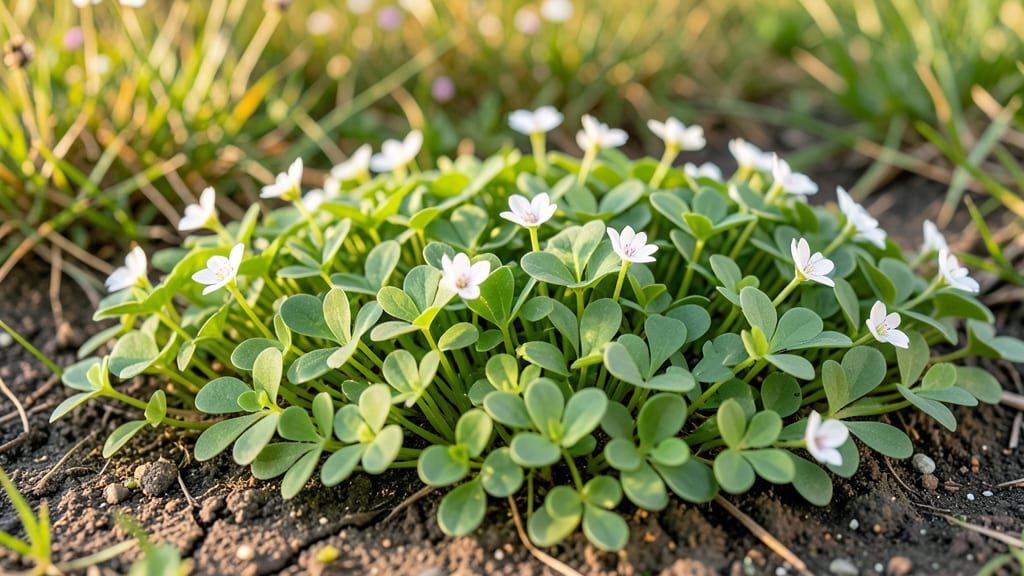
To find chickweed, look for it in damp, shady lawns, forest edges, and disturbed soil areas during spring and fall. You can also grow it in your garden by planting seeds in well-drained, partially shaded spots with consistent moisture, but be sure to confirm the plant's identity before harvesting.
Chickweed thrives in cooler months when other plants slow down, making early spring and late fall your best bet for wild harvesting. 🌱 Look for its small, oval leaves with jagged edges growing in dense mats along garden borders or under trees where moisture lingers.
I've found it growing alongside clover and dandelions in my own backyard, but always double-check with a field guide or app to avoid confusing it with poisonous lookalikes like ground ivy.
For home cultivation, this hardy annual is one of the easiest plants to grow—it self-seeds readily in favorable conditions. Start with organic seeds in containers or directly in soil with 60% shade and keep the soil damp but not soggy.
The key is patience; chickweed grows slowly but spreads quickly once established. Many gardeners let it grow wild in shady corners as a natural ground cover or living mulch, though it can become invasive if not managed.
💡 In This Article
- Identifying and Locating Wild Chickweed Growth Habitats
- Growing Chickweed at Home: Soil, Light, and Care Essentials
Identifying and locating wild chickweed growth habitats
Chickweed (Stellaria media) thrives in temperate climates with moderate rainfall, particularly in zones 3-10 where winters aren't extreme. It favors rich, loamy soils with organic matter, often found in areas where soil is disturbed—think garden beds, compost piles, or construction sites.
The plant's shallow roots (2-3 inches deep) mean it needs consistent moisture but can't tolerate waterlogging, which is why you'll spot it along irrigated lawn edges or under drip irrigation systems in gardens. 🌱
Visually, chickweed's tiny white, five-petaled flowers (each 1/8 inch wide) are a dead giveaway, especially in spring when they bloom prolifically. The leaves are oval with scalloped edges, growing in opposite pairs along the stem, creating a dense, mat-like carpet.
One trick I use is to gently tug at the plant—chickweed's stems are hairy and brittle, snapping easily at the base. This helps distinguish it from ground ivy (Glechoma hederacea), which has square stems and a more robust growth habit.
The plant's growth cycle is another clue. Chickweed germinates in fall or early spring when soil temperatures hover around 45-55°F, then bolts in late spring if conditions dry out. In my Pacific Northwest garden, it peaks in March-April before fading as summer heat sets in.
This seasonal pattern explains why foragers often find it in shaded, north-facing areas where temperatures stay cooler. The plant's ability to photosynthesize efficiently in low light also means it outcompetes many weeds in dappled sunlight.
Regional variations matter too. In cooler, wetter climates like the Pacific Northwest, chickweed grows year-round in mild winters. But in hotter, drier areas (like the Southwest), it becomes a winter annual, disappearing by early summer.
I've noticed it thrives near oak and maple trees where leaf litter creates a natural mulch, retaining moisture while blocking intense sunlight. This microclimate preference is why it often appears in woodland gardens or under fruit tree canopies.
One common misidentification is with mouse-ear chickweed (Cerastium fontanum), which has smoother leaves and a more upright growth habit. The key difference? Chickweed's leaves are covered in fine hairs (visible with a magnifying glass), giving them a slightly fuzzy texture.
This trait isn't just for show—it helps the plant retain moisture in dry periods. When harvesting, I always run my fingers over the leaves to confirm this characteristic roughness before collecting.
For urban foragers, parking strips and median gardens are prime spots, as these areas often receive regular watering but minimal maintenance. I've even found it growing between paving stones where rainwater collects.
The plant's resilience makes it a reliable find, but always harvest sparingly—removing too much can leave bare soil vulnerable to erosion. 🌿