
Vegetables
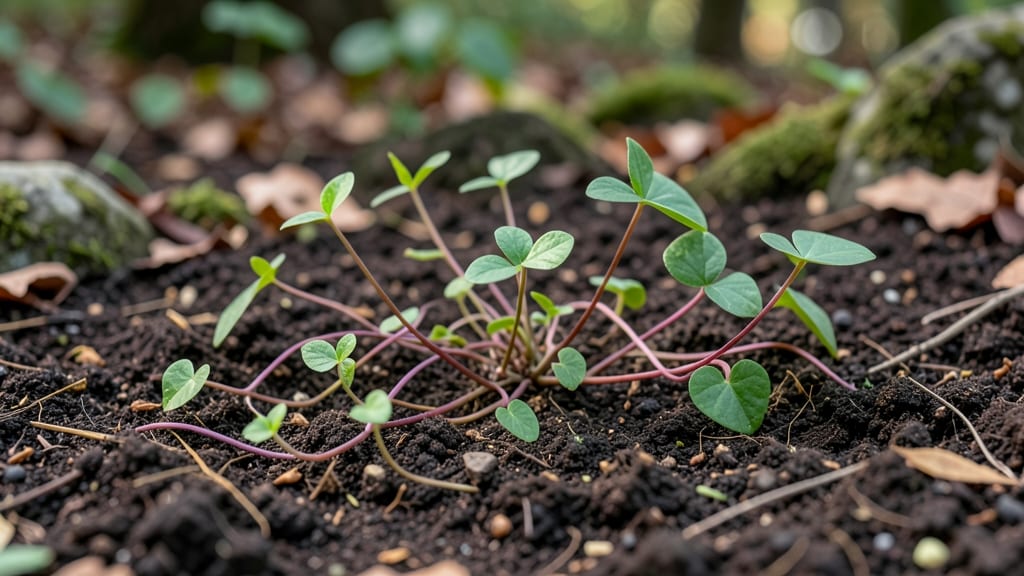
Identifying black bindweed seedlings early is crucial because these invasive plants grow rapidly with heart-shaped leaves and distinctive black or dark purple stems, often confusing them for harmless morning glory. Their aggressive spread can choke out garden plants, so removal by hand-pulling or vinegar-based herbicides must happen before deep roots form.
Black bindweed seedlings thrive in gardens because they mimic desirable plants like morning glory, but their dark stems and rapid growth give them away. 🌱 The key is catching them young—before those roots dig in.
I’ve seen them smother entire beds within weeks, so I always check for these telltale signs after rain when soil is soft. Vinegar solutions (1:1 ratio with water) work fast, but repeated applications are often needed since even small root fragments can regrow.
For stubborn cases, I recommend combining manual removal with a thick layer of cardboard mulch to block sunlight, which black bindweed seedlings can’t tolerate. This two-pronged approach gives your garden a fighting chance against this persistent invader.
💡 In This Article
- How to Identify Black Bindweed Seedlings in Your Garden
- Effective Black Bindweed Removal Techniques for Long-Term Control
How to identify black bindweed seedlings in your garden
The first clue that you're dealing with black bindweed seedlings—rather than a harmless vine like morning glory—is the deep black or dark purple stems. These aren't just any shade of green; they're almost jet-black, especially when young, and lack the glossy sheen of morning glory stems.
The leaves are heart-shaped (like a classic valentine) with pointed tips, but their edges are smooth rather than lobed, which helps distinguish them from ground ivy or creeping Charlie.
What makes identification tricky is how these seedlings mimic desirable plants.
For example, morning glory vines also have heart-shaped leaves, but their stems are green or reddish and their tendrils wrap clockwise (black bindweed's tendrils twist counterclockwise). 🌿 Another key difference is the growth speed—black bindweed seedlings can grow 6 inches per day in ideal conditions, while morning glory grows more slowly.
Look for the black stems at the base of the plant, even if the upper stems turn green as they mature.
The root system is another dead giveaway. Black bindweed develops a thick, woody taproot that can extend 10 feet deep if left unchecked. Even young seedlings have a sturdier root structure than morning glory, which has a more fibrous, shallow root system.
This is why pulling them by hand is so challenging—you'll often find the root breaks off, leaving fragments that regrow into new plants.
Timing matters too. Black bindweed seedlings emerge spring through early summer, often after rain when soil moisture triggers germination. They thrive in full sun but can also tolerate partial shade, which is why they appear in garden beds, vegetable patches, and even cracks in pavement.
The tendrils are another identifying feature—they're hairy and cling aggressively to other plants, creating a dense mat that blocks sunlight from reaching your garden plants.
Here's a quick comparison to help you spot the difference:
- Black bindweed: Black/purple stems, smooth-edged leaves, counterclockwise tendrils, grows 6+ inches/day, deep taproot
- Morning glory: Green/red stems, slightly lobed leaves, clockwise tendrils, grows 2-3 inches/day, shallow roots
- Ground ivy: Scalloped leaves, square stems, spreads via runners, no tendrils
If you're still unsure, dig up a small section of the plant and check the root structure. Black bindweed's roots will feel thick and woody even in seedlings, while other vines will have thinner, more flexible roots. 🔍