
Pests and Diseases
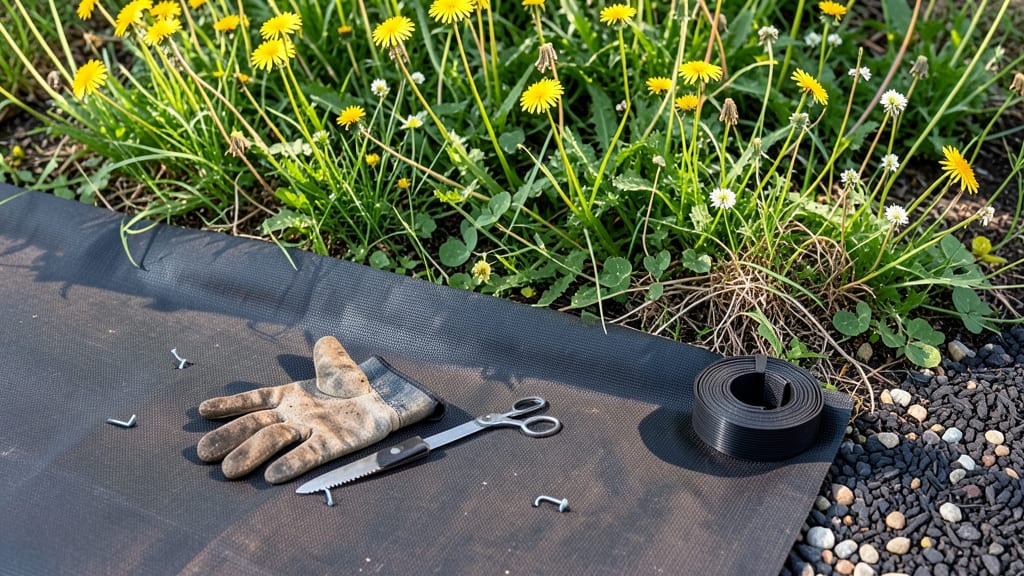
You can put landscape fabric over weeds to suppress their growth, but it won’t kill them permanently. The fabric smothers weeds by blocking sunlight, which weakens them over time while still allowing water and nutrients to reach the soil below. For best results, pair it with mulch or pre-treat weeds first.
Landscape fabric works by creating a physical barrier that cuts off weeds' access to sunlight—something they absolutely need for photosynthesis. 🌱 Without light, existing weeds gradually weaken and die, while new seeds struggle to sprout.
However, this method isn't foolproof: weeds often find their way through tears, edges, or gaps in the fabric over time. The key to long-term success lies in proper installation—securing the fabric tightly with overlaps and pairing it with a thick layer of mulch to block any remaining light leaks.
Think of it like putting weeds on a diet: they're still alive but starved of their essential energy source. This approach preserves your soil's health by maintaining airflow and nutrient flow, unlike heavy plastic sheets that can suffocate the ground.
I've found that combining fabric with a pre-emergent herbicide gives even better results, especially in high-weed areas.
💡 In This Article
- How Landscape Fabric Affects Weed Growth Over Time
- Best Practices for Using Landscape Fabric Against Weeds
How landscape fabric affects weed growth over time
Landscape fabric suppresses weeds primarily by blocking sunlight, which is their lifeline for photosynthesis. Most weeds require 4-6 hours of direct sunlight daily to thrive, and fabric reduces this to near-zero.
When you cover weeds with fabric, the existing plants gradually deplete their stored energy reserves, causing them to weaken and eventually die within 2-4 weeks. However, the fabric doesn’t kill weed seeds—it simply prevents them from sprouting by starving them of light.
The fabric’s effectiveness depends on its thickness and material. Standard woven polypropylene fabric (commonly 0.6-1.0 mm thick) allows water and nutrients to pass through while blocking light. Thicker fabrics or those with a UV-resistant coating work better for long-term suppression. 🌿 The downside?
Weeds often find their way through tears, edges, or where the fabric overlaps poorly. Even a 1-inch gap can let sunlight through, allowing weeds to grow through.
Over time, landscape fabric actually improves soil health by preventing erosion and maintaining moisture levels. Unlike plastic sheets, it allows air and water to penetrate, keeping the soil aerated and nutrient-rich.
This means your plants beneath the fabric will still receive what they need to grow, while weeds are systematically deprived. I’ve noticed that in areas with consistent rainfall, fabric helps retain moisture better than bare soil, reducing the need for frequent watering.
One critical factor is how weeds adapt to fabric. Some hardy species, like creeping Charlie or nutgrass, may develop thicker roots that push through the fabric over time. These weeds often require additional treatment, such as spot-applied herbicides or manual removal.
The fabric itself can degrade under UV exposure, typically lasting 3-5 years before needing replacement, depending on sunlight exposure and material quality.
For best long-term results, pair fabric with a 2-3 inch layer of mulch (like wood chips or straw) on top. This adds an extra light-blocking barrier and helps retain moisture. Without mulch, fabric alone may leave small gaps where weeds can still sprout.
Think of it like a two-layer defense system: the fabric blocks light, and the mulch seals any potential weak spots.
If you’re dealing with a heavy infestation, consider pre-treating the area with a non-selective herbicide before laying the fabric. This kills existing weeds and their seeds, giving the fabric a cleaner slate to work with.
Over time, the fabric will maintain weed suppression while the soil recovers, making it a sustainable solution for garden beds and pathways.