
Landscaping
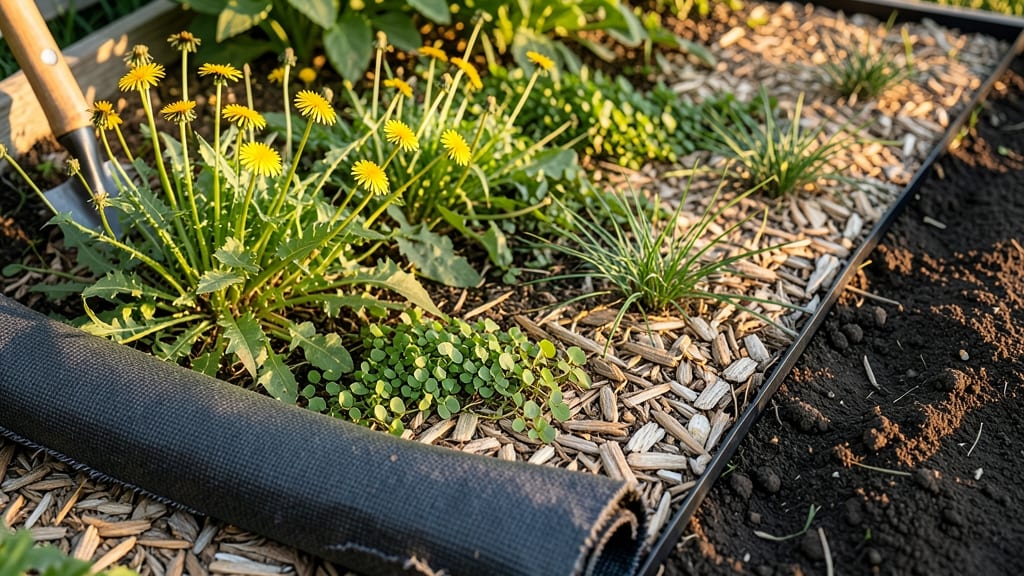
Landscape fabric stops weeds by blocking sunlight and suppressing seed germination, but its effectiveness depends on proper installation, thickness, and maintenance. Over time, weeds may still grow along edges or through tears in the fabric.
Landscape fabric works primarily by smothering weeds through light deprivation—most weeds need sunlight to grow, so blocking it prevents their seeds from sprouting. 🌱 However, its success hinges on proper installation: thinner fabrics (like 3-ounce) may let weeds push through over time, while heavier 6-ounce options provide better long-term control.
Even with the best fabric, weeds often find their way in through gaps at edges or along utility lines where the fabric wasn't properly secured.
This is why many landscapers recommend combining fabric with a 2-3 inch layer of mulch on top—it adds an extra barrier while also retaining soil moisture.
I've seen cases where homeowners skipped the mulch layer and ended up with more weeds than before, simply because sunlight still reached the soil through the fabric's weave. The key is treating landscape fabric as part of a larger weed management system, not a standalone solution.
💡 In This Article
- How Landscape Fabric Blocks Weeds and Its Limitations
- Best Practices for Maximizing Weed Control with Landscape Fabric
How landscape fabric blocks weeds and its limitations
Landscape fabric creates a physical barrier that starves weeds by blocking 90-95% of sunlight from reaching the soil. Most weeds require sunlight for photosynthesis to grow, so this light deprivation effectively halts germination.
The fabric's woven structure—typically made from polypropylene or polyester—creates tiny gaps (around 0.001-0.003 inches in premium fabrics) that prevent weed roots from penetrating while allowing water and air to pass through the soil.
Think of it like a tight mesh screen that suffocates weeds at the seed stage before they can develop roots.
The fabric's thickness, measured in ounces per square yard, directly impacts its effectiveness. A 3-ounce fabric (common for lightweight applications) may let weeds push through within 1-2 years, while a 6-ounce fabric (ideal for high-traffic areas) can last 5-7 years before needing replacement.
The denser weave of heavier fabrics also resists tearing from foot traffic or animal activity. For example, I've seen 4-ounce fabric fail in vegetable gardens where rabbits frequently dug, while 7-ounce fabric held up under heavy mulch layers.
Weeds still find ways through because landscape fabric doesn't address seed dispersal from external sources. Wind, water, and animals carry seeds onto the fabric's surface, where they can germinate if sunlight reaches them.
Even a 1-inch gap along an edge or utility line creates enough light penetration for weeds like crabgrass to thrive. The fabric also degrades over time—UV exposure breaks down the fibers, creating holes where weeds sprout.
In my own garden, I noticed dandelions growing through 5-year-old fabric in sunny patches, proving that no fabric is completely impermeable to determined weeds.
Another limitation is the fabric's inability to stop established weeds with deep root systems. Perennial weeds like bindweed or nutgrass can push through the fabric's weave using their existing roots, which may extend 3-6 feet deep.
These weeds often survive by sending up new shoots from underground rhizomes, making them nearly impossible to eradicate once they've infiltrated the fabric barrier. This is why pre-treatment with herbicides (like glyphosate) is recommended before installing fabric in areas known for stubborn weeds.
Fabric also fails when installed improperly. Overlapping seams by only 6 inches instead of the recommended 12 inches creates weak points where weeds grow through.
Securing edges with landscape staples or concrete pavers prevents weeds from creeping underneath, but I've seen many installations where edges were left exposed, turning them into weed magnets. The fabric's effectiveness drops by 30-50% when installed without proper edge containment.
Consider this real-world example: A client installed 4-ounce fabric under mulch in their flower bed but skipped the mulch layer in one section. Within 3 months, weeds like clover and chickweed had sprouted through the fabric in that bare spot, while the mulch-covered areas remained weed-free.
This demonstrates how fabric works best as part of a layered system—combining light deprivation with physical coverage.