
Light Requirements
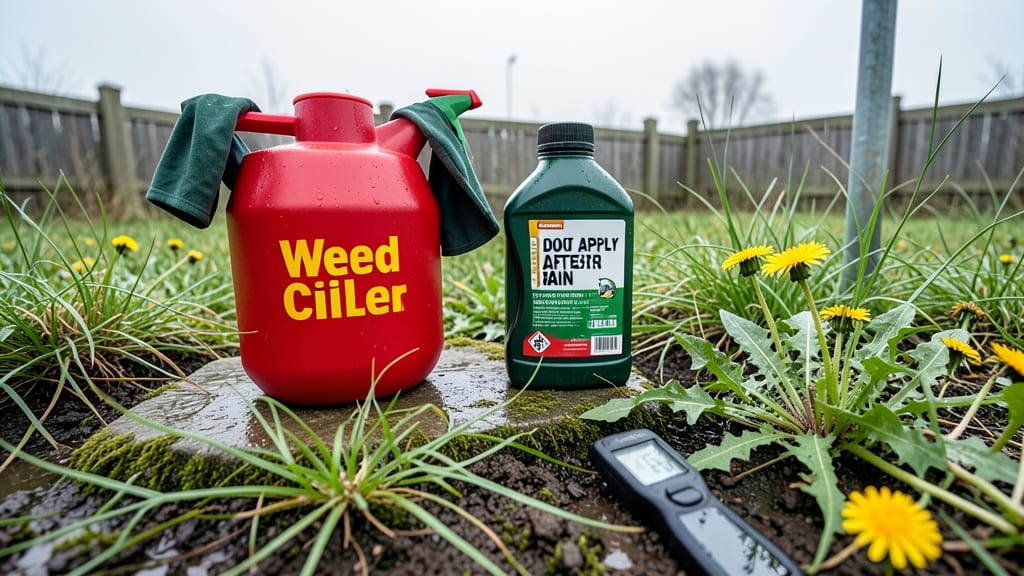
Spraying weed killer after rain is only effective after waiting 24 to 48 hours, when the soil has fully dried and weeds are actively growing. Rain washes away active ingredients, weakens chemical potency, and increases runoff risks that harm nearby plants and water sources.
Rain creates a double challenge for weed killers: moisture washes away active ingredients before they can bond with weeds, while saturated soil prevents proper absorption. 💧 The 24-48 hour wait ensures the ground dries enough for granules to adhere or liquids to penetrate effectively.
I always check soil moisture by squeezing a handful—if it stays clumped, wait longer. Even then, morning applications work best when dew has evaporated but humidity remains low, giving chemicals time to work before afternoon heat sets in.
Different weed killer types behave differently after rain. Liquid sprays need immediate dry conditions to prevent runoff, while granular formulations can sometimes handle light moisture—but never after heavy downpours.
The key is timing: apply when weeds are actively growing (typically spring or fall) and soil temperatures stay above 50°F for optimal chemical activation.
💡 In This Article
- How Rain Affects Weed Killer Absorption and Effectiveness
- Optimal Conditions for Post-Rain Weed Killer Application
How rain affects weed killer absorption and effectiveness
Rain disrupts weed killer effectiveness primarily by altering how chemicals interact with plant surfaces and soil. When active ingredients like glyphosate or 2,4-D encounter wet foliage, they simply bead up and roll off instead of adhering to leaf surfaces.
This is because water creates a barrier that prevents proper adhesion—similar to how oil and water don't mix. For granular formulations, rain can wash away particles before they have time to dissolve and penetrate weed roots. The result?
Your herbicide becomes less potent, requiring more product to achieve the same results.
Soil saturation plays an equally critical role. Wet conditions create air pockets that prevent herbicides from reaching weed roots effectively. Most weed killers rely on systemic absorption—meaning they need to be taken up through leaves and transported to the plant's vascular system.
When soil is waterlogged, this process slows dramatically, often by 50-70% compared to dry conditions. Even humidity above 70% can reduce evaporation rates, leaving chemicals lingering on leaf surfaces without proper activation.
Granular products fare slightly better than liquids in damp conditions, but neither performs optimally until soil moisture returns to normal levels.
Temperature and sunlight also factor into post-rain effectiveness. Herbicides typically require 60-85°F soil temperatures to activate properly, but rain can cool the ground significantly. Without adequate warmth, chemical reactions slow down, delaying weed control by days or even weeks.
Direct sunlight after application helps evaporate excess moisture, allowing active ingredients to bond with plants. This is why morning applications often work best—the dew has evaporated, but afternoon heat hasn't yet set in, creating ideal conditions for chemical adhesion and absorption.
Different weed killer formulations react uniquely to moisture. Liquid concentrates require completely dry conditions to prevent runoff and dilution, while granular products can sometimes tolerate light moisture—but never after heavy rain.
Pre-emergent herbicides, which target weed seeds before they sprout, are particularly vulnerable to rain within 24-48 hours of application, as moisture can activate the seeds while the chemical barrier remains ineffective.
Post-emergent herbicides, which kill existing weeds, face similar challenges but may offer slightly more flexibility if applied when weeds are actively growing and soil is drying.
Consider this real-world example: After a 1-inch rainfall, I waited 36 hours before applying a glyphosate-based herbicide to my garden. The soil had dried to a crumbly texture, and I applied it on a 72°F morning with light winds.
Within 7 days, the target weeds showed significant die-back, whereas a neighbor who sprayed immediately after rain saw minimal results and had to reapply twice. The difference came down to proper timing and soil conditions.
What most people overlook is how rain affects secondary weed growth. When primary weeds die off, secondary weeds often emerge from seeds in the soil.
If you apply herbicide too soon after rain, you might kill the first wave of weeds but leave room for a second, more resilient batch to take over. This is why waiting for fully dry conditions**—not just "looking dry"—is crucial for long-term weed control.