
Tools
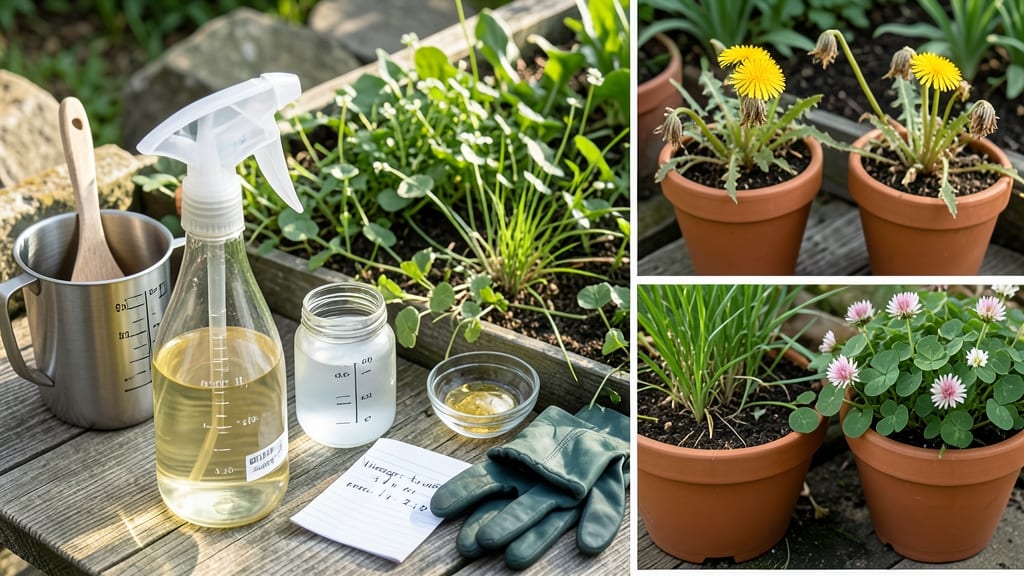
Using vinegar as a weed killer in the garden effectively targets unwanted plants by disrupting their cell structure through acetic acid, but it works best on young weeds under direct sunlight and should never be applied near desirable plants or grass.
Vinegar's acetic acid acts like a natural herbicide by breaking down plant cell walls, causing dehydration and death within hours. 🔥 The higher the concentration (10%–20% works best), the faster the results—but this also means greater risk to surrounding plants.
I always recommend testing a small area first, especially in shady spots where vinegar's effectiveness drops significantly. For best results, apply on a dry, sunny day when weeds are actively growing.
To boost adhesion, mix vinegar with a few drops of dish soap—this helps the solution cling to leaves rather than bead up. A simple spray bottle works, but for larger areas, a pump sprayer ensures even coverage.
Just remember: vinegar won't prevent future weeds, so regular applications are key for stubborn patches.
💡 In This Article
- How Vinegar Kills Weeds: The Science Behind Its Effectiveness
- Best Vinegar Types and Application Tips for Weed Control
How vinegar kills weeds: the science behind its effectiveness
Vinegar's weed-killing power comes from its acetic acid content, which acts like a natural herbicide by disrupting plant cell membranes. When applied, the acid causes cells to lose water rapidly through a process called osmotic shock, effectively dehydrating the plant from the inside out.
This is why you'll see weeds wilt and turn brown within hours of application. For example, a 20% acetic acid solution can kill weeds faster than a 5% solution, but it also increases the risk of damaging nearby plants.
The concentration of acetic acid directly impacts how quickly weeds die. Household vinegar typically contains 5% acidity, which works for young weeds but may require multiple applications for tougher varieties.
On the other hand, garden-strength vinegar with 20-30% acidity delivers faster results—often within 24 hours—but must be handled with care. This is similar to how commercial herbicides like glyphosate work, though vinegar lacks the systemic properties that allow herbicides to travel through a plant's vascular system.
Sunlight plays a crucial role in vinegar's effectiveness because it enhances the evaporation process, concentrating the acetic acid on the plant's surface. On a dry, sunny day, the vinegar solution dries quickly, leaving behind a higher concentration of acid that continues to damage the weed's cells.
In contrast, shady or damp conditions slow evaporation, reducing the weed-killing power. This is why early morning applications often yield the best results—weeds are typically dry, and sunlight will accelerate the process throughout the day.
One key difference between vinegar and commercial herbicides is selectivity. Vinegar doesn't discriminate—it will kill any green plant it touches, including grass and garden crops. This is why precision is critical.
For instance, if you're targeting weeds in a flower bed, use a 1% acetic acid solution (like diluted household vinegar) to minimize collateral damage. Even then, avoid overspraying, as the acid can linger in the soil and affect future plantings.
For best results, focus on young weeds with small leaves, as their cell structure is less resilient. Mature weeds with thick stems may require multiple applications, and even then, vinegar might not provide complete eradication.
This is where commercial herbicides shine—they often include additives that help penetrate tougher plant structures. However, vinegar remains a popular choice for organic gardeners due to its natural composition and low environmental impact.
Consider this comparison: A 10% acetic acid solution applied to dandelions in full sun will typically kill the plants within 3-5 days, while the same solution in partial shade may take 7-10 days or fail entirely.
The difference lies in how quickly the vinegar evaporates and concentrates on the plant's surface. 🌞