
How To
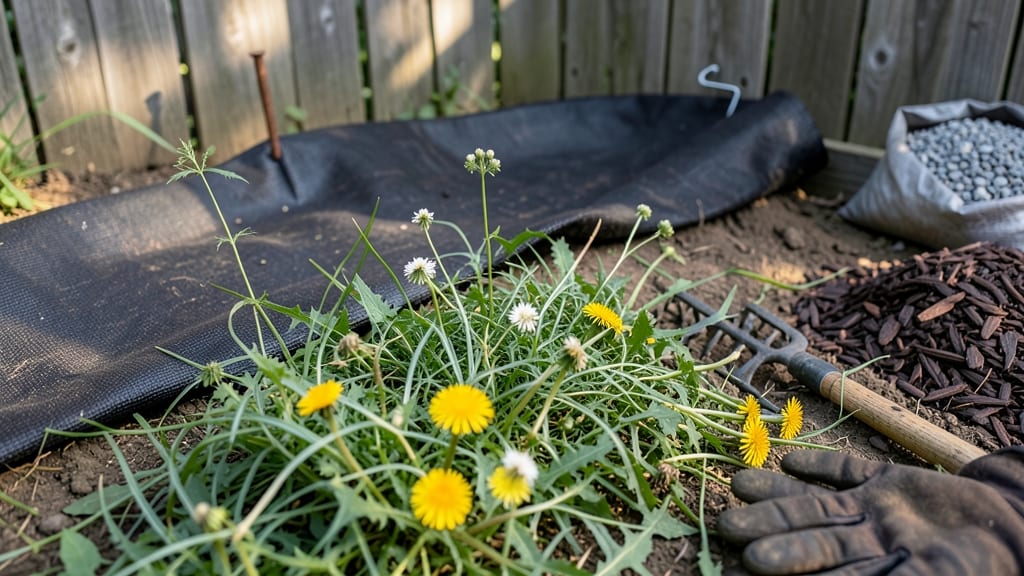
You shouldn’t put weed barrier over existing weeds because it only blocks sunlight without eliminating the roots, which lets weeds push back up through the fabric. The proper approach is to smother weeds first with thick layers of cardboard or mulch before installing the barrier.
Weed barriers work by preventing sunlight from reaching weed seeds, but they do nothing to kill established plants.
When you lay fabric over living weeds, their roots continue growing underground, eventually breaking through the barrier once the plants regain energy. 🌱 For best results, I recommend completely smothering weeds with at least 4-6 inches of cardboard or thick mulch for 4-6 weeks before installing the barrier.
This ensures the roots decompose and the soil is weed-free before the fabric goes down.
If you're working with stubborn weeds like dandelions or clover, consider using a vinegar-based herbicide first—it kills roots quickly and prepares the soil for the barrier. The key is patience: rushing the process often leads to weeds popping back up within weeks, making the barrier useless.
💡 In This Article
- Why Weed Barrier Fails on Existing Weeds
- Step-by-Step Weed Removal Before Laying Barrier
Why weed barrier fails on existing weeds
Weed barrier fabric works by blocking sunlight, which is essential for photosynthesis—the process weeds use to convert carbon dioxide and water into energy for growth. However, when you lay fabric over living weeds, their roots remain active underground, continuing to draw nutrients and moisture from the soil.
This underground network can persist for weeks or even months, depending on the weed species. For example, dandelions have deep taproots that can extend 12-15 inches into the soil, while shallow-rooted weeds like chickweed may only need 2-4 inches of soil to regenerate.
The fabric itself doesn’t kill roots—it only suppresses growth by cutting off light. Over time, weeds like crabgrass or clover will push through the fabric’s weave, especially if the material is thin (0.6mm or less).
Thicker barriers (1.2mm or more) delay this process but don’t eliminate it entirely. The real issue is that the barrier becomes a temporary shield rather than a permanent solution, giving weeds a chance to regroup once they breach the surface. 🌱
Sunlight deprivation alone isn’t enough because weeds have evolved to survive in low-light conditions for short periods. Some species, like bindweed, can even photosynthesize in dim light, making them particularly resilient. The barrier’s effectiveness hinges on preventing new weed seeds from germinating, not on stopping established plants from resurfacing.
Without addressing the roots, you’re essentially playing a game of whack-a-mole with your garden.
Consider the texture and density of the fabric: lighter-weight materials (often used in landscape cloth) allow moisture to evaporate quickly, stressing the soil and indirectly weakening weeds—but they also let roots penetrate more easily.
Heavier fabrics slow moisture loss and may take longer for weeds to break through, but they don’t change the fundamental problem: the roots are still alive and waiting for their chance to escape.
This is why smothering weeds first is critical—it starves the roots of oxygen and nutrients, forcing them to decompose before the barrier is installed.
For a deeper understanding, think about how weeds like creeping charlie spread: their roots can grow horizontally up to 3 feet from the parent plant. If you lay fabric over these roots without first killing the plant, you’re essentially creating a tunnel system for future regrowth.
The barrier might buy you 6-12 months of weed suppression, but without proper prep, you’ll eventually see weeds popping up through the fabric’s seams or tears.
Here’s the science in action: when you smother weeds with cardboard or mulch, you create an anaerobic environment (low in oxygen) that forces the roots to break down. This process, called suffocation, is far more effective than relying on a barrier alone.
Once the roots are gone, the fabric can focus on blocking new seeds, giving you the long-term control you’re after. 💫