
Lawn
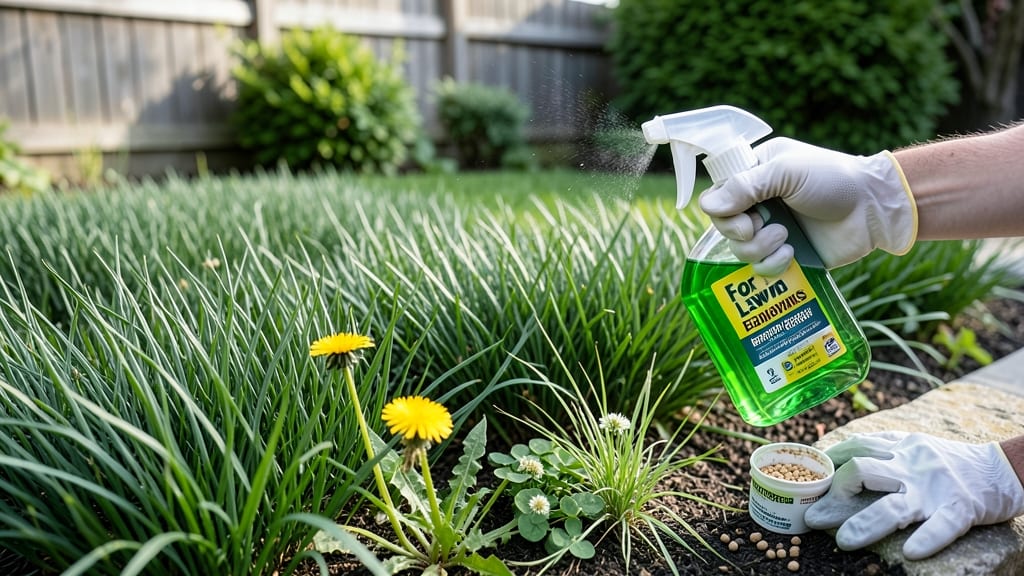
You should never put weed killer on wet grass because moisture dilutes the active ingredients, reducing their effectiveness while increasing runoff risks that can harm nearby plants and water sources. Always apply when the lawn is completely dry for optimal results.
Moisture disrupts weed killer performance by preventing proper absorption into plant tissues. When applied to damp grass, the chemicals spread unevenly and may wash away before they can take effect. 🌧️ This is especially critical with liquid herbicides, which rely on direct contact with weed leaves.
Even granular products can clump or fail to adhere properly when grass is wet. The best practice is to wait for a dry, calm day with no rain forecasted for at least 24 hours after application.
For lawns that are already damp, consider using granular weed killers instead of liquids—they're less affected by moisture. Always wear protective gloves and clothing, and follow the product's specific instructions for application timing.
After treating, avoid watering for at least 24 hours to prevent runoff from spreading the chemicals beyond your target area.
💡 In This Article
- How Moisture Affects Weed Killer Absorption and Performance
- Safe Application Tips for Wet vs Dry Grass Conditions
How moisture affects weed killer absorption and performance
When you spray weed killer on wet grass, the moisture creates a barrier that prevents the active ingredients from properly adhering to weed leaves. Most herbicides work by penetrating plant tissues through tiny openings called stomata, which are naturally more open during dry conditions.
Wet surfaces cause the chemicals to bead up or spread unevenly, reducing their effectiveness by up to 70% in some cases. This is especially true for systemic herbicides like glyphosate, which need to be absorbed and transported throughout the plant.
The science behind this lies in surface tension. Water molecules form a thin film over grass blades, creating a slippery surface that prevents herbicide droplets from sticking. Imagine trying to paint a wall while it's raining—the paint simply rolls off instead of adhering.
Similarly, granular weed killers can clump together when applied to damp grass, failing to disperse evenly across the lawn. Even a light dew can create enough moisture to compromise absorption, making early morning applications particularly risky.
Another critical factor is chemical dilution. Rain or irrigation after application can wash away 30-50% of the active ingredients before they have a chance to work. This runoff doesn't just reduce effectiveness—it can contaminate soil and nearby water sources, harming beneficial insects, fish, and plants.
The Environmental Protection Agency (EPA) warns that improper application increases the risk of herbicide movement into groundwater by up to 40%, posing ecological and health concerns.
For optimal performance, herbicides need dry conditions to maximize contact time with target weeds. Most products specify a 24-48 hour dry period before and after application. This allows the chemicals to properly adhere, penetrate, and begin working without interference from moisture.
The ideal scenario is a calm, dry day with temperatures between 60-85°F, as extreme heat or humidity can also affect absorption rates.
Consider the difference between liquid and granular herbicides: liquids are more immediately affected by moisture, while granules can sometimes work better in damp conditions—but only if applied correctly. Granules rely on water to dissolve and activate, but they must first make contact with dry soil or plant surfaces.
When applied to wet grass, they often clump together, reducing their surface area and effectiveness. This is why many professionals recommend waiting until late afternoon when dew has evaporated but evening rains aren't forecasted.
The best time to apply weed killer is typically between 8 AM and 10 AM on a dry day, when temperatures are moderate and winds are calm. This window allows for proper absorption before the heat of the day can cause rapid evaporation of the herbicide droplets.
Always check the weather forecast and avoid applying if rain is expected within 24 hours, as this will wash away the chemicals before they can take effect.