
Blooming
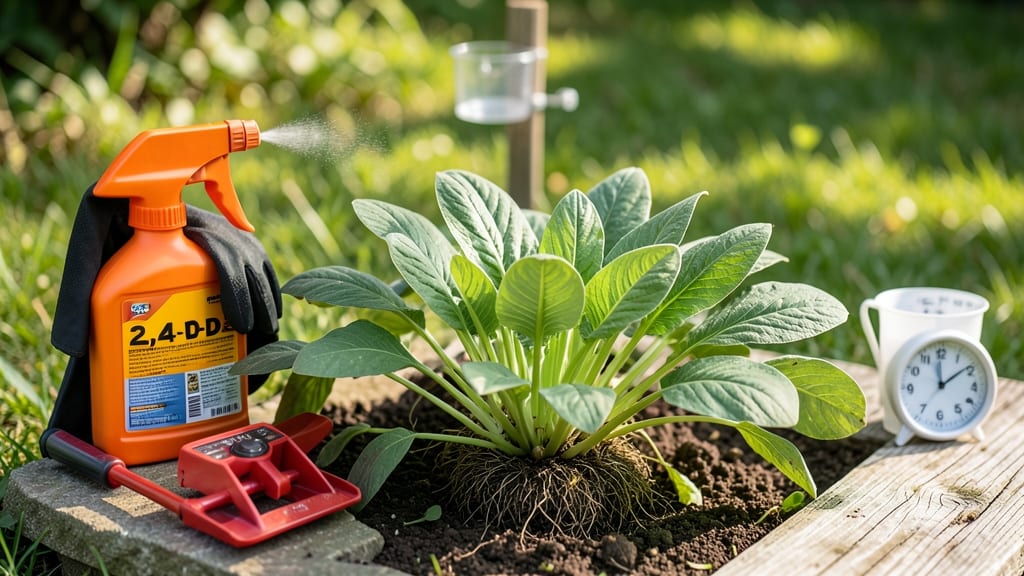
Waiting 24 to 48 hours before rain after applying weed killer is crucial to prevent the herbicide from washing off, though pre-emergent products may need up to 72 hours for full absorption. Always verify the product label for precise timing instructions.
Rain can turn your weed killer application into a waste of time and money. 🌧️ When it rains too soon, the herbicide gets diluted and rinsed away before it can penetrate the weeds' systems, leaving them unharmed.
For post-emergent weed killers, the 24-48 hour window gives the active ingredients enough time to soak into the leaves and roots. Pre-emergent types need longer because they must create a protective barrier in the soil before weeds even sprout.
Checking the weather forecast and product instructions can save you from reapplying and potential environmental runoff.
If rain is forecasted within 24 hours, consider using a rain-resistant formula or opt for manual removal methods like hand-pulling or mulching. Some herbicides are formulated to resist light rain, but even these perform best when applied during dry conditions.
Always prioritize timing—waiting just a little longer can make the difference between effective weed control and a failed treatment.
💡 In This Article
- How Rain Washes Away Weed Killer and Reduces Effectiveness
- Best Practices for Applying Weed Killer Before Rainy Weather
How rain washes away weed killer and reduces effectiveness
Rain disrupts weed killer effectiveness by diluting the active ingredients before they can penetrate plant tissues. When applied, most herbicides rely on a process called absorption, where chemicals move through the weed's leaves or soil to reach its vascular system.
Rain washes away the herbicide layer, preventing it from forming a proper bond with the plant's waxy cuticle. For post-emergent herbicides like glyphosate, this means the chemical never reaches the roots to disrupt growth. 🌧️
The timing difference between pre-emergent and post-emergent herbicides stems from their mechanisms. Pre-emergent herbicides create a protective barrier in the soil, requiring 72 hours to fully activate before weeds sprout.
Rain during this window can wash the chemical deeper into the soil, reducing its concentration at the surface where it needs to work. Post-emergent types, however, need only 24-48 hours because they target existing weeds through foliar absorption.
A single rainfall can reduce efficacy by up to 60% if applied too soon.
Rain also triggers harmful runoff, carrying herbicides into waterways where they can harm aquatic life. Many weed killers contain surfactants that enhance absorption but also increase water solubility. When it rains, these chemicals dissolve and flow into nearby streams or ponds, creating ecological imbalances.
For example, glyphosate has been linked to reduced biodiversity in aquatic ecosystems when introduced through runoff. 🌊
Temperature and humidity play hidden roles too. Warmer conditions (above 70°F) speed up herbicide absorption, while high humidity can cause droplets to bead up on leaves, preventing proper adhesion. This is why early morning applications often work better—the dew evaporates, leaving the herbicide in place.
Conversely, a sudden downpour can turn a perfectly applied treatment into a diluted, ineffective solution within minutes.
Consider the case of 2,4-D, a common broadleaf herbicide. When applied and followed by rain within 12 hours, its effectiveness drops by nearly 50% because the chemical washes off before it can translocate to the plant's growing points.
Even light drizzle can disrupt this process, making precise timing critical. For best results, always check the weather forecast and wait until at least 48 hours of dry conditions are predicted.
Another factor is the weed's growth stage. Young weeds have thinner cuticles, making them more susceptible to herbicide uptake—but also more vulnerable to rain washing away the treatment. Mature weeds with thicker leaves require stronger concentrations, which take longer to absorb.
This is why pre-emergent herbicides are often recommended for lawns with persistent weed problems—they don't rely on immediate rain-free conditions to work.