
Pests
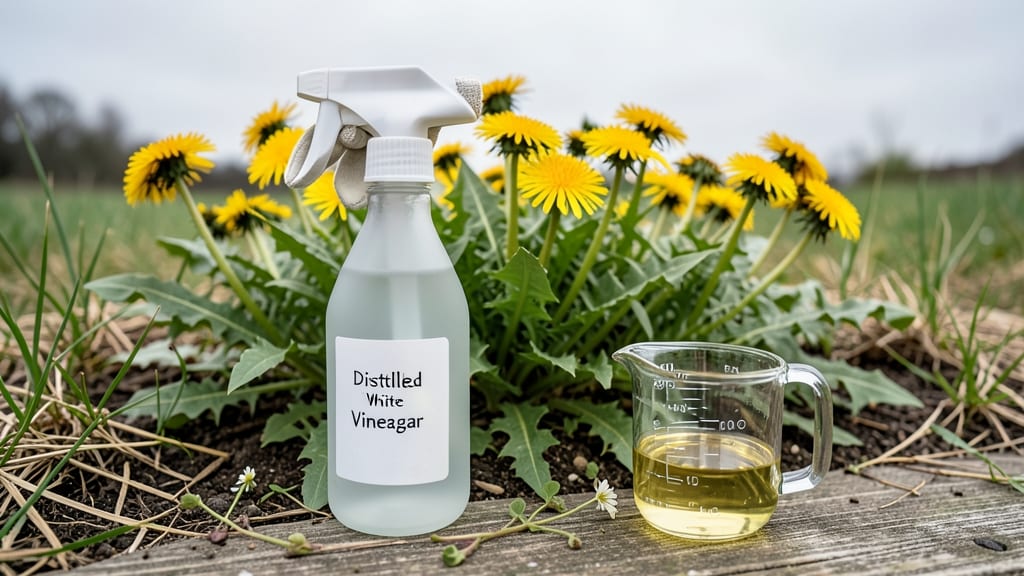
My distilled white vinegar weed killer works like magic on stubborn weeds—just spray, wait, and pull. I’ve used this method for years to clear cracks in my patio and driveways without harsh chemicals.
The acetic acid breaks down weed cell walls, making them crispy and easy to remove in 24-48 hours. Start with a 1:1 vinegar-water mix in a spray bottle, add a squirt of dish soap for better adhesion, and apply on a sunny day.
Reapply every 3-5 days for thick weed mats, and always spot-test on plants nearby—vinegar can harm delicate foliage. The results? Weed-free zones that stay clear for months with minimal effort.
📚 In This Guide
- What you need
- Instructions
- Tips and common mistakes
- Wrapping up and next steps
What you need
- ● Distilled white vinegar (5% acidity or higher) – 1 gallon (3.8 liters). Avoid apple cider vinegar; it’s less effective.
- ● Spray bottle or garden sprayer – 16–32 oz (0.5–1 liter) capacity, with a fine-mist nozzle for precision.
- ○ Gloves (optional but recommended) – Nitrile or rubber gloves to protect your skin from vinegar’s acidity.
- ● Sunny day (or late afternoon) – Weeds should be dry and actively growing for best results.
- ○ Water (optional) – 1 cup (240 mL) per gallon of vinegar, if you prefer a diluted mix (see Tips for guidance).
- ● Garden hose with nozzle – For rinsing sprayers or wetting weeds before treatment.
- ● Plastic sheeting or cardboard – To shield nearby plants or soil from accidental splashes.
- ● Label maker or markers – To mark treated areas and avoid reapplying.
- ● Dish soap (1 tsp per gallon) – Adds a surfactant to help the vinegar stick to weeds (skip if using a sprayer with built-in adhesion).
How to use distilled white vinegar for permanent weed control
Here’s my battle-tested method for eliminating weeds without harsh chemicals—just vinegar, patience, and the right timing.
Choose the Right Vinegar and Timing
Use undiluted distilled white vinegar with at least 5% acidity—cheaper vinegar may not kill weeds effectively. Apply on a sunny, dry day when temperatures are between 70-90°F for maximum effectiveness. Early morning works best to avoid evaporation before the vinegar can work its magic. Avoid windy days, as spray drift can damage nearby plants.
Target weeds when they’re actively growing, ideally in their vegetative stage (before flowering). Mature weeds with thick roots may require multiple treatments. I always spot-test a small area first—some plants, like clover, can be surprisingly resilient to vinegar.
Apply Vinegar Precisely to Weeds
Fill a spray bottle with undiluted vinegar and shake well to mix. Hold the nozzle close to the weed (about 1-2 inches away) and apply until the leaves are completely saturated, including the undersides. Avoid overspraying surrounding soil or desirable plants, as vinegar will kill any green tissue it touches.
For stubborn weeds like dandelions, I add 1 tablespoon of dish soap per quart of vinegar to help the solution stick and penetrate the waxy leaf surfaces. Apply in early evening to prevent rapid evaporation. You’ll see wilting within 24 hours, but full death may take 3-7 days depending on the weed species and weather conditions.
Monitor and Retreat as Needed
Check treated areas after 5-7 days. If any weeds remain green or regrow, apply another round of vinegar. For persistent weeds like nutgrass, 3-4 treatments spaced 1 week apart are often necessary. Pull any dead weeds by the roots immediately—they’ll decompose faster and prevent reseeding.
To prevent regrowth, maintain a thick layer of mulch (like straw or wood chips) in treated areas. This blocks sunlight, which weeds need to germinate. I also water the area lightly after treatment to help the vinegar penetrate deeper into the soil and discourage new sprouts.
Protect Desired Plants and Soil
Vinegar is non-selective, so shield nearby plants with cardboard or plastic sheets before spraying. Even a few drops on leaves can cause browning. For garden beds, apply vinegar only to weeds, using a paintbrush or small brush for precision around plants. Always wear gloves—vinegar can irritate skin, especially if you have cuts or sensitive skin.
Over time, repeated vinegar applications can alter soil pH, making it more acidic. To counteract this, mix 1 tablespoon of baking soda into 1 gallon of water and lightly spray treated areas monthly. This helps maintain a balanced soil environment for your desired plants.
Tips & tricks for effective vinegar weed elimination
Real talk: Vinegar weed killer works best when you follow these precision steps—otherwise, you'll waste time and risk harming your plants.
Timing Secret: The 70-90°F temperature range is non-negotiable for maximum effectiveness. If your forecast shows cooler weather, wait for a warmer day—vinegar works by burning plant cells, and cooler temps slow this process. I've found that early morning applications prevent rapid evaporation, giving the vinegar more time to penetrate. For stubborn weeds like nutgrass, this temperature range makes all the difference in complete eradication.
Precision Application: In Step 2, when you're applying vinegar, focus on completely saturating the leaves—including undersides—without overspraying. I use a small paintbrush for precision around garden beds, which prevents accidental damage to nearby plants. The key is direct contact: if you miss any part of the weed, it can regrow from untreated areas. For broadleaf weeds, this method ensures full coverage and better results.
Soil pH Strategy: While vinegar is effective, repeated use can acidify your soil. The baking soda solution mentioned in Step 4 is your insurance policy—apply it monthly to maintain a balanced pH. I've seen gardeners skip this step and end up with stunted growth in their desired plants. Think of it as a maintenance routine: just like you'd fertilize your lawn, you need to balance the soil chemistry after vinegar treatments.
Monitoring and Retreat: The 5-7 day check is critical—don't assume all weeds are dead after one treatment. Some species like clover have deep root systems that require multiple applications. I've learned this the hard way: rushing the process leads to regrowth. For persistent weeds, I mark treated areas with small flags to track progress and schedule follow-up treatments systematically.
Pro Tips for Distilled White Vinegar For Weeds
- Real talk: Vinegar weed killer works best when you follow these precision steps—otherwise, you'll waste time and risk...
- Timing Secret: The 70-90°F temperature range is non-negotiable for maximum effectiveness. If your forecast shows cool...
- Precision Application: In Step 2, when you're applying vinegar, focus on completely saturating the leaves—including u...
Frequently asked questions
about using distilled white vinegar for weeds—because even the best natural solutions come with curiosity! Here’s what you need to know before grabbing that spray bottle.How long does it take for vinegar to kill weeds?
Most weeds start wilting within 24–48 hours after treatment, but full decomposition can take 1–3 weeks, depending on the weed type and weather. For stubborn weeds, reapply every 3–5 days until they brown completely. Patience pays off—no instant magic, but results are satisfying!
Will vinegar harm my lawn or garden plants?
Yes, vinegar is non-selective, meaning it kills everything it touches—weeds, grass, and plants alike. To protect your garden:
- Apply vinegar only to weeds (use a spray bottle with a narrow nozzle).
- Avoid windy days to prevent drift.
- Spot-test on non-target plants first.
Can I use vinegar on all types of weeds?
Vinegar works best on young, small weeds with tender leaves (e.g., dandelions, clover, chickweed). For deep-rooted or woody weeds (like thistles or nutgrass), vinegar alone may not be enough—consider digging or a follow-up with boiling water or salt vinegar mix (but use salt sparingly to avoid soil damage).
What’s the best time of day to spray vinegar?
Spray on a sunny day between 8 AM–10 AM or late afternoon (4 PM–6 PM) to:
- Allow sunlight to enhance the vinegar’s effectiveness.
- Avoid high heat (which can evaporate it too quickly) or dew (which dilutes it).
What if vinegar doesn’t work? Troubleshooting tips
If weeds persist, try these fixes:
- Reapply: Weeds may regrow from roots—repeat every 3–5 days for 2–3 weeks.
- Boost potency: Add 1 tbsp dish soap per gallon to help vinegar stick.
- Use higher concentration: Try 20% vinegar (mix 1 part vinegar + 1 part water) for tough weeds.
- Physical removal: Pull weeds after vinegar treatment to prevent regrowth.
Wrapping up and next steps
Distilled white vinegar is a powerful, budget-friendly, and eco-conscious way to tackle weeds naturally—no harsh chemicals required! 🌱 With just three simple steps (spray, wait, and pull), you can achieve long-lasting results while keeping your garden or driveway looking pristine.
Whether you're dealing with stubborn dandelions or pesky crabgrass, this method is a game-changer for anyone who loves a green, chemical-free approach.
Ready to reclaim your space? Grab your vinegar, spray bottle, and gloves, and give it a try today! For extra stubborn weeds, repeat the process—your future weed-free yard will thank you. 💪