
Vegetables
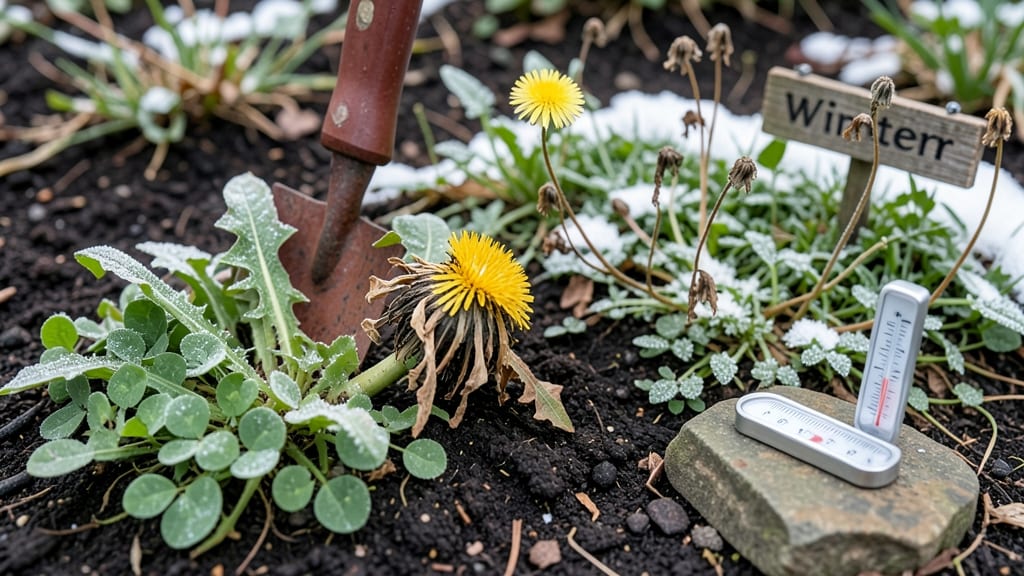
Weeds don't always die in winter; many perennial weeds survive through underground roots or seeds that regrow when temperatures warm, while annual weeds typically die but leave seeds for spring germination.
Winter's chill doesn't automatically kill weeds—it's all about their life cycle. 🌱 Perennial weeds like dandelions and creeping charlie rely on deep root systems or rhizomes to store energy, allowing them to bounce back when spring arrives.
Annual weeds may die back, but their seeds often survive in the soil until conditions improve. The USDA's cold hardiness zones play a role too, with weeds in milder climates (like Zones 7-10) faring better than those in harsh winters (Zones 3-5).
Understanding these differences helps you strategize control methods that actually work for your region.
For example, in Zone 5 where winters can drop below -20°F, many weeds will die back completely, but their seeds may still sprout in spring. Meanwhile, in Zone 8 where winters rarely dip below 10°F, weeds often remain active year-round.
This is why pre-emergent herbicides applied in early spring are often more effective than winter treatments—you're targeting those dormant seeds before they get a chance to germinate.
💡 In This Article
- How Cold Hardiness Zones Affect Weed Survival
- Best Winter Weed Control Methods for Different Climates
How cold hardiness Zones affect weed survival
Understanding weed survival hinges on how these plants adapt to cold through their biological structures. Perennial weeds like dandelions and creeping charlie store carbohydrates in deep taproots that can withstand -20°F temperatures, while their above-ground growth dies back.
These roots act like natural batteries, converting stored energy into rapid regrowth once temperatures rise above 40°F. Annual weeds, however, lack this resilience—their entire structure freezes, but they leave behind seeds that remain dormant until soil temperatures hit 50-60°F in spring.
The USDA's cold hardiness zones create dramatic differences in weed behavior. In Zones 3-5 where winters drop below -10°F, most annual weeds die completely, but their seeds may survive 2-3 years in soil.
Meanwhile, in Zones 7-10 where winters rarely dip below 10°F, many perennial weeds like nutgrass and chickweed remain active year-round. This zone-based survival explains why northern gardens often see weed explosions in spring, while southern gardens may struggle with persistent weeds throughout winter.
What's particularly interesting is how weed species adapt to their local climate. For instance, purple deadnettle thrives in Zones 4-9 by producing both seeds and rhizomes, giving it multiple survival strategies. In contrast, lambsquarters—an annual—relies entirely on seed dormancy, with viability lasting up to 5 years in cold climates.
This biological diversity means your weed control approach must account for both the type of weeds present and your specific hardiness zone.
The science behind this involves a process called "cold acclimation," where weeds gradually build up protective compounds like antifreeze proteins in their cells during fall. This is why early winter applications of herbicides often fail—weeds haven't fully committed to dormancy yet.
In Zones 6-8, many weeds enter a semi-dormant state where they can still photosynthesize under snow cover, using sunlight to maintain energy reserves.
Consider this practical example: In Zone 5, a dandelion's taproot might extend 12-18 inches deep, while in Zone 9, the same species might only grow 6-10 inches deep because the soil rarely freezes.
This depth difference means deeper cultivation is needed in colder zones to effectively sever perennial weed roots. The deeper the root system, the more energy the weed has stored for spring regrowth.
Temperature fluctuations also play a crucial role. Weeds in transitional zones (like Zone 6) experience "false springs" where temperatures briefly rise above 50°F before dropping again.
This can trick weeds into germinating prematurely, only to be killed by subsequent frosts—a phenomenon gardeners can exploit with strategic pre-emergent herbicide applications timed to these temperature shifts.
Understanding these mechanisms helps explain why some weeds seem to disappear in winter only to return stronger in spring. The key takeaway is that weed survival isn't just about whether they die in winter, but how their biological adaptations interact with your local climate patterns.
This knowledge forms the foundation for effective year-round weed management strategies tailored to your specific growing conditions. 🌱