
Plants
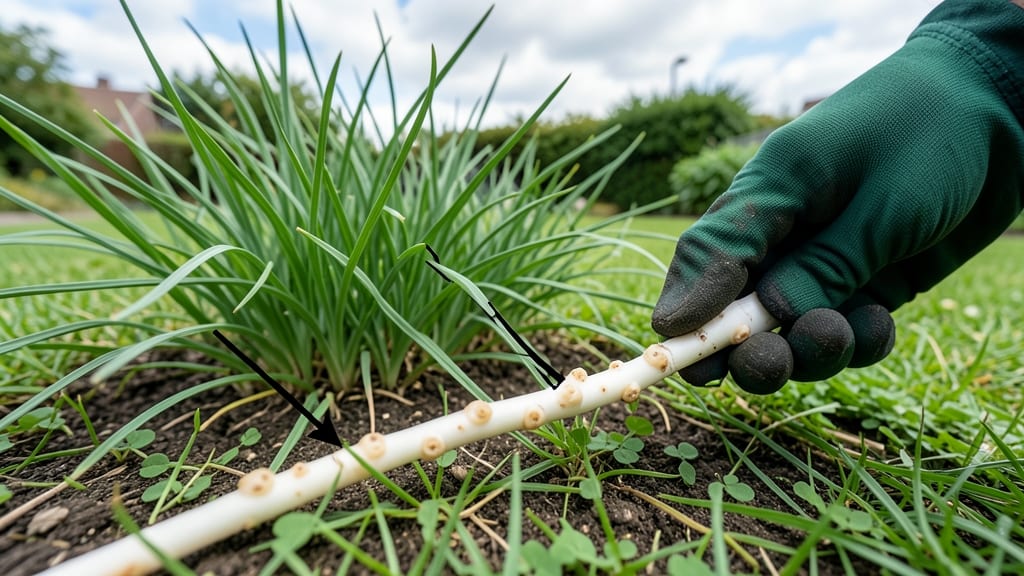
Weeds with underground runners, such as Bermuda grass and creeping Charlie, multiply rapidly through horizontal stems called rhizomes or stolons. To stop their spread, you must dig deep to cut these roots completely and then use mulch or herbicides to block regrowth.
These aggressive spreaders don't just pop up—they send out underground networks that can regenerate from even small fragments left behind. 🔥 Unlike weeds with single taproots, runners create entire colonies, making them harder to control with surface treatments.
I've seen firsthand how a single stolon fragment can sprout into a new plant within weeks if not fully removed.
Your best defense starts with proper identification. Rhizomes are thick, woody stems growing horizontally underground, while stolons are slender stems that root at nodes above ground.
Both types make these weeds resilient, so a shallow pull won't cut it—you need to go at least 6 inches deep to sever the connection completely.
💡 In This Article
- How Rhizomes and Stolons Help Weeds Spread Underground
- Step-by-Step Guide to Eradicating Runner Weeds Permanently
How rhizomes and stolons help weeds spread underground
Rhizomes and stolons are nature's way of creating weed superhighways. Rhizomes are thick, horizontal underground stems that store nutrients and can grow 12-24 inches deep in some species. They produce new shoots at nodes along their length, allowing a single plant to create a dense network.
Stolons, on the other hand, are above-ground runners that root at nodes, creating new plants along their path—think of them as living vines that take root wherever they touch soil.
The real danger lies in their regenerative ability. Even a 1-inch rhizome fragment left in the soil can sprout into a full plant within 2-3 weeks if conditions are right. This is why pulling weeds by hand often fails—you're likely leaving behind fragments that will just grow back.
The thick, fibrous nature of rhizomes also makes them resistant to drying out, allowing them to survive through droughts that would kill other plants.
What makes these spreaders particularly sneaky is their growth strategy. Unlike taproot weeds that grow straight down, rhizomes and stolons grow outward, creating multiple access points for regrowth.
For example, Bermuda grass can spread 15-20 feet per season through its rhizome system, while creeping Charlie's stolons can root at every node, creating new plants every 4-6 inches along its length.
This horizontal growth pattern is why you'll often see weeds appearing in perfect lines or circular patterns in your lawn.
Seasonal timing plays a crucial role in their spread. Most rhizomatous weeds grow most aggressively during late spring to early fall when temperatures are warm and moisture is abundant. During this period, a single plant can produce enough runners to cover hundreds of square feet in just one growing season.
This is why early intervention is critical—waiting until they've established a large network makes removal exponentially more difficult.
Here's where it gets interesting: these weeds don't just spread through physical growth. Some species also release chemicals called allelochemicals that inhibit the growth of competing plants nearby. This creates a "weed monopoly" where the runner plants dominate their territory.
For instance, nutsedge—a common rhizomatous weed—can create bare spots in lawns by suppressing grass growth around its colonies.
The biological advantage of rhizomes and stolons becomes clear when you consider their energy storage capabilities. These underground stems can store enough starch to support new growth even when the above-ground plant is dead.
This is why you'll often see weeds "coming back" year after year from the same spots—what you're seeing is the plant's stored energy being used to regenerate.
Understanding this growth mechanism is the first step to effective control. The key is to disrupt this network before it becomes established.
When you see those telltale circular patterns or linear spreads in your lawn, you're looking at a weed that's already created an extensive underground transportation system—one that's ready to expand even further if left unchecked. 🌱