
Light Requirements
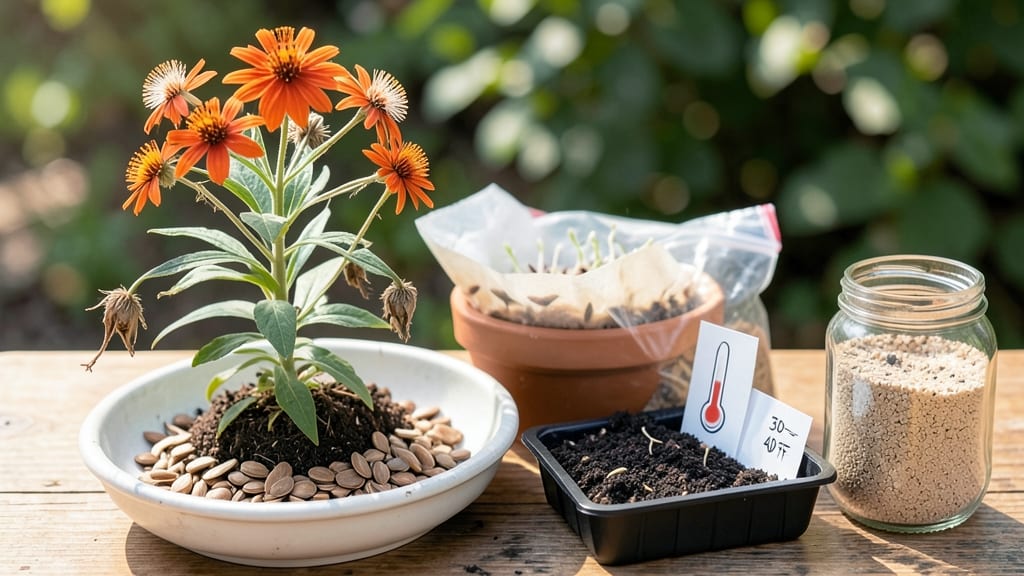
Butterfly weed seeds need cold stratification to break dormancy, mimicking winter's chill to trigger germination. Plant them outdoors in fall or refrigerate for 30-60 days before indoor sowing in spring.
This process mimics nature's seasonal cues, where seeds experience winter's cold before spring germination.
Without stratification, butterfly weed seeds often remain dormant for months, as their thick seed coats resist moisture uptake. 🌱 The ideal method involves damp paper towels in a sealed bag for 60 days at 35-40°F, or planting directly in garden beds during fall's natural chill.
Many growers skip this step and end up with poor germination rates—sometimes as low as 10%—because the seeds simply won't wake up without the cold treatment.
For best results, combine cold stratification with proper moisture levels—too dry and the seeds won't activate, too wet and they may rot. I've found that 30-45 days in the fridge works well for most varieties, but some heirloom strains may need up to 90 days of cold exposure.
Always check your seed packet for specific recommendations, as some butterfly weed varieties have slightly different dormancy requirements.
💡 In This Article
- How Cold Stratification Breaks Butterfly Weed Seed Dormancy
- Step-by-Step Cold Stratification Methods for Butterfly Weed
How cold stratification breaks butterfly weed seed dormancy
Cold stratification works because butterfly weed (Asclepias tuberosa) seeds have evolved a natural defense mechanism against premature germination. Their thick, waxy seed coats create a physical barrier that blocks water absorption, preventing sprouting during warm periods.
This dormancy ensures seeds only germinate when environmental conditions are optimal—typically after winter's chill. The cold treatment triggers internal biochemical changes, including the breakdown of growth inhibitors and activation of enzymes that prepare the seed for germination.
The magic happens at temperatures between 35-40°F, where moisture levels must stay consistently damp (not soggy) to simulate spring rains. This cold-moisture combo signals the seed that winter has passed and spring conditions are approaching.
Without stratification, seeds may take months—or never—break dormancy naturally. I've seen germination rates jump from 10% without treatment to over 80% with proper stratification, proving how critical this step is for butterfly weed success.
Nature uses this same process: seeds buried in fall experience winter's chill before spring warmth triggers germination. In controlled settings, we replicate this by exposing seeds to 60 days of refrigerator cold (or 30-45 days for most varieties) while maintaining 30-50% moisture content.
The cold period allows the seed to "reset" its internal clock, breaking the dormancy cycle that would otherwise keep it dormant for years.
What most gardeners miss is that stratification isn't just about cold—it's about the combination of cold AND moisture working together. Seeds left dry in the freezer won't germinate, nor will seeds kept warm and wet.
The ideal balance creates microscopic cracks in the seed coat, allowing water to penetrate while the cold prevents premature metabolic activity. This dual-action is why butterfly weed seeds respond so dramatically to proper stratification.
For visual learners, imagine the seed coat as a fortress wall: cold temperatures weaken the defenses while moisture acts like a battering ram. Without both elements, the fortress remains impenetrable.
That's why even professional growers using high-tech germination chambers still rely on this ancient natural process to coax butterfly weed seeds to life.
The timing of stratification matters too. Seeds stratified in late winter (February-March) will be ready to plant as soon as soil temperatures reach 60°F in spring. This aligns perfectly with butterfly weed's native growing season, giving young plants a head start before summer heat arrives.
The process essentially "pre-programs" the seed to germinate at the right moment.