
Landscaping
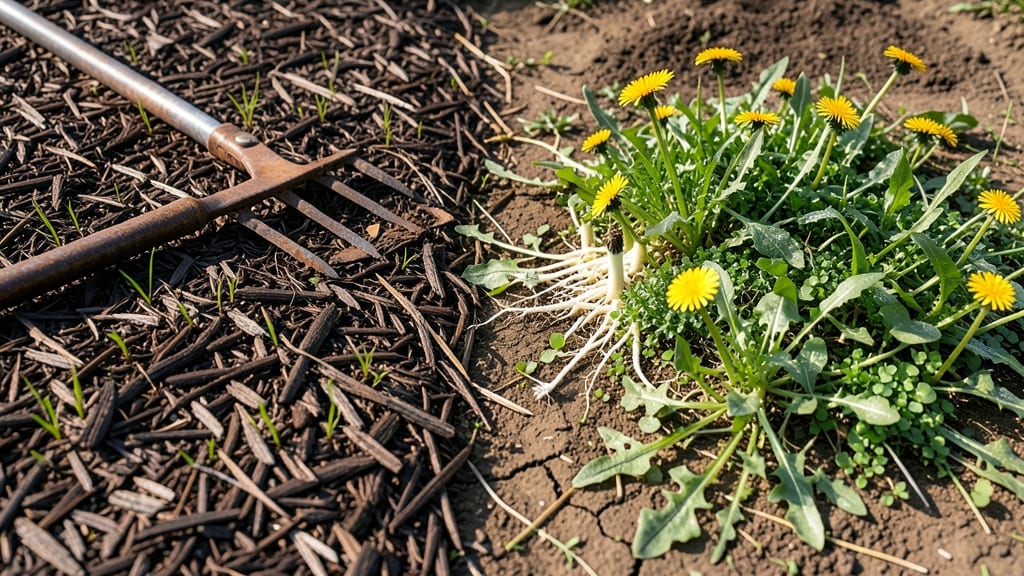
Mulch does help with weeds by blocking sunlight that weed seeds need to germinate, while also smothering young weeds before they establish roots. Organic options like wood chips break down over time, enriching soil with nutrients while maintaining weed suppression for months.
Weeds need three things to thrive: sunlight, moisture, and bare soil.
Mulch disrupts all three by creating a physical barrier that chokes out weeds at their earliest stages. 🌱 Organic mulches work double-duty—they decompose slowly, adding beneficial microbes to the soil while their thickness makes it harder for weeds to push through.
I’ve seen gardens where a 3-inch layer of wood chips kept weeds at bay for nearly a full growing season with minimal maintenance.
Not all mulches are equally effective, though. Inorganic options like gravel or landscape fabric may block weeds initially, but they don’t improve soil health or prevent future seeds from blowing in. For best results, combine mulch with regular weeding—especially in high-traffic areas where disturbances can expose new soil.
💡 In This Article
- How Mulch Physically and Chemically Stops Weeds
- Best Mulch Types for Weed Control in Gardens
How mulch physically and chemically stops weeds
Mulch creates a multi-layered defense against weeds by targeting their most critical needs. The primary mechanism is light deprivation: weed seeds require sunlight to germinate, and a thick mulch layer—typically 2-4 inches—blocks 90-95% of sunlight from reaching the soil surface.
Studies show that even 1 inch of mulch can reduce weed growth by 50%, while 3-4 inches can suppress it by 80-90% over a growing season. This works because most weed seeds lie dormant in the top 1/4 inch of soil, where mulch creates a dark, inhospitable zone.
The chemical aspect comes into play with organic mulches like wood chips or straw. As these materials decompose, they release tannins and phenolic compounds that inhibit weed seed germination—a process called allelopathy.
For example, hardwood mulches like oak or cedar contain natural chemicals that can suppress weed growth by 30-50% compared to synthetic mulches. Meanwhile, the decomposition process also lowers soil temperature fluctuations, creating another barrier for weed seeds that struggle in cooler, more stable conditions.
A 3-inch layer of wood chips can reduce soil temperature swings by 10-15°F compared to bare soil, further discouraging weed establishment.
Physical smothering is the final piece of the puzzle. Young weeds that do manage to sprout find themselves trapped under mulch, unable to access the sunlight they need to photosynthesize.
In my own garden, I’ve noticed that weeds growing under mulch develop long, thin stems trying to reach the surface—only to weaken and die when they can’t break through.
This effect is most pronounced with fine-textured mulches like straw or shredded leaves, which create a dense mat that physically blocks weed growth more effectively than chunky materials like bark.
One nuance to consider is the moisture factor. While mulch helps retain soil moisture—reducing evaporation by 30-50%—it also creates a damp environment that can encourage fungal growth. However, organic mulches improve soil aeration over time, preventing waterlogging that might otherwise promote weeds.
The key is maintaining proper thickness: too thin (1 inch) leaves gaps for weeds, while too thick (> 4 inches) can suffocate plant roots and trap excess moisture. The sweet spot is 2.5-3 inches for most garden beds.
For maximum effectiveness, combine mulch with pre-emergent herbicides (if using chemicals) or hand-pulling established weeds before applying mulch. This two-step approach ensures you’re not just preventing new weeds but also eliminating existing ones that could regrow.
In my experience, a well-mulched garden requires 70-80% less weeding than one without mulch, saving time and effort while creating a healthier soil ecosystem.