
Landscaping
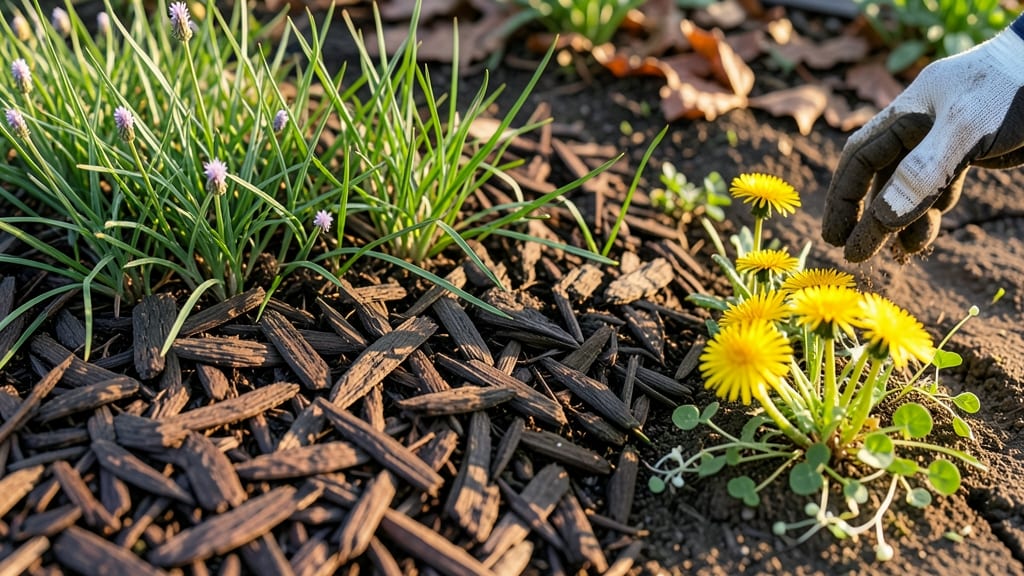
Mulch does keep weeds from growing by blocking sunlight to prevent seed germination and creating physical barriers that slow existing weed growth through organic decomposition and moisture regulation.
This natural weed suppression works because mulch creates a double barrier: sunlight deprivation (which stops weed seeds from sprouting) and physical obstruction (which smothers young shoots). 🌱 Organic mulches like wood chips or straw also release allelopathic compounds as they decompose, further inhibiting weed growth.
The key is maintaining a consistent 3-4 inch layer—thinner layers let sunlight through, while thicker layers prevent soil temperature fluctuations that encourage weed seeds to activate.
For best results, I recommend using organic mulches in garden beds and inorganic options like gravel in high-traffic areas. Just remember to refresh your mulch every 6-12 months to maintain effectiveness, especially in areas with heavy rainfall or foot traffic that can break down the layer over time.
💡 In This Article
- How Mulch Blocks Weed Growth Mechanically and Chemically
- Best Mulch Types and Application Tips for Weed Prevention
How mulch blocks weed growth mechanically and chemically
Mulch works primarily by creating a physical barrier that blocks sunlight from reaching weed seeds in the soil. Weed seeds require light to germinate—a process called photoblastic germination.
When mulch covers the soil with a 3-4 inch layer, it reduces light penetration to less than 10% of full sunlight, which is often enough to prevent most weed seeds from sprouting.
This is especially effective for annual weeds like crabgrass or chickweed, whose seeds need light to break dormancy. 🌱
The chemical aspect comes into play with organic mulches like wood chips or straw. As these materials decompose, they release natural compounds called allelochemicals, which inhibit weed seed germination and root growth.
For example, black walnut mulch contains juglone, a compound that suppresses many common weeds, while pine bark mulch releases tannins that slow weed development. Even simpler organic mulches like grass clippings or leaves create a slightly acidic environment that many weeds struggle to thrive in.
Moisture regulation is another critical factor. Mulch helps maintain even soil moisture by reducing evaporation, which creates less favorable conditions for weed seeds.
Dry soil can actually trigger some weed seeds to germinate in a desperate attempt to find water, but mulch keeps the environment consistently moist—ideal for your plants but inhospitable to many weeds. This is why mulched areas often show 70-80% fewer weeds than unmulched soil after just one growing season.
Temperature control plays a subtle but important role too. Mulch acts as insulation, preventing soil temperature fluctuations that can trigger weed seed activation. Many weed seeds have specific temperature ranges where they'll germinate—often between 60-85°F.
By keeping soil temps more stable, mulch helps prevent these "germination windows" from opening. This is particularly noticeable in spring and fall when temperature swings are common.
Let's talk about the decomposition process. As organic mulch breaks down, it forms a dense mat that physically smothers emerging weed seedlings before they can establish roots. This is why freshly applied mulch is more effective than old, broken-down material.
For example, a 4-inch layer of wood chips can suppress weeds for up to 2 years before needing replacement, while a 2-inch layer might only last 6-12 months**. The thicker the layer, the longer it maintains its weed-suppressing properties.
There's one important exception to note: inorganic mulches like gravel or landscape fabric don't provide these chemical benefits. They work purely through physical light blocking and moisture regulation.
Organic mulches offer that plus the chemical suppression, making them generally more effective for long-term weed control in garden beds and flower areas. 🌿
For maximum effectiveness, consider combining mulch with other weed prevention strategies. For instance, applying a pre-emergent herbicide before mulching can provide an extra layer of protection during the critical first few weeks, while hand-pulling any weeds that do appear keeps your mulch's effectiveness from diminishing over time.