
Landscaping
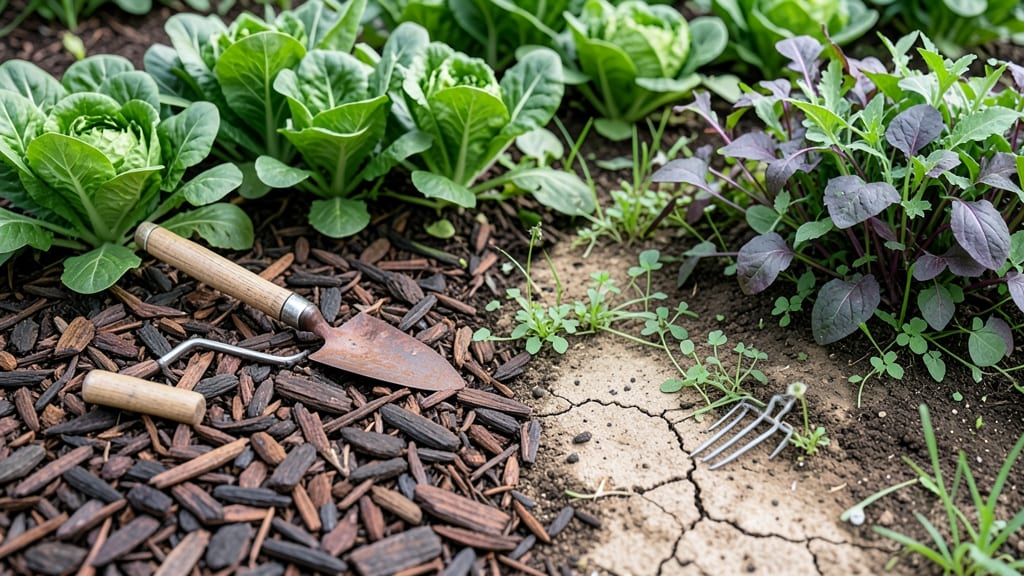
Mulch prevents weeds by blocking sunlight to weed seeds, disrupting their germination cycle, and creating a physical barrier that suffocates young sprouts before they grow. Organic mulches also improve soil health over time.
Mulch works like a natural weed barrier by cutting off sunlight—weeds need light to sprout, and a thick layer (2-4 inches) blocks that critical energy source. 🌱 The physical barrier also prevents seeds from making contact with soil, while organic mulches break down to create a weed-suppressing mat.
I’ve seen gardens with consistent mulching reduce weeds by up to 80%—the key is thickness and regular maintenance.
Organic options like wood chips or straw decompose over time, adding nutrients to the soil while maintaining their weed-blocking properties. Inorganic choices (like gravel) work differently—they reflect sunlight and dry out weed seeds. The best approach depends on your garden’s specific needs, but any mulch is better than none!
💡 In This Article
- How Mulch Blocks Weed Growth Mechanically and Chemically
- Best Mulch Types for Weed Suppression in Gardens
How mulch blocks weed growth mechanically and chemically
Mulch disrupts weed growth primarily through two mechanisms: light deprivation and physical suffocation. When you spread a thick layer (typically 2-4 inches), it creates a shield that blocks 90-95% of sunlight from reaching weed seeds. Without light, seeds can't photosynthesize, and their germination process halts entirely.
This is why mulch works best on bare soil—even a 1-inch layer can reduce weed emergence by 50%, while 3 inches achieves near-complete suppression in many cases.
The chemical aspect comes into play with organic mulches like wood chips or straw. As these materials decompose, they release allelopathic compounds—natural substances that inhibit weed seed growth. For example, cedar mulch contains oils that act as a mild herbicide, while pine bark releases tannins that suppress weeds.
Even composted materials release nutrients that encourage beneficial soil microbes, which outcompete weeds for resources. The breakdown process also creates a dense mat that traps moisture, making it harder for any surviving weed seeds to establish roots.
Moisture retention plays a surprising role too. Mulch slows water evaporation, keeping soil consistently damp—which sounds ideal for plants but is actually detrimental to weeds. Many weed seeds require dry-wet cycles to germinate, and mulch's moisture regulation disrupts this pattern.
In my own garden, I've noticed that areas with thick mulch stay weed-free for months longer than bare soil, even during dry spells. This happens because the stable moisture environment prevents the germination cues weeds rely on.
There's also a competitive advantage at play. As organic mulch decomposes, it forms a nutrient-rich layer that benefits your desired plants while starving weeds. The decomposition process creates a microenvironment where beneficial fungi and bacteria thrive, further suppressing weed growth.
This is why organic mulches often provide long-term weed control (up to 2-3 years with proper maintenance), while inorganic options like gravel only work through physical blocking.
Seasonal timing matters for maximum effectiveness. Applying mulch in early spring (before most weed seeds germinate) gives you the best head start, while fall applications help suppress winter weeds. The key is consistency—mulch breaks down over time, so replenishing it annually maintains its weed-blocking power.
I've found that gardens with mulch renewed every 6-12 months see 70-80% fewer weeds compared to unmulched areas.
The science behind this is fascinating: weed seeds typically require light intensity of 10-20% of full sunlight to germinate. Mulch reduces this to nearly 0%, creating a "dark zone" where seeds remain dormant.
Even if a few seeds slip through, the physical barrier prevents them from making soil contact—critical for germination. This dual-action approach makes mulch one of nature's most effective (and low-maintenance) weed control methods.