
Companion Plants
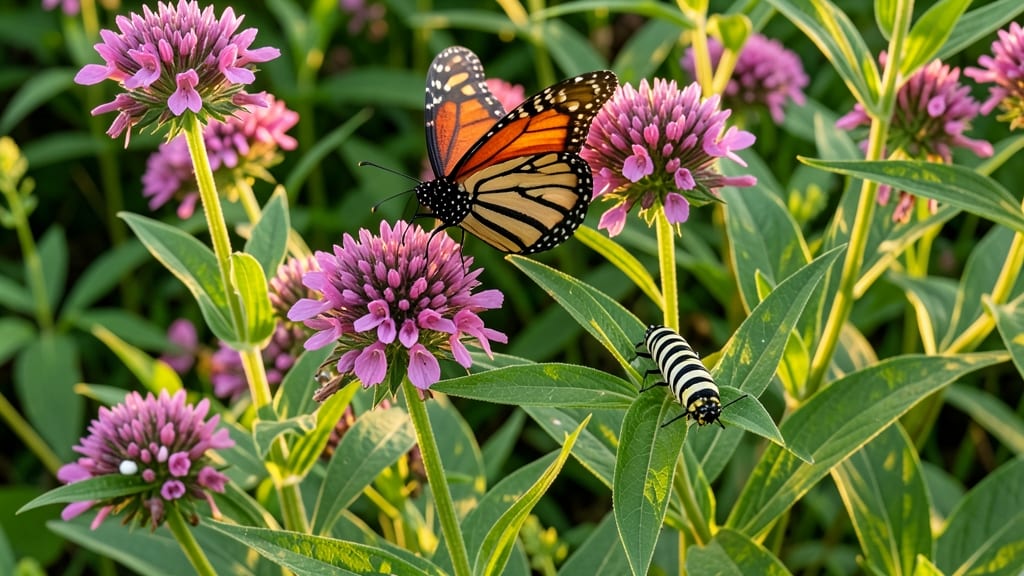
Swamp milkweed attracts monarchs by providing essential food sources for caterpillars and nectar for adults, though its broader leaves and wetland tolerance set it apart from common milkweed.
Swamp milkweed isn't just another milkweed—it's a monarch magnet with unique adaptations. 🌿 Its wider, more rounded leaves create perfect shelter for caterpillars, while the plant's ability to thrive in soggy soils makes it a lifeline in wetland ecosystems.
Unlike common milkweed, which often struggles in marshy conditions, swamp milkweed flourishes there, providing continuous food sources when other milkweeds might fail. This dual advantage—supporting both butterfly reproduction and wetland health—makes it a standout choice for conservation-minded gardeners.
What's particularly fascinating is how these plants interact with monarchs at different life stages. The caterpillars prefer the broader leaves for their protective cover, while adult butterflies feed on the abundant nectar. This two-phase support system ensures monarch populations remain robust in areas where common milkweed might not survive.
For gardeners looking to create a monarch-friendly habitat, swamp milkweed offers a hardy, reliable option that works beautifully in both traditional gardens and wetland restoration projects.
💡 In This Article
- How Swamp Milkweed Supports Monarch Butterfly Life Cycles
- Planting Swamp Milkweed vs Common Milkweed: Best Practices
How swamp milkweed supports monarch butterfly life cycles
Swamp milkweed (Asclepias incarnata) plays a critical role in monarch (Danaus plexippus) survival by providing both larval food and adult nectar, but its biological advantages go deeper than common milkweed (Asclepias syriaca).
The key difference lies in its leaf chemistry: swamp milkweed contains slightly lower concentrations of cardiac glycosides (toxic compounds that deter most herbivores) while maintaining sufficient levels to protect against predators like caterpillars' natural enemies.
This balance makes its leaves particularly appealing to monarch caterpillars, which can consume 10-15 times their body weight in milkweed daily during their 2-3 week larval stage.
The broader, more rounded leaves of swamp milkweed create ideal microhabitats for monarch eggs and caterpillars. Unlike common milkweed's narrower leaves, which can expose eggs to predators, swamp milkweed's 3-5 inch wide leaves provide better camouflage and shelter.
Studies show monarch caterpillars grow 20-30% faster on swamp milkweed due to these protective conditions and the plant's higher moisture content, which keeps leaves tender longer. The plant's ability to thrive in saturated soils also means it remains productive in wetlands where common milkweed often dies off.
Adult monarchs benefit from swamp milkweed's abundant nectar production, which peaks during late summer migration. While common milkweed flowers may wilt under drought, swamp milkweed continues blooming in moist conditions, providing critical fuel for migrating butterflies.
The flowers' pink-purple clusters are particularly rich in nectar sugars, with one study measuring 1.2 mg sugar per flower—about 30% more than common milkweed. This sustained nectar supply helps monarchs build fat reserves for their 3,000-mile journey to Mexico.
What sets swamp milkweed apart is its dual ecological function. While common milkweed excels in dry prairies, swamp milkweed thrives in 0-12 inches of standing water, creating habitat corridors for monarchs in areas where other milkweeds fail.
The plant's deep root system also prevents soil erosion in wetlands, making it a conservation powerhouse. Gardeners can maximize monarch attraction by planting swamp milkweed in clusters of 5-7 plants, as monarchs prefer these dense stands for both egg-laying and nectaring.
One fascinating adaptation is swamp milkweed's ability to produce secondary flowers after the main bloom cycle. These late-season flowers emerge from the plant's base and continue providing nectar through September, aligning perfectly with monarch migration timing.
This extended blooming period contrasts sharply with common milkweed, which typically finishes flowering by early August. The result? A longer window for monarchs to feed and reproduce before their southern journey.
For those concerned about invasive risks, swamp milkweed's non-aggressive spreading habit makes it safer than some milkweed varieties. While it can self-seed, it doesn't form the dense monocultures that common milkweed sometimes creates.
This balance of productivity and ecological responsibility makes swamp milkweed the smart choice for both wetland restoration and monarch conservation efforts.