
Fertilization
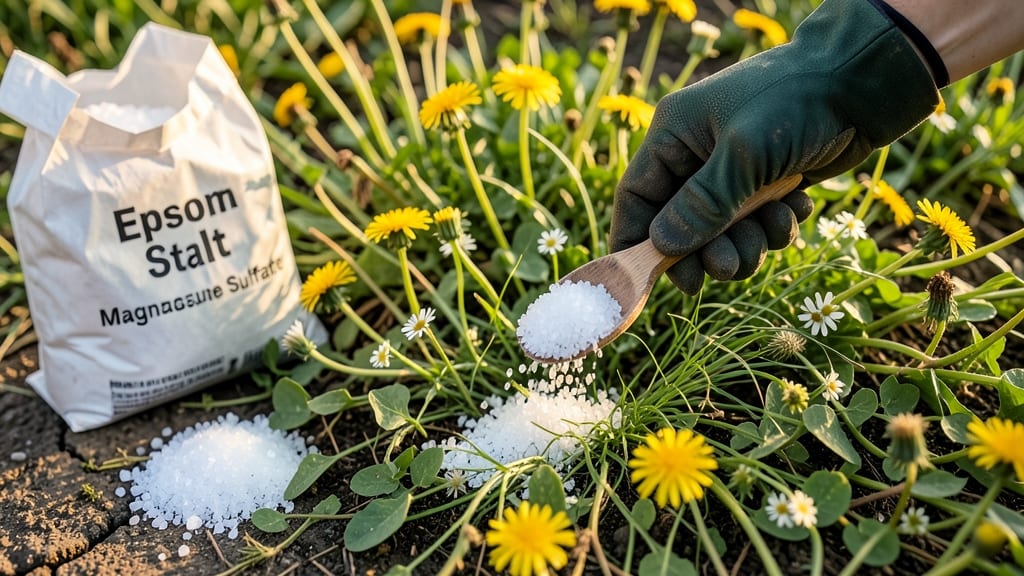
Epsom salt for weed control works by delivering excess magnesium and sulfur, which creates osmotic stress in weed roots and disrupts their nutrient balance. Mix 1 tablespoon per gallon of water and apply directly to weeds while avoiding desirable plants.
Epsom salt's effectiveness comes from its ability to create an imbalance in soil chemistry that weeds can't handle. 🌱 Unlike traditional herbicides that kill indiscriminately, this method targets weeds by making their root zones too salty, forcing them to expend energy trying to regulate their internal chemistry.
I've seen best results when applied in early morning or late evening, when temperatures are cooler and evaporation is slower. For delicate gardens, consider using a spray bottle with a fine mist setting to avoid overspray on nearby plants.
This approach is particularly useful in organic gardening because it doesn't introduce synthetic chemicals. However, it's important to note that Epsom salt works best on young weeds—once they've established deep root systems, the treatment becomes less effective.
For tougher infestations, I recommend combining this method with regular hand-pulling or mulching to starve out new growth.
💡 In This Article
- How Epsom Salt Disrupts Weed Growth Mechanically
- Best Application Methods and Timing for Weed Control
How Epsom salt disrupts weed growth mechanically
Epsom salt works as a weed killer primarily through osmotic stress, a process where excess magnesium sulfate (MgSO₄) in the soil draws water out of weed cells. Weeds, especially annuals like crabgrass and chickweed, have shallow root systems that absorb water rapidly.
When Epsom salt dissolves in water, it creates a hypertonic solution around the roots—meaning the concentration of dissolved particles outside the cells becomes higher than inside. This forces the weeds to expend energy trying to maintain moisture balance, essentially dehydrating them from within.
The magnesium and sulfur in Epsom salt also create a nutrient imbalance that weeds can't recover from quickly. Most weeds thrive in soils with balanced magnesium-to-calcium ratios, often around 1:5. When you apply Epsom salt, you're suddenly introducing 10-20 times more magnesium than weeds are adapted to handle.
This disrupts their cellular functions, particularly in the chloroplasts where photosynthesis occurs. Unlike established plants with deep root systems, weeds can't access deeper soil layers for nutrients, making them more vulnerable to this chemical imbalance. 🌱
Another key difference from traditional herbicides is that Epsom salt doesn't rely on toxic chemicals—it works by starving weeds of essential resources. While chemical herbicides like glyphosate kill by disrupting specific metabolic pathways, Epsom salt creates a broad-spectrum stress that affects multiple cellular processes.
This makes it particularly effective against broadleaf weeds and grasses that compete aggressively for space and nutrients. The sulfur component also lowers soil pH slightly (by 0.5-1.0 units), creating an environment where weed seeds struggle to germinate.
For best results, focus on young weeds with leaves still in the 2-4 inch range. At this stage, their root systems are shallow and haven't developed the resilience of mature plants. The salt solution penetrates these small roots more effectively, causing visible wilting within 24-48 hours.
In contrast, established plants with deep taproots (like dandelions) may show minimal effects because they can access unaffected soil layers. This selective pressure is why Epsom salt works so well in vegetable gardens where you want to eliminate weeds without harming crops like tomatoes or peppers.
One important consideration is that Epsom salt's effectiveness depends on soil moisture levels. In dry conditions, the salt crystals can form a crust on the soil surface, preventing proper dissolution. Always apply when the soil is lightly moist (not soggy) to ensure even distribution.
For container gardens, mix 1 tablespoon per gallon of water and apply directly to weed foliage, as the roots are confined and more susceptible to the osmotic stress. The key is consistency—repeat applications every 7-10 days during active growing seasons for maximum impact.