
Advice
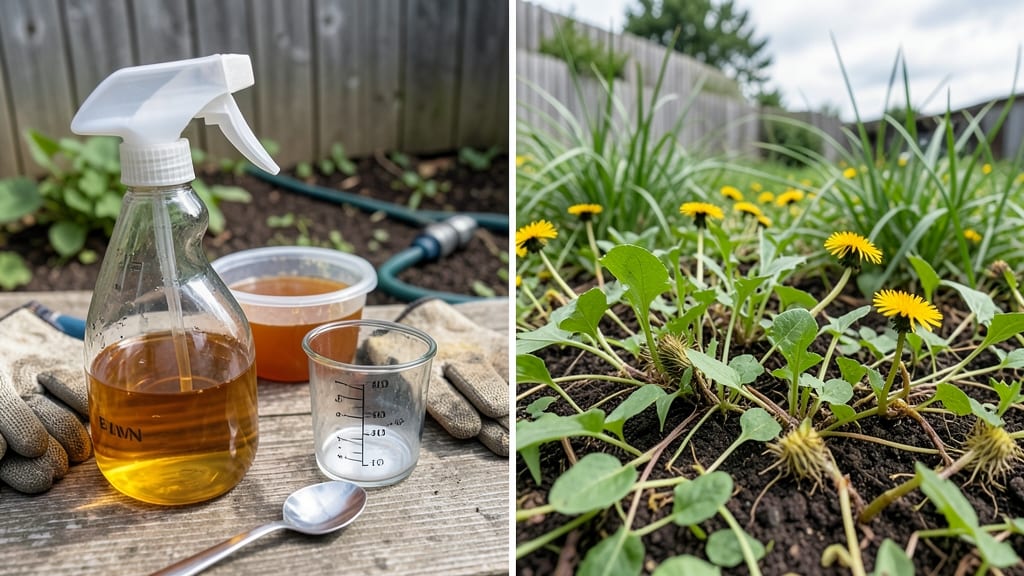
A vinegar, Epsom salt, and Dawn dish soap weed killer creates an effective organic solution by combining 1 gallon white vinegar, 2 tablespoons Epsom salt, and 1 teaspoon Dawn soap in a spray bottle, with application best done on sunny days. Reapply weekly for stubborn weeds while avoiding nearby plants and grass.
This homemade weed killer leverages the natural properties of vinegar—its acetic acid disrupts weed cell structures—while Epsom salt adds a drying effect that accelerates damage.
The Dawn dish soap acts as a surfactant, helping the mixture cling to leaves for better absorption. 🌱 I’ve found this combo particularly effective on broadleaf weeds like dandelions, though it requires consistent reapplication since weeds can regrow from roots.
For tougher infestations, I’ll often double the Epsom salt to 4 tablespoons while keeping the vinegar ratio the same.
Timing matters just as much as the mix. Spraying on sunny mornings ensures the solution stays on leaves longer, maximizing its effectiveness. Avoid windy days or rainy weather, as this can dilute the mixture before it works.
Always wear gloves and protective eyewear—vinegar can sting sensitive skin. For delicate gardens, I recommend spot-testing on a small area first to ensure it doesn’t harm nearby plants.
💡 In This Article
- How This Weed Killer Works Against Unwanted Plants
- Best Application Techniques for Maximum Effectiveness
How this weed killer works against unwanted plants
The magic of this weed killer lies in how each ingredient attacks weeds at different levels. White vinegar—typically 5% acetic acid—works by breaking down the protective waxy layer on weed leaves, allowing the acid to penetrate and disrupt cellular structures.
This causes rapid dehydration and cell death, similar to how salt draws moisture from biological tissues. The acetic acid concentration in vinegar is strong enough to kill most broadleaf weeds within 24-48 hours of contact, though it requires direct application for maximum effect.
Epsom salt (magnesium sulfate) plays a secondary but crucial role by creating an osmotic imbalance. When dissolved in the vinegar solution, the magnesium ions draw even more moisture out of weed cells, accelerating the drying process.
This is why you’ll often see weeds wilting within hours of application—it’s not just the vinegar, but the combined effect that makes the solution so effective. For comparison, pure vinegar alone might take 3-5 days to kill weeds, while the Epsom salt addition cuts that time nearly in half.
The Dawn dish soap acts as a surfactant, reducing the surface tension of the spray so it clings better to leaves and stems. Without it, the vinegar solution would bead up and roll off, especially on waxy leaves like those of dandelions.
This ingredient also helps the mixture penetrate leaf pores more effectively, ensuring the acetic acid reaches deeper into the plant’s structure. Think of it like adding dish soap to water to help it spread evenly—it’s what makes the spray stick and work where it matters most.
What makes this solution so selective is how it targets weeds differently than desirable plants. Most weeds have thinner, less waxy leaves that absorb the vinegar more readily, while thicker-stemmed plants like grass or vegetables often have protective layers that resist penetration.
That said, this isn’t a perfect solution—delicate plants with thin leaves (like some herbs) can still be damaged, which is why spot-testing is essential. The key is precision: apply only to the weeds you want to eliminate.
For tougher weeds like clover or creeping charlie, you might need to adjust the ratio slightly. I’ve found that doubling the Epsom salt to 4 tablespoons per gallon while keeping the vinegar and soap ratios the same can improve results, especially in dense weed patches.
The extra magnesium helps combat the weeds’ resilience, though it also means you’ll need to be more careful about protecting nearby plants. Always mix fresh batches—old solutions lose their effectiveness as the vinegar evaporates and the Epsom salt settles.
One common misconception is that this weed killer works by "burning" weeds like herbicides. In reality, it’s a slow, chemical dehydration process rather than a rapid combustion. You’ll notice the leaves first turn yellow, then brown, and eventually crisp up—this is the acetic acid at work.
The process is visible proof of how the cell structures are breaking down, but it’s not the same as the instant wilting you might see with commercial herbicides. Patience is key here: reapplication is often needed because some weed roots can regrow if not fully eradicated.