
Advice
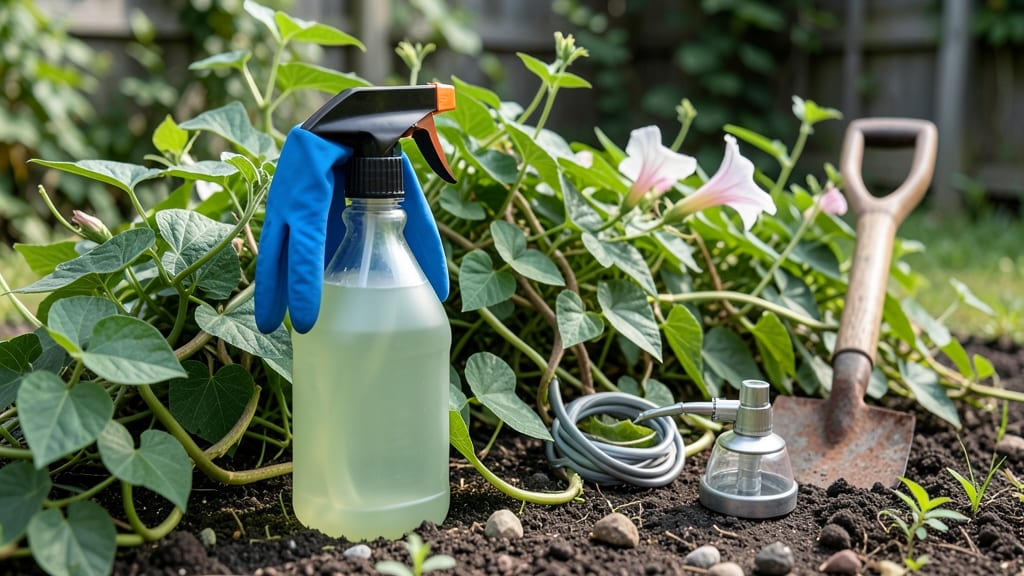
Using glyphosate for bindweed effectively disrupts its growth by targeting the plant's broadleaf system and protein synthesis pathways, which weakens the weed's ability to thrive while minimizing harm to surrounding grass and soil organisms when applied properly. Proper timing and full coverage are essential for lasting control.
Bindweed's deep roots and aggressive growth make it a persistent challenge, but glyphosate works by being absorbed through the leaves and transported throughout the plant's system. 🌱 The herbicide blocks a key enzyme (EPSP synthase) that bindweed needs to produce essential proteins, essentially starving the plant from within.
This systemic action is why you'll often need multiple treatments—especially for established bindweed—to fully exhaust its root reserves. I've found that applying glyphosate during the weed's active growth phases (spring and fall) gives the best results, as the plant is most vulnerable and actively transporting nutrients through its system.
For best outcomes, I recommend using a 0.5% to 1% glyphosate solution with a non-ionic surfactant to improve adhesion and penetration. Always wear protective gear—gloves, long sleeves, and eye protection—and avoid spraying on windy days to prevent drift onto desirable plants.
After application, monitor the area closely, as bindweed can sometimes regrow from dormant buds if not fully treated.
💡 In This Article
- How Glyphosate Kills Bindweed: Science and Mechanism
- Best Practices for Applying Glyphosate on Bindweed
How glyphosate kills bindweed: science and mechanism
Glyphosate works its magic on bindweed by exploiting the plant's unique biology. This herbicide is a systemic chemical—meaning it gets absorbed through the leaves and travels throughout the plant's vascular system.
Once inside, it targets a specific enzyme called EPSP synthase, which is crucial for producing essential amino acids like glycine and tryptophan.
Without these building blocks, bindweed's cells can't synthesize proteins needed for growth, leading to stunted development and eventual death. 🌱 What's fascinating is that bindweed's deep root system (which can extend 10-15 feet underground) requires multiple treatments because the herbicide needs time to fully translocate through the entire plant network.
The selectivity of glyphosate comes from how it interacts with different plant species. Bindweed, being a broadleaf weed, lacks the genetic resistance found in many grasses, which is why glyphosate is so effective against it while leaving your lawn mostly unharmed.
The herbicide binds to a plant protein called 5-enolpyruvylshikimate-3-phosphate synthase (EPSPS), which grasses have evolved to be less sensitive to. This is why you'll often see bindweed dying back within 7-14 days of proper application, while surrounding grass recovers quickly.
The key here is that glyphosate doesn't kill immediately—it disrupts the plant's metabolic processes over time, which is why you need patience and follow-up treatments.
For bindweed's deep-rooted nature, think of glyphosate as a slow-acting poison that works from the inside out. The herbicide moves through the plant's phloem (the transport system for sugars and nutrients), effectively cutting off the weed's food supply.
This is why you'll often see the above-ground parts of bindweed turn yellow and die back first—it's starving from the roots up. 🌿 What most gardeners don't realize is that bindweed's roots can remain viable for years, storing energy that allows regrowth.
This is why a single application is rarely enough—you're essentially playing a game of cat-and-mouse with the weed's energy reserves.
Another critical factor is how glyphosate's effectiveness varies with environmental conditions. When applied during bindweed's active growth phases (typically spring and fall), the plant is rapidly transporting nutrients through its system, making it more vulnerable to the herbicide's action.
In contrast, during dormancy (winter), the plant's metabolic processes slow down, reducing glyphosate's impact. This is why timing your application to coincide with bindweed's growth flushes—when you see new shoots emerging—can dramatically improve control.
The herbicide's performance also depends on proper coverage; even small gaps can allow bindweed to regrow from untreated sections.
Here's what happens at the cellular level: glyphosate mimics the structure of glycine, an amino acid essential for plant growth. When bindweed's EPSP synthase enzyme tries to incorporate glyphosate instead of glycine, it creates a non-functional protein that disrupts the plant's entire metabolic pathway.
This is similar to how some antibiotics work in bacteria—by interfering with critical biochemical processes.
The result is a gradual shutdown of the plant's growth machinery, leading to necrosis (tissue death) and eventual collapse of the weed's structure. 🌱 This systemic approach is why glyphosate is so effective against perennial weeds like bindweed, which can regrow from fragments or roots if treated superficially.