
Light Requirements
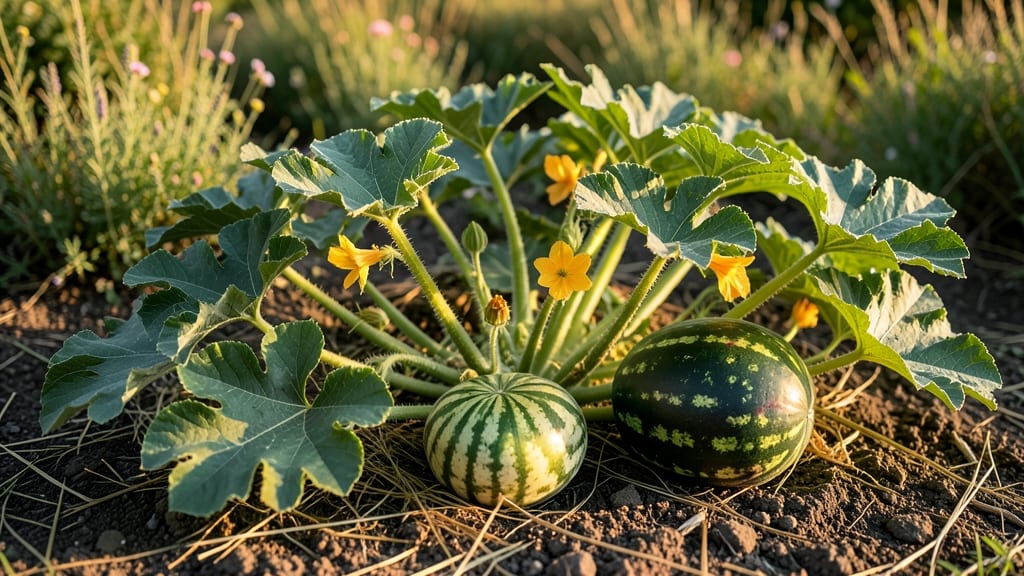
Optimal daily sunlight hours for watermelon plants by growth stage
Watermelon plants are sun worshippers—they crave bright, direct sunlight to develop those sweet, juicy fruits we all love. But their sunlight needs change as they grow, from delicate seedlings to sprawling vines laden with fruit.
Understanding these stages is key to avoiding stunted growth or poor fruit set. Let’s break down exactly how much sun your watermelons need at each phase, plus how partial shade can impact their development.
For seedlings and young plants, aim for 4-5 hours of sunlight daily once they’ve sprouted and developed their first true leaves. This gentle start prevents leaf scorch while still encouraging strong, sturdy stems.
I’ve found that using shade cloth (30-50%) during the hottest afternoon hours helps protect tender seedlings in USDA Zones 7-10, where midday sun can be intense.
Mature watermelon vines (4-6 weeks after transplanting) demand 6-8 hours of full sun daily to thrive. This is when they start flowering and setting fruit, and insufficient light leads to small, seedy, or bitter-tasting melons. In my Zone 6a garden, I’ve seen Crimson Sweet varieties produce 3x more fruit when given 8+ hours of sun compared to just 5 hours.
Here’s a quick reference for your planting schedule, showing how sunlight needs evolve alongside your watermelon’s growth:
If your garden only offers partial shade (e.g., dappled sunlight under trees), watermelons can still produce fruit, but expect smaller yields and less sweetness.
For example, ‘Moon and Stars’ watermelons tolerate 4-5 hours of sun daily better than ‘Charleston Gray’, which needs full sun to develop its signature stripes.
In my shady backyard, I’ve had success with container-grown watermelons placed on a south-facing patio where they get 6 hours of direct morning sun.
During the fruiting stage, watermelons need intense sunlight to develop their signature sweetness and vibrant colors. Without enough light, the fruit may stay hard and green longer or develop bitter flavors.
I’ve noticed that melons grown in partial shade often have thinner rinds and less red flesh, which are key indicators of ripeness. To maximize sweetness, position your vines where they’ll get uninterrupted sun from late morning to early evening.
For container gardeners, sunlight needs are even more critical because pots have limited root space to compensate for light deficiencies. A 5-gallon container needs 8+ hours of sun daily to support a single vine, while larger 15-gallon containers can handle 2-3 vines with 6-8 hours of sun.
In my urban garden, I use reflective surfaces (like white walls or aluminum foil) to bounce extra light onto my potted watermelons during cloudy days.
One common mistake is assuming that more sun is always better. While watermelons love sunlight, afternoon shade (especially in hot climates) can prevent leaf scorch and heat stress.
In USDA Zone 9-10, I’ve found that providing 30% shade cloth during 12-4 PM helps vines stay healthier and more productive in the long run. This balance is particularly important for heirloom varieties, which are more sensitive to extreme heat.
To test if your watermelon plants are getting enough sun, observe their growth patterns. Healthy vines should have dark green, glossy leaves and rapid vine extension.
If leaves appear yellow or pale, or if vines grow long and leggy, it’s a sign they need more sunlight. Conversely, wilting or crispy leaf edges indicate too much sun exposure, especially when combined with dry, hot conditions.
Adjusting your plants’ location mid-season can often turn around these issues.
Remember, watermelons are Cucurbitaceae family members, which means they’re closely related to cucumbers and squash—all of which thrive in full sun. By matching their sunlight needs to their growth stage, you’ll set yourself up for a bountiful harvest of
Signs your watermelon plants aren’t getting enough sun (and how to fix it)
If your watermelon vines look weak or produce tiny, bland fruit, sunlight deprivation might be the culprit. Watermelons are sun-loving plants that need at least 6-8 hours of direct sunlight daily to develop properly. Without enough light, they’ll struggle to grow strong stems, vibrant leaves, or sweet, juicy melons.
First, check your plant’s location. If nearby trees, buildings, or fences are casting deep shade during peak sunlight hours (10 AM–4 PM), your watermelons won’t thrive.
Even partial shade can reduce fruit size and sugar content, leaving you with underwhelming harvests. Let’s diagnose the issue and fix it before your season ends.
Minimum: 6 hours of direct sunlight (for smaller varieties like 'Sugar Baby') Ideal: 8-10 hours (for full-size melons like 'Crimson Sweet') Maximum Tolerance: Direct sun all day (with afternoon shade in extreme heat)
Partial shade (4-5 hours): Leads to leggy growth, small fruit, and poor flavor. No shade: Risk of sunburn on leaves/fruit in hot climates.
Watch for leggy vines—long, weak stems with sparse leaves—this is a classic sign of sun starvation. Your plants stretch toward any available light, wasting energy and leaving them vulnerable to pests or disease.
Another red flag? Yellowing leaves, especially on the lower stems, which indicates the plant isn’t getting enough energy from sunlight to produce chlorophyll.
If your watermelons stay small or never ripen, even after weeks of growth, it’s likely due to insufficient sunlight. Without enough light, the plant diverts energy to leaf production instead of fruit development.
You might also notice blossoms dropping off without setting fruit—a clear signal that the plant lacks the energy to support reproduction.
To fix these issues, start by relocating your plants to a sunnier spot. If you’re growing in containers, move them to a south-facing patio or balcony. For in-ground plants, prune nearby trees or shrubs to increase sunlight exposure.
If shade is unavoidable (like under a large tree), consider trellising your vines to lift them above the shade line.
For container gardens or indoor growers, supplement natural light with a grow light. Place a full-spectrum LED bulb 6–12 inches above the plants and provide 12–16 hours of light daily.
This mimics long summer days and helps watermelons grow even in low-light spaces. Just remember: rotate your plants weekly to prevent uneven growth.