
How To
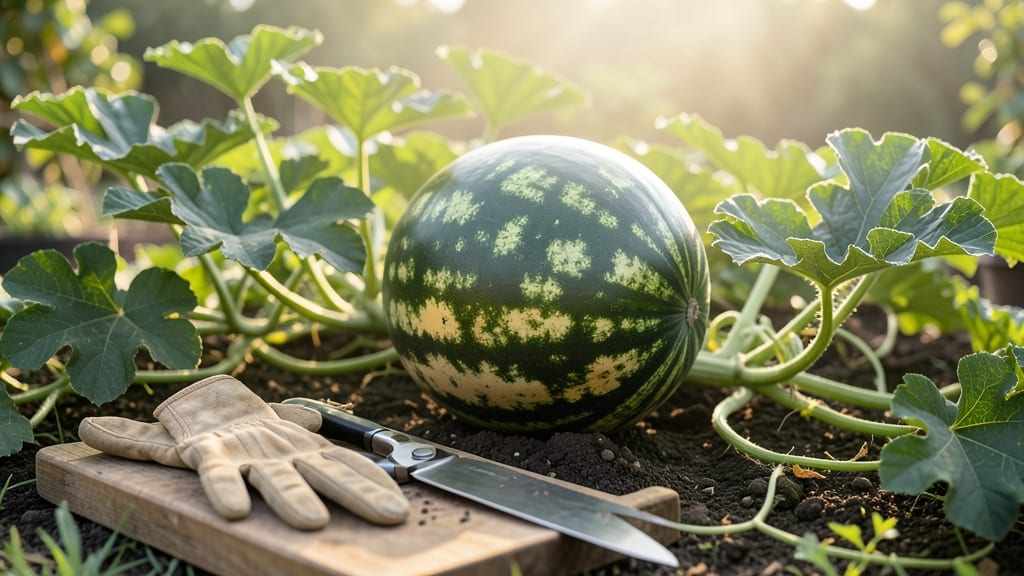
Harvesting a Sugar Baby watermelon 🍉 at the right time means the difference between a burst of sweet, juicy perfection and a meal of disappointment.
Picking too early leaves you with bland, seedy flesh, while waiting too long turns it into a tough, overripe mess. The good news? You don’t need a degree in botany to nail the timing—just a few simple tricks from the field.
Look for a deep, glossy rind, a browned tendril near the stem, and a hollow sound when tapped. These visual and physical cues are your shortcut to harvesting at peak sweetness.
Below, I’ll walk you through the exact steps to test ripeness, avoid common mistakes, and guarantee a harvest that’ll make your taste buds dance.

3 Visual and physical cues to harvest Sugar Baby watermelons at peak ripeness
Harvesting a Sugar Baby watermelon at the perfect moment transforms your garden into a treasure trove of sweet, juicy rewards. Unlike larger watermelons, these small varieties ripen quickly—often in just 70–90 days—so timing is everything.
One wrong move, and you could end up with a bland, underripe fruit or an overripe, seedy mess. The good news? Mother Nature gives you clear signals if you know what to look for.
I’ve spent years growing Sugar Baby watermelons in my garden, and the most reliable indicators aren’t just about size or days since planting.
Instead, focus on three key visual and physical cues: the rind’s color and texture, the condition of the tendril near the stem, and the sound when tapped. Master these, and you’ll never guess again—you’ll know when that tiny watermelon is ready to burst with flavor.
Rind Color & Texture: From Dull to Deep Green
Start by examining the rind’s color. When unripe, it’s dull and light green. At peak ripeness, the entire surface turns deep, glossy green—almost like a shiny apple. Run your thumb over it: a ripe rind feels hard and slightly waxy, not soft or spongy.
Tendril Test: Brown Means Ready
Locate the small tendril near the stem where the watermelon connects to the vine. When ripe, this tendril dries up and turns brown—like a crispy leaf. If it’s still green and flexible, your watermelon needs more time. Pro tip: Check this daily in the last week of growth for accuracy.
Thumping Test: Hollow = Perfect
Give the watermelon a gentle tap with your knuckles. A ripe Sugar Baby sounds deep and hollow, like a drum. If it thuds softly (like a unripe melon) or feels mushy, it’s not ready. Overripe watermelons may sound dull or hollow with a wet interior—so act fast once you hear that sweet musical ping!
Let me share a real-life example from my garden last summer. I had two Sugar Baby watermelons on the vine, both looking similar in size. One had a dull rind and a green tendril—I left it alone.
The other? Deep green, glossy rind, brown tendril, and that hollow thump. I harvested it immediately, sliced it open, and—boom—bright red flesh, no seeds, and explosive sweetness. The other one? Still bland weeks later. That’s the power of these cues!
One common mistake I see is relying only on size. Sugar Baby watermelons are tiny—typically 6–10 pounds—so they won’t grow much bigger than a small football. Don’t assume a larger watermelon is riper; focus on the three cues above instead.
Another trick? Check the field spot (the cream-colored patch where the watermelon rested on the ground). A ripe one will have a creamy yellow hue in this area.
Temperature also plays a role. In hot climates, watermelons ripen faster, so monitor the tendril and rind more closely. In cooler areas, they may take longer to develop those telltale signs.
If you’re unsure, harvest one early and taste-test it. A Sugar Baby at peak ripeness should be sweet, crisp, and seedless—a true garden gem.
Pro growers like me use these cues to harvest in batches. Once one watermelon meets all three criteria, check nearby fruits daily. Sugar Babies ripen quickly, so don’t wait too long or you’ll miss the sweetest window.
And remember: cut the stem with a sharp knife or pruners—never twist—to avoid damaging the vine for future fruits.
Now that you’re armed with these field-tested tricks, your next Sugar Baby harvest will be a sweet success. No more guesswork, just perfectly ripe watermelons bursting with flavor. Happy harvesting!
How Sugar Baby watermelon size and growth stage affect harvest timing
Don’t let the Sugar Baby watermelon’s small size fool you—these compact fruits pack big flavor, but their harvest timing depends on more than just weight. While most reach 6–10 lbs at maturity, waiting for the right growth stage ensures peak sweetness.
Smaller melons (under 5 lbs) can still be perfectly ripe if other indicators align, but size alone isn’t the best predictor.
The key lies in vine behavior and subtle physical changes. Watch for flower drop—when the last blossoms fall from the vine—and observe the seed color inside. Even if your melon feels small, these cues reveal when it’s truly ready to harvest.
Ignoring them often leads to underripe (or overripe) fruit that lacks the signature sweetness Sugar Babies are famous for.
| Growth Stage | Size Range | Key Indicators | Harvest Window |
|---|---|---|---|
| Early (60–70 days) | 3–5 lbs | Green rind, soft stem, dull field spot | Not ready |
| Ideal (75–85 days) | 6–10 lbs | Shiny rind, brown stem, cream field spot, hollow sound | Perfect harvest |
| Late (90+ days) | 10+ lbs | Overripe texture, cracked rind, seedy | Avoid |
| Vine Behavior | N/A | No new flowers, tendrils dry, vine yellows | Confirm ripeness |
Pay attention to the vine’s last flower. When the vine stops producing new blossoms and the tendril nearest the fruit turns brown and crispy, that’s your first sign.
This often happens 75–85 days after planting, but don’t rush—wait until the field spot (the area where the melon rested on the vine) turns from white to cream-colored. This color shift indicates sugar development.
For a foolproof test, check the seed color. Cut open a small section near the stem—if the seeds are deep black (not white or yellow), the melon is ready.
Pro tip: Sugar Baby seeds mature faster than larger varieties, so even a 5-pound melon can be perfect if all other signs align. Smaller size doesn’t mean underripe; it means early maturity!
Environmental factors also play a role. Hot, dry weather speeds up ripening, while cool nights slow it down. If your melon isn’t hitting the 6–10 lb mark but other indicators are present, harvest it—these melons prioritize sweetness over size.
Overlooking these cues often leads to underripe fruit that’s watery or overripe melons with a seedy, mushy texture.
Remember: Harvest timing is about balance. A Sugar Baby watermelon left too long on the vine risks cracking or attracting pests, while one picked too soon lacks the sugar concentration you crave.
Trust the vine’s signals, not just the scale, and you’ll always enjoy that burst of summer sweetness.