
Watering
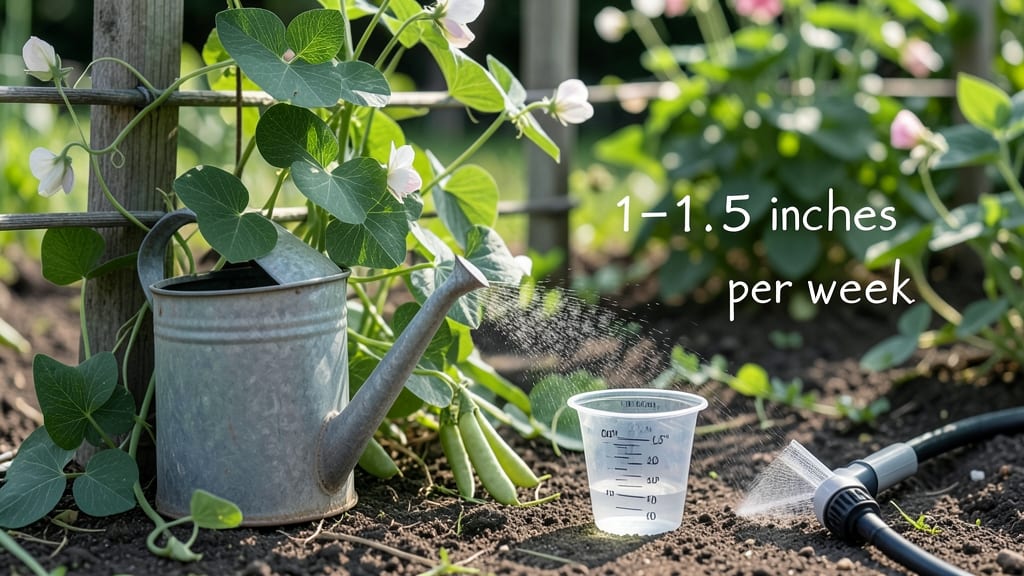
Pea plants need about 1 inch of water per week to grow strong and sweet 🌱 — but the devil is in the details, like soil type and temperature swings.
Picture this: you water your peas every morning, only to find them wilting by afternoon. Or worse, the soil stays soggy, and the roots rot before the pods even form.
The key isn’t just how much you water, but how often and when—and it changes as your plants climb, flower, and finally produce.
In this guide, I’ll walk you through the soil-moisture tricks that keep your peas thriving, from the finger test for seedlings to adjusting for containers versus in-ground beds. You’ll also learn how climate and soil type tweak the rules, so you’re never guessing again.
By the end, you’ll know exactly when to water, how to spot trouble early, and which methods—like drip irrigation or hand-watering—work best for your garden setup. No more wasted water or sad, stunted plants!
Pea plant watering requirements by growth stage (with soil moisture tests)
Pea plants (Pisum sativum) need consistent moisture to thrive, but their watering needs change dramatically from seedling to podding stages. Understanding these shifts prevents root rot or stunted growth. The key is keeping soil evenly moist—not soggy, not dry.
I’ll break down exactly how much water pea plants need at each stage, plus two foolproof soil moisture tests to avoid guessing.
Start with freshly planted seeds that need gentle, frequent watering to encourage germination. Once seedlings emerge, adjust based on soil type—sandy soil drains faster than clay soil, requiring more frequent watering.
In hot climates, pea plants may need watering every 2-3 days, while cooler regions can stretch it to 4-5 days. Let’s dive into the specifics by growth stage, starting with the most critical phase: seedlings.
Pea Plant Watering by Growth Stage
| Growth Stage | Water Frequency | Soil Moisture Goal | Key Adjustments |
|---|---|---|---|
| Seedling (0-2 weeks) | Daily (light misting) | Consistently damp | Use seedling tray with drainage |
| Vegetative (2-4 weeks) | Every 3-4 days | Top 1-2 inches moist | Mulch to retain moisture |
| Flowering (4-6 weeks) | Every 2-3 days | Evenly moist | Water at soil level |
| Podding (6+ weeks) | Every 1-2 days (hot weather) | Deeply hydrated | Drip irrigation preferred |
For seedlings, aim to keep the top ½ inch of soil damp at all times. Use a spray bottle or fine mist to avoid dislodging seeds.
Once seedlings sprout, switch to a gentle watering can and water at the base of plants to prevent fungal diseases like powdery mildew. This stage is critical—uneven moisture can cause seedling damping-off, a deadly fungal infection.
During the vegetative stage (2-4 weeks), pea plants develop vines and leaves rapidly. Here, the finger test becomes your best friend: Stick your index finger 1 inch deep into the soil.
If it feels dry, water thoroughly until moisture reaches 3-4 inches deep. Clay soil holds moisture longer, so you may only need watering every 5 days, while sandy soil dries out faster, requiring watering every 2-3 days.
When pea plants enter the flowering stage (4-6 weeks), they demand more consistent moisture to support blooms and pod formation. This is when underwatering leads to dropped flowers or blind pods (pods without peas).
Water deeply in the morning to allow foliage to dry before nightfall, reducing fungal risks. In hot climates, mulch with straw or grass clippings to lock in moisture and keep roots cool.
The podding stage (6+ weeks) is when pea plants need the most water—1-1.5 inches per week—especially if you’re growing sugar snap peas or snow peas. Use the weight check method: Lift a 5-gallon container filled with potting soil before and after watering.
If the weight drops by 10-15 pounds, you’ve added enough water. For container-grown peas, this might mean watering twice daily in peak summer heat.
Adjust your watering based on weather conditions. After heavy rain, skip watering for 2-3 days to avoid waterlogged soil, which causes root rot. In drought conditions, increase frequency but reduce volume per watering to encourage deep root growth.
Always water at the soil level—never overhead—to prevent leaf diseases and pest attraction.
Pro tip: Group pea plants with other shallow-rooted crops like lettuce or radishes to create a microclimate that retains moisture longer. Avoid planting peas near deep-rooted competitors like tomatoes, which steal water and nutrients. With these adjustments, your pea plants will stay hydrated, healthy, and productive from seed to harvest.
Remember, overwatering is just as harmful as underwatering. Yellowing leaves, moldy stems, or wilting despite wet soil are red flags. If you notice these signs, cut back on watering and improve drainage immediately. Your goal is consistent moisture, not a swampy garden bed.
Common watering mistakes that kill pea plants (and how to fix them)
Pea plants are surprisingly sensitive to watering errors. Overwatering creates soggy soil that smothers roots, while underwatering causes wilting and stunted growth. I’ve seen both mistakes ruin entire pea harvests—let’s fix that together.
The key is consistency: pea plants need 1 inch of water weekly, but timing and technique matter just as much.
First, watch for yellowing leaves or mushy stems—these are classic overwatering signs. On the flip side, dry, crispy edges on leaves or drooping vines mean your peas are thirsty. Both extremes stress plants, reducing pod production. The solution? A balanced approach that keeps soil moist but never waterlogged.
Pea plants thrive with 1 inch of water weekly during active growth (spring/summer). Use the finger test: stick your finger 1 inch into soil—if it feels dry, water deeply. Morning watering prevents fungal diseases by letting foliage dry before nightfall. Containers dry faster—check daily in hot weather.
One of the biggest mistakes I see is inconsistent watering. Pea plants have shallow roots, so they need frequent, light watering rather than deep, infrequent soaks. Drip irrigation or soaker hoses deliver water directly to roots, reducing waste and evaporation.
If you’re hand-watering, use a gentle stream to avoid displacing soil around delicate seedlings.
Poor drainage is another silent killer. If your garden soil feels compacted or water pools after rain, amend it with compost or perlite to improve aeration. Raised beds are ideal for peas—they drain faster and warm up quicker in spring.
For containers, ensure pots have drainage holes and use a mix of potting soil and coconut coir to prevent soggy bottoms.
Mulching is a game-changer for pea plants. Apply 2-3 inches of straw or shredded leaves around the base to lock in moisture and suppress weeds. This reduces how often you need to water while keeping roots cool.
Just remember: keep mulch 2 inches away from stems to prevent rot. I’ve seen mulched pea patches stay hydrated for 5-7 days longer than unmulched ones.
Finally, adjust your watering schedule by season and climate. In hot, dry summers, peas may need daily watering, while cool spring mornings might only require every 3-4 days. Always water at soil level—avoid spraying leaves, which can spread fungal diseases like powdery mildew.
With these fixes, your pea plants will reward you with vibrant vines and plump pods all season long.