
Plants
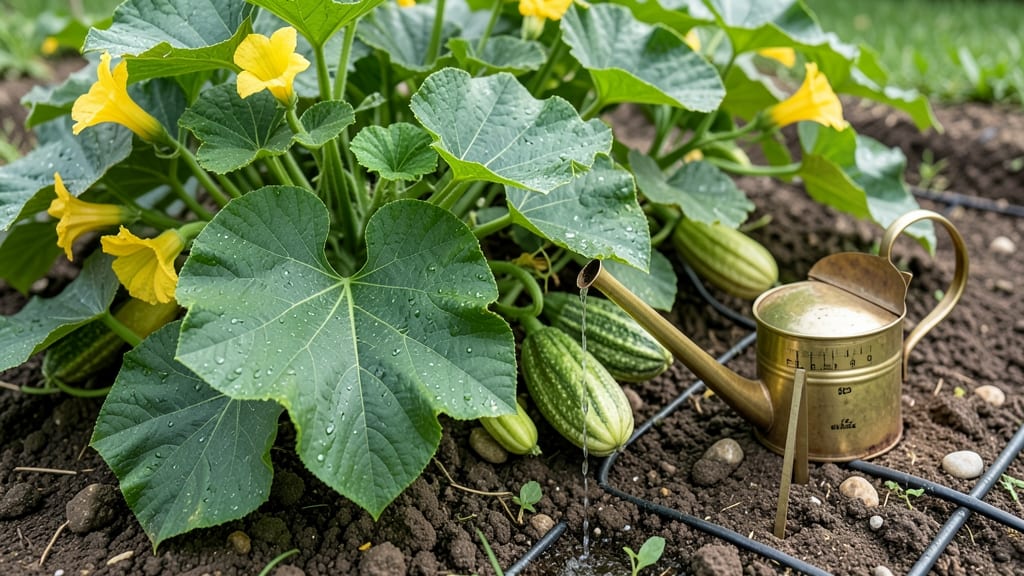
Squash plants need about 1 to 2 inches of water weekly to thrive, but the exact amount depends on their growth stage and your climate.
Picture this: you’ve just planted your squash seeds in spring, and the soil is still cool. Too much water now can drown those delicate seedlings, while too little leaves them struggling to break through the dirt.
Getting the balance right isn’t just about the numbers—it’s about reading your plants and adjusting as they grow.
From tiny seedlings to heavy fruit-bearing vines, your squash’s water needs shift dramatically. A young plant might only need a light drink every few days, while a mature vine loaded with 🎃 squash could be begging for deep, frequent watering.
Ignore these changes, and you’ll end up with bitter fruit or wilted leaves.
In this guide, I’ll break down the exact watering schedule for each stage—plus how to spot when your plants are thirsty, overwatered, or just fine. By the end, you’ll know not just how much to water, but when and how to do it for a bountiful harvest.
Squash watering needs by growth stage: seedlings to harvest
Getting the water balance right for your squash plants is crucial—they need consistent moisture but hate soggy roots. From delicate seedlings to heavy fruit production, their needs change dramatically.
I’ll break down exactly how much water squash plants need at each stage, plus how to test soil moisture and adjust for your climate.
Newly planted squash seedlings are the most delicate stage. Overwatering can drown them, while too little moisture causes wilting. During germination and the first 2 weeks after sprouting, aim for 1/2 inch of water every 2-3 days.
Use a spray bottle or gentle watering wand to avoid disturbing the soil around fragile stems.
Once seedlings reach 2-3 inches tall and develop their first true leaves, increase watering to 1 inch per week. This is when roots start spreading deeper, but they still need frequent hydration. Morning watering is best—it reduces fungal risks like powdery mildew that thrive in damp leaves overnight.
🎃 Comparison Table: Squash Watering by Growth Stage
| Growth Stage | Water Amount | Frequency | Key Notes |
|---|---|---|---|
| Seedlings (0-2 weeks) | 1/2 inch | Every 2-3 days | Keep soil moist, not soggy |
| Vegetative (2-4 weeks) | 1 inch | Every 3-4 days | Encourage root growth |
| Flowering (4-6 weeks) | 1.5 inches | Every 2-3 days | Critical for pollination |
| Fruiting (6+ weeks) | 2 inches | Daily or every other day | Deep watering preferred |
| Harvest Season | 1.5-2 inches | Every 2-3 days | Maintain soil moisture |
During the flowering stage (4-6 weeks after planting), squash plants need even more water—up to 1.5 inches per week. This is when they’re producing energy for fruit development, and consistent moisture prevents blossom-end rot.
I always check soil moisture by sticking my finger 1-2 inches deep; if it feels dry, it’s time to water.
Once fruits appear, you’re in the fruiting stage, which demands the most water—2 inches per week. This is when squash vines work hardest to feed growing fruits. In hot climates, you may need to water daily, especially if your soil drains quickly.
A 5-gallon bucket of water per plant is a good rule of thumb for mature squash.
Environmental factors play a huge role in watering needs. In hot, dry climates, squash plants lose moisture faster and may need water every 1-2 days. In humid or rainy regions, reduce watering to prevent root rot.
Always water at the base of the plant and avoid wetting leaves to minimize disease risks.
To test soil moisture accurately, use the "squeeze test": Grab a handful of soil near the roots. If it crumbles easily, water is needed. If it stays clumped, hold off.
Mulching with 2-3 inches of straw or shredded leaves helps retain moisture and keeps roots cool—this reduces how often you need to water during peak summer heat.
One common mistake is watering too frequently but shallowly. Squash plants develop deep root systems, so they need deep watering (6-8 inches down) to establish strong roots.
Use a soaker hose or drip irrigation for the best results—it delivers water slowly and directly to the roots where it’s needed most.
As harvest approaches, you can slightly reduce watering but keep the soil consistently moist. Overly dry conditions can cause fruits to develop bitter flavors or crack.
I always aim to water in the early morning to give leaves time to dry before evening, which prevents fungal infections like powdery mildew that love damp foliage.
Remember, every garden is unique. Adjust your watering schedule based on your soil type, microclimate, and rainfall patterns. With the right approach, your squash vines will thrive from seedling to harvest, giving you a bountiful yield of healthy, delicious fruits. 🎃
Signs of overwatering vs underwatering in squash plants (with fixes)
Squash plants are surprisingly sensitive to watering mistakes—too much or too little can turn your 🎃 harvest into a sad, wilted mess. The key is learning to read your plants' signals before problems like root rot or blossom end rot appear.
I’ve seen firsthand how a simple watering schedule gone wrong can mean the difference between a thriving vine and a struggling one.
Start by checking the soil moisture with your finger. Stick it about 1 inch deep near the plant’s base—if it feels damp, hold off on watering. If it’s bone-dry, it’s time to hydrate.
But here’s the catch: squash plants don’t just need water; they need it at the right depth and right time. Shallow watering encourages weak roots, while deep soaking strengthens them for heavy fruit loads.
Now, let’s talk symptoms. Overwatered squash plants often show yellowing leaves, especially the older ones, and may develop a musty smell around the base. Underwatered plants, on the other hand, have crispy, curled leaves and may drop flowers or fruit before they mature.
Both issues can attract pests like aphids or fungal diseases, so acting fast is critical.
Watering Squash Plants: Pros & Cons
✅ Correct Watering
- Deep soaking encourages strong roots
- Morning watering reduces fungal risk
- 1-2 inches weekly supports fruit growth
- Well-draining soil prevents rot
❌ Overwatering
- Yellow leaves (especially lower ones)
- Mushy stems or wilting despite wet soil
- Root rot (black, smelly roots)
- Pests like fungus gnats
❌ Underwatering
- Crispy, curled leaves (often brown edges)
- Dropped flowers/fruit before maturity
- Stunted growth or weak vines
- Bitter-tasting fruit
If you spot yellowing leaves or a musty smell, your squash is likely overwatered. The fix? Let the top 2 inches of soil dry out between waterings and improve drainage by mixing in compost or perlite.
For underwatered plants, water deeply until moisture reaches 6 inches down, then mulch to retain humidity. I’ve found that drip irrigation or soaker hoses help maintain consistent moisture without the guesswork.
Don’t forget to adjust for your climate. In hot, dry summers, squash may need watering every 2-3 days, while cooler months can stretch that to 5-7 days. Always water at the base of the plant to avoid wetting leaves, which can lead to powdery mildew.
A quick check of the soil moisture with a moisture meter or your finger can save you from over- or underwatering mistakes.
Remember, squash plants are resilient, but they won’t forgive extreme watering habits. Pay attention to their leaves, stems, and roots, and you’ll be rewarded with healthy vines and plenty of 🎃 to enjoy all season. The more you observe, the easier it becomes to strike that perfect watering balance.