
Watering
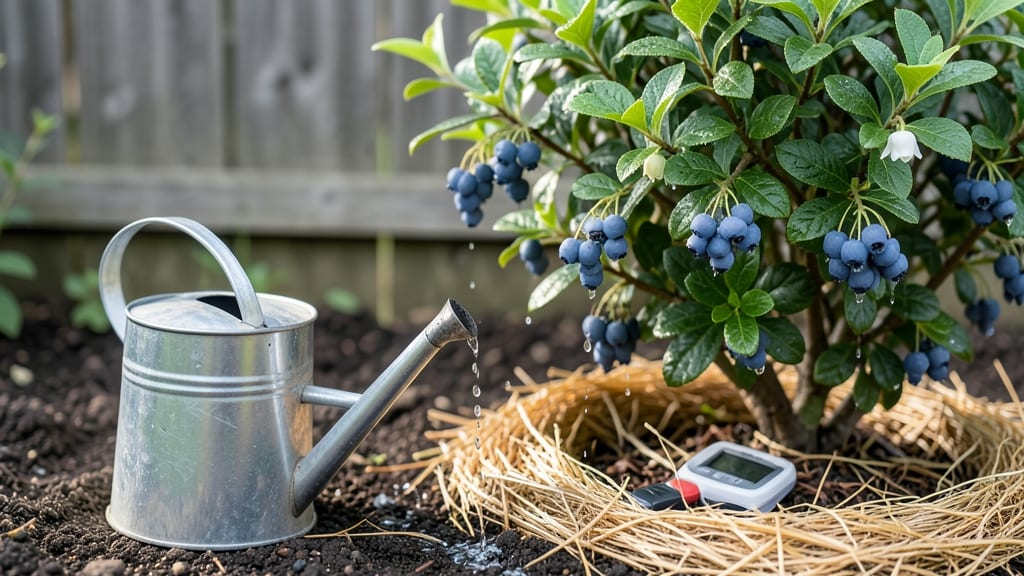
A blueberry bush needs about 1-2 gallons of water every 2-3 days during its active growing season to thrive 🫐—but get that wrong, and you’ll watch your harvest shrink before it even starts.
Picture this: You’ve spent months nurturing your blueberry bush, only to see the berries stay small and tart instead of juicy and sweet. The culprit? Too little water stresses the plant, while too much drowns its roots. The key is consistency—not drowning the soil or letting it dry out.
From planting to fruiting, each stage demands a different approach. Young bushes need frequent, deep watering, while mature plants can handle slightly less—but never skip the morning routine to avoid fungal issues. Drought-prone areas? We’ll cover adjustments to keep your bushes happy.
In this guide, you’ll learn the exact watering schedule for every growth phase, spot the signs of over- or under-watering, and pick the best method—whether it’s drip irrigation or a simple watering can—to keep your blueberries plump and productive.
Blueberry bush water requirements by growth stage: weekly watering schedule
Blueberry bushes need consistent moisture to thrive, but their water needs change dramatically depending on their growth stage and soil conditions. Young plants require more frequent watering than mature bushes, while fruiting stages demand deep, regular hydration to support heavy berry production.
Understanding these shifts ensures your bushes stay healthy and productive year after year.
Soil type plays a critical role in how often you need to water. Sandy soil drains quickly, requiring more frequent watering, while clay soil holds moisture longer. Container-grown blueberries dry out faster than in-ground plants, so they need daily checks during hot weather.
Let’s break down the exact watering schedule for each growth stage to keep your bushes flourishing.
| Growth Stage | Water Frequency | Water Amount | Soil Moisture Goal | Notes |
|---|---|---|---|---|
| Dormant (Winter) | Every 2-3 weeks | ½ gallon per bush | Lightly moist | Prevents root suffocation |
| Flowering (Spring) | Every 2-3 days | 1-2 gallons per bush | Deeply moist | Critical for fruit set |
| Fruiting (Summer) | Daily (deep soak) | 2-3 gallons per bush | Consistently moist | Supports berry growth |
| New Growth (Early Summer) | Every 3-4 days | 1-1.5 gallons per bush | Moderately moist | Encourages root expansion |
| Containers (All Stages) | Daily (check soil) | 1 gallon per pot | Never dry out | Use self-watering pots |
During the dormant season (winter), blueberry bushes need minimal water—just enough to prevent the soil from drying out completely. Overwatering in winter can lead to root rot, especially in heavy clay soils.
Aim for lightly moist soil by watering every 2-3 weeks, reducing frequency as temperatures drop. This keeps roots healthy without encouraging excess moisture.
When buds begin to swell in early spring, your bushes enter the flowering stage, a critical time for watering. Flowers need consistent moisture to develop into fruit, so water every 2-3 days with 1-2 gallons per bush.
Use a soaker hose or drip irrigation to deliver water directly to the root zone, avoiding wet foliage that can attract pests. Morning watering is ideal to reduce evaporation and fungal risks.
The fruiting stage (summer) demands the most attention. Blueberries are 90% water when ripe, so your bushes need daily deep watering—2-3 gallons per bush—to support heavy fruit loads. Let the top 2 inches of
Signs your blueberry bush is overwatered or underwatered (and how to fix it)
Blueberry bushes are sensitive to water balance—too much or too little can stress your plant and reduce fruit production. Yellowing leaves, mushy stems, or wilting foliage often signal watering issues. The key is monitoring soil moisture and adjusting your routine based on seasonal needs and weather conditions.
First, check the soil 1-2 inches deep. It should feel moist but not soggy. If it’s dry, your bush needs water; if it’s damp, hold off. Container-grown bushes dry out faster than in-ground plants, so they require more frequent checks.
Understanding these signs helps you act quickly before damage occurs.
⚠️ callout warning
Young plants: 1-2 gallons every 2-3 days (deep soak).
Mature bushes: 1-2 gallons weekly (adjust for heat/drought).
Fruiting stage: Daily deep watering (1-2 gallons) to support berry development.
Winter: Bi-weekly light watering (prevents root freeze).
Containers: Check soil daily—they dry out 3x faster than in-ground.
Overwatering is just as harmful as underwatering. Dark, mushy spots on leaves or stems indicate root rot, a fungal issue caused by soggy soil.
If you see white mold or a foul smell, your bush is drowning. Immediate action is critical: reduce watering, improve drainage, and consider repotting if in containers.
On the flip side, underwatered bushes show signs like crispy leaf edges, drooping branches, or premature fruit drop.
If the soil is bone-dry, water deeply until it drains from the bottom. Mulch around the base (2-3 inches of pine bark or straw) to retain moisture and regulate soil temperature.
Long-term prevention starts with well-draining soil and proper mulching. Amend heavy clay soil with compost or sand to improve aeration. Test your soil’s pH (ideal: 4.5–5.5) and adjust with sulfur if needed. Healthy soil holds moisture without becoming waterlogged.
For container-grown bushes, use pots with drainage holes and a mix of peat moss and perlite. Avoid letting them sit in saucers of water. In hot climates, water in the early morning to reduce evaporation, while cooler regions may need afternoon watering to prevent fungal growth.