
Plants
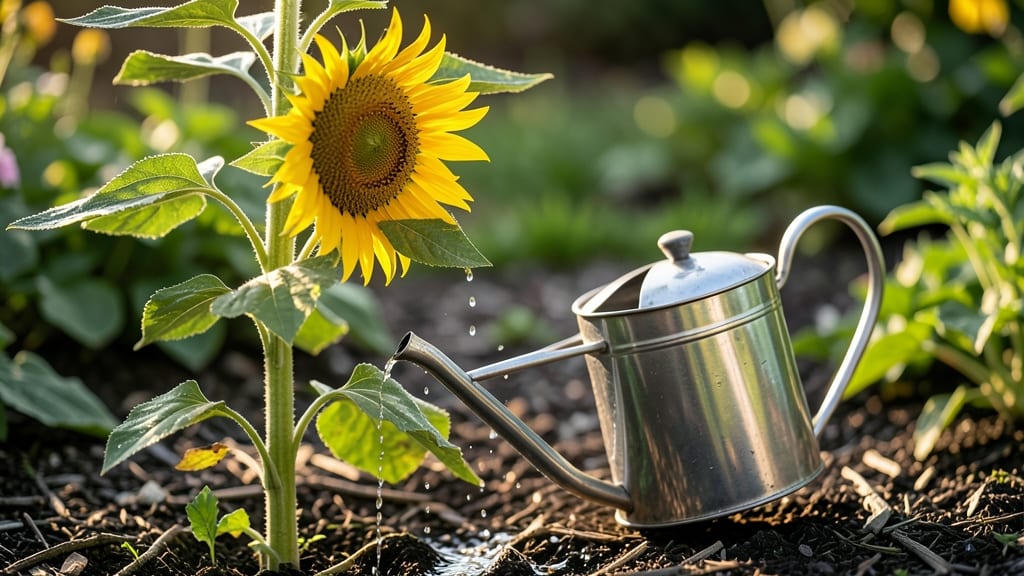
Watering a sunflower plant the right way means giving it deep, infrequent drinks instead of daily sips — a mistake I made my first year that left me with stunted stems and drooping blooms.
Sunflowers might seem low-maintenance with their towering stems and bright blooms, but watering them just right determines whether they’ll grow into giants or wilt before reaching their potential. Their deep roots need consistent moisture but hate soggy soil, so timing and depth matter more than frequency.
If you’ve ever watched your 🌻 sunflowers lean toward the sun only to sag by afternoon, you’re not alone. The key is learning when to soak the soil and when to let it dry out between waterings — and how to spot the signs when you’ve gotten it wrong.
In this guide, I’ll break down the exact watering schedule by growth stage, how to check soil moisture without guessing, and the 3 biggest mistakes that kill sunflowers faster than drought. Let’s get those roots thriving!
Sunflower watering schedule by growth stage: from seedlings to blooms
Sunflowers might seem low-maintenance, but their watering needs change dramatically as they grow. Overwatering young plants causes rotten roots, while underwatering mature sunflowers stunts their towering growth.
Understanding each stage’s needs keeps your sunflowers thriving from tiny sprouts to sun-kissed blooms. Let’s break down the perfect watering schedule by growth phase.
Most gardeners make the mistake of treating all sunflower stages the same. In reality, seedlings need gentle moisture, while mature plants crave deep hydration.
The key is adapting your watering routine to match their root development and environmental demands. Below, we’ll cover four critical stages with precise watering guidelines.
| Growth Stage | Watering Frequency | Depth per Watering | Key Signs of Stress | Pro Tips |
|---|---|---|---|---|
| Germination (Days 1-7) | Daily (light misting) | ¼ inch (6mm) | Dry soil surface, wilting sprouts | Use a spray bottle; avoid soaking |
| Seedling (Weeks 2-4) | Every 2-3 days | ½ inch (12mm) | Yellowing leaves, soft stems | Water at soil level, not leaves |
| Vegetative (Weeks 5-8) | Every 3-5 days | 1-2 inches (25-50mm) | Drooping leaves, cracked soil | Deep water at base, mulch heavily |
| Flowering (Weeks 9-12+) | Every 5-7 days | 2-3 inches (50-75mm) | Wilted buds, brown stems | Water early morning, avoid wetting blooms |
During the germination phase (days 1-7), sunflower seeds need consistent moisture to break through the soil. I recommend using a spray bottle for light misting—never drown the seeds.
Let the top ¼ inch of soil dry slightly between waterings to prevent fungal diseases like damping off. This delicate stage is where most sunflower failures happen.
The seedling stage (weeks 2-4) demands more careful watering. Young plants develop shallow root systems, so I water every 2-3 days with ½ inch of moisture.
Watch for yellowing leaves or wilting, which signal underwatering. Overwatering here causes root rot, so always check soil moisture before watering again.
As sunflowers enter the vegetative stage (weeks 5-8), their roots grow deeper and stronger. This is when you can increase watering depth to 1-2 inches every 3-5 days.
I’ve found that mulching with straw helps retain moisture and prevents soil crusting. Look for drooping leaves or cracked soil—these are clear signs your sunflowers need a drink.
The flowering stage (weeks 9-12+) is when sunflowers need the most water, but with precision timing. Deep watering every 5-7 days encourages strong stems and vibrant blooms.
I water in the early morning to prevent fungal issues. Avoid wetting the flower heads themselves, as this can cause brown spots or rot.
One common mistake I see is watering sunflowers at night. This creates a damp environment that invites powdery mildew and other fungal diseases. Always water in the morning or early afternoon so foliage has time to dry.
Another tip: container-grown sunflowers dry faster than in-ground plants, so check soil moisture daily.
If your sunflowers show wilting leaves or dry soil, it’s time to water—even if it’s not your scheduled day. Sunflowers are drought-tolerant once established, but they won’t forgive neglect during critical growth phases. Pay extra attention during hot, dry spells, as evaporation rates increase dramatically.
Remember, consistency is key with sunflower watering. Skipping watering days can stunt growth, while overwatering leads to weak stems and disease. By following this stage-specific schedule, your sunflowers will grow into healthy, towering beauties that turn heads in your garden.
🌻
How to tell if your sunflowers are thirsty (or drowned): soil and plant clues
Sunflowers have deep roots that stretch 3-4 feet into the soil, which means they store water like natural reservoirs. But even these hardy plants can't handle too much or too little moisture. The key is learning their subtle signals before wilting or yellowing becomes obvious.
Start by checking the soil moisture with your finger. Stick it about 2 inches deep—if it feels dry, it's time to water. If it's damp but not soggy, wait another day. Overwatering is just as harmful as underwatering, especially for sunflowers prone to root rot in heavy clay soils.
How Often Should You Water a Sunflower Plant?
For seedlings: Water daily to keep soil moist but not waterlogged. Once plants reach 6 inches tall, reduce to 2-3 times per week with 1-2 inches of water per session. In hot summers, increase to daily deep watering.
✅ Pro Tip: Use a moisture meter or the "squeeze test"—grab a handful of soil; if it crumbles easily, water is needed.
Watch for leaf wilting as a red flag. Young sunflowers may droop slightly in the heat, but if leaves feel crispy or dry to the touch, they're severely thirsty.
Older plants might show yellowing between veins, a classic sign of underwatering. Act fast—give them a deep drink at the base, not overhead.
Pay attention to the stem strength. A healthy sunflower stem should feel firm and upright. If it wobbles or feels soft and mushy, your plant may be overwatered, leading to rot.
Gently tug on the stem—if it pulls out easily, roots are failing. Adjust your watering schedule immediately to every 5-7 days instead.
Root health is the ultimate test. Dig near the base (but not too deep!) to check for white, firm roots. Healthy roots should spread out like fingers. If they're black, mushy, or smell foul, your sunflower is drowning.
Let the soil dry out slightly before watering again, and consider amending heavy soil with compost to improve drainage.
Adjust your watering routine based on weather and soil type. In sandy soil, water more frequently but less deeply, while clay soil holds moisture longer—water less often but thoroughly.
Mulch around the base with straw or wood chips to lock in moisture and keep roots cool, reducing how often you need to water.
Remember, sunflowers are resilient once you get the balance right. The goal is consistent moisture, not soggy soil or drought stress. Next time you check your plants, trust your fingers and eyes—they’ll tell you everything you need to know before problems start. 🌻