
Orchid Care
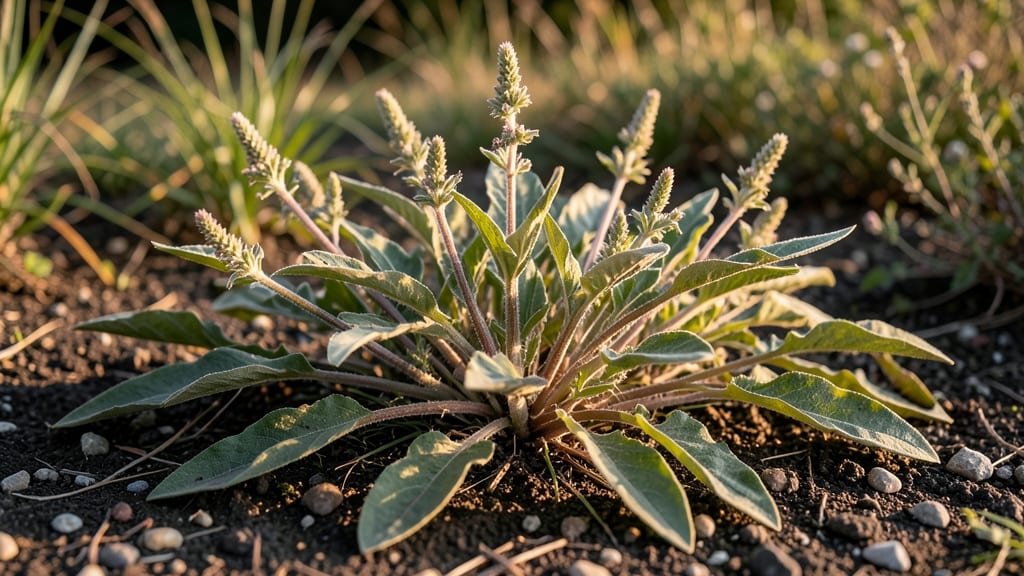
Identifying rough careless pigweed early is critical because its deep taproots and prolific seed production make it nearly impossible to eliminate once established. Look for its distinctive rough stems, lance-shaped leaves with noticeable veins, and clusters of small white flowers that appear in summer.
This aggressive weed thrives because its roots can extend up to 4 feet deep, while a single plant can produce 200,000 seeds per season—each capable of germinating for years. 🌱 The key to stopping it lies in removing every root fragment, as even small pieces can regrow.
I’ve found that pulling weeds after rain (when soil is moist) makes the roots easier to extract, and applying a thick layer of organic mulch afterward blocks sunlight that pigweed needs to sprout.
For stubborn patches, a homemade vinegar solution (one part vinegar to three parts water with a drop of dish soap) works well when sprayed directly on leaves—just avoid nearby plants since it’s non-selective.
The Evergreen Seeds Team recommends repeating treatments every 3-5 days until the weeds die back completely, as pigweed’s resilience demands persistence.
💡 In This Article
- How Rough Careless Pigweed Spreads and Survives
- Natural Eradication Methods for Stubborn Pigweed Roots
How rough careless pigweed spreads and survives
Rough careless pigweed (Amaranthus rudis) earns its reputation through a two-pronged invasion strategy: its extensive rhizome root system and explosive seed production. Unlike shallow-rooted weeds, this species develops a network of fibrous roots that can stretch 3-4 feet deep and spread horizontally up to 2 feet wide.
These roots store energy for rapid regrowth—even a 1-inch root fragment left in soil can sprout into a new plant within 7-10 days. 🌱 The plant’s ability to photosynthesize through its stems (a trait called "stem succulence") means it can survive even when uprooted, as long as a portion remains attached to the soil.
The seed dispersal strategy is equally ruthless. A single mature plant can produce 100,000-200,000 seeds per season, which scatter via wind, water, and even garden tools. These seeds remain viable in the soil for up to 5 years, waiting for ideal conditions to germinate.
The plant’s rapid growth cycle—mature seeds appear just 6-8 weeks after sprouting—means one season’s infestation can become next year’s full-blown takeover. Traditional weeding often fails because gardeners target only the visible foliage, leaving roots and seeds intact to fuel future growth.
What makes this weed particularly stubborn is its C4 photosynthesis pathway, which allows it to thrive in hot, dry conditions where many plants struggle. This metabolic advantage means pigweed grows aggressively even in poor soil with minimal nutrients, outcompeting desirable plants for sunlight and water.
The rough, hairy texture of its stems isn’t just for identification—it helps the plant retain moisture in arid environments, making it a persistent nuisance in drought-prone regions. 💧
Understanding these mechanisms explains why conventional methods like surface-level pulling or spot-treatment herbicides often backfire. The plant’s deep roots and seed bank ensure that partial removal only creates more opportunities for regrowth.
For instance, a 2018 study by the University of Florida found that hand-pulling without root removal resulted in a 90% regrowth rate within three months. This resilience demands a multi-pronged approach that targets both roots and seeds simultaneously.
Here’s what’s actually happening underground: When you pull a pigweed plant, the roots break at their weakest points, often leaving fragments behind. These fragments contain dormant buds that can quickly regenerate into new shoots.
The plant’s ability to regrow from root pieces is why gardeners often see "weed rings"—areas where pigweed keeps reappearing in the same spot despite repeated attempts to remove it. This biological persistence is what makes rough careless pigweed such a formidable opponent in any garden or landscape.
Consider these key factors when assessing an infestation:
- Root depth: Use a garden trowel to check how far roots extend—if you find fragments deeper than 6 inches, manual removal becomes significantly harder.
- Seed density: Disturbing the soil (even through tilling) can trigger dormant seeds to germinate, creating a larger problem.
- Growth rate: Pigweed can grow 1-2 inches per day under ideal conditions, so delays in treatment give it a major competitive edge.